中文简体
 русский
 Français
 Español
 Deutsch
 عربى

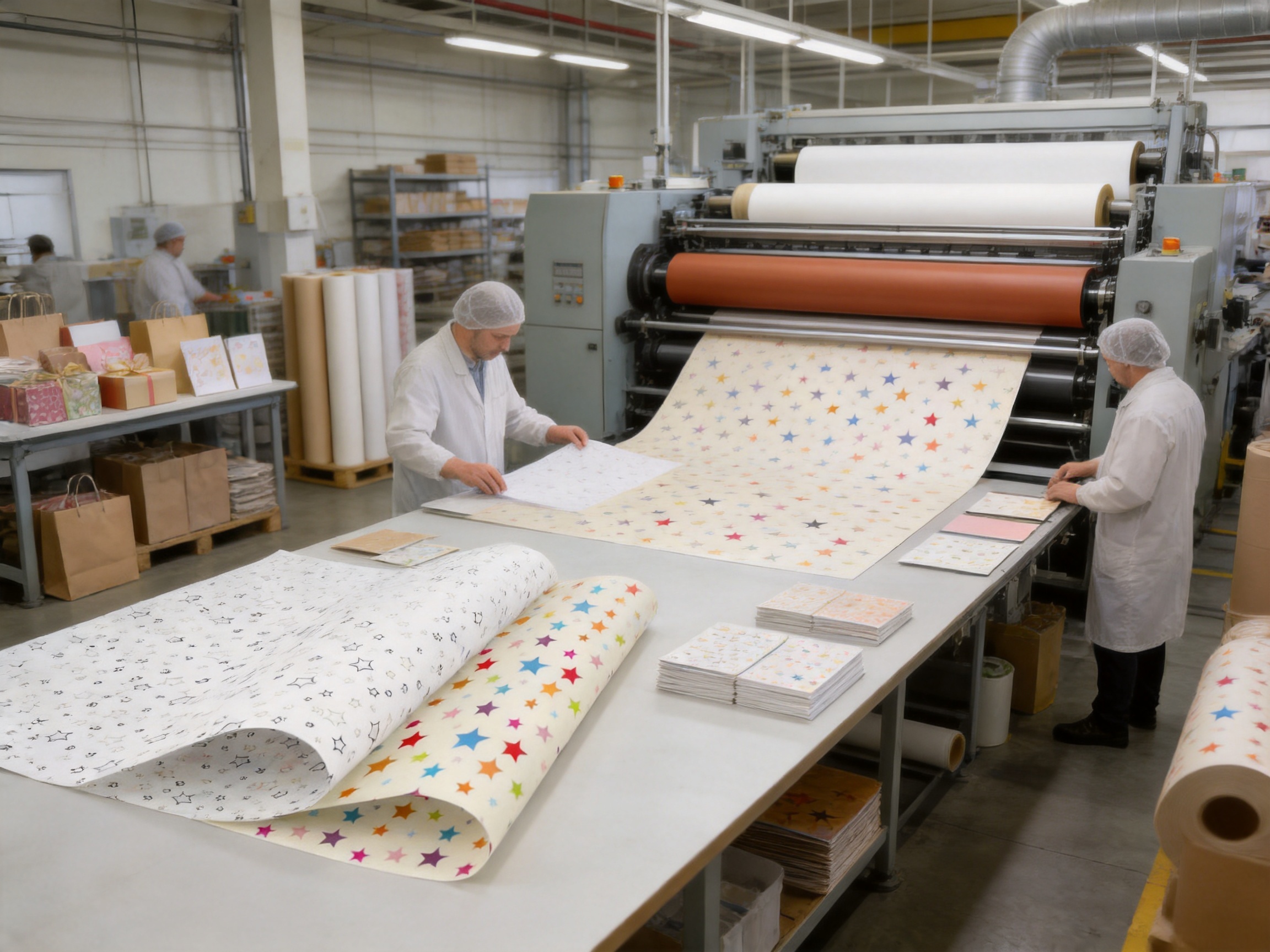
Wrapping paper is often treated as a finishing detail, but it has a direct influence on how a gift, retail product, promotional item, or branded package is perceived. Before a recipient opens a package, the paper communicates color, mood, occasion, quality, and attention to detail. For retailers and brands, the right wrapping material can also support visual identity, encourage social sharing, and make ordinary products feel more memorable.
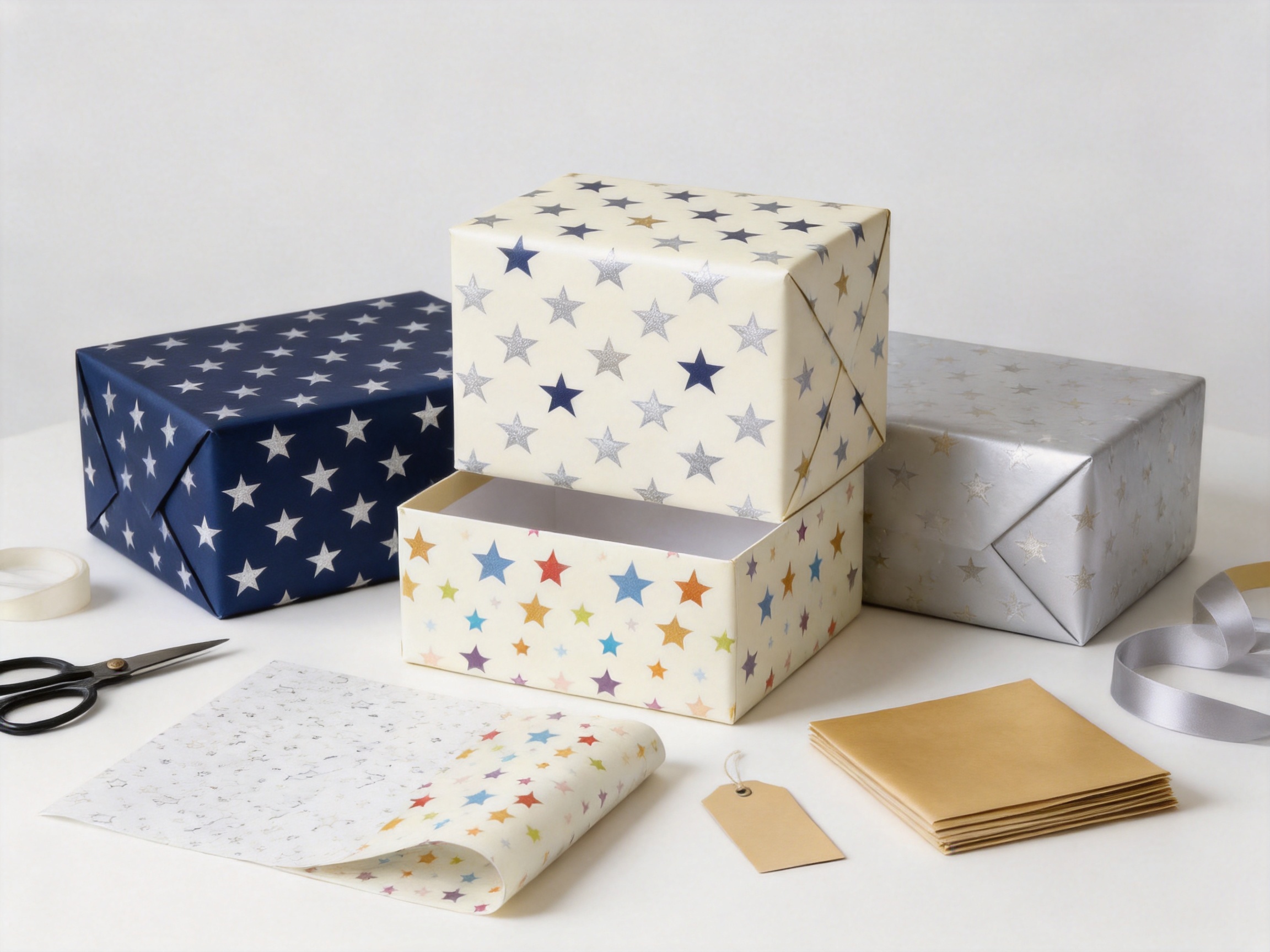
Custom double-sided star-patterned wrapping paper offers a practical way to combine visual variety with production efficiency. The product features star designs on both sides, allowing users to choose between two coordinated presentation styles without purchasing separate types of wrapping paper. One side can be selected for a more visible or dominant pattern, while the reverse side can provide a different appearance when the package design calls for a subtle change.
This flexibility makes the paper suitable for gift shops, department stores, online retailers, event organizers, boutiques, subscription businesses, corporate gift programs, and brands that want packaging to feel distinctive. Instead of relying on a single-use visual treatment, buyers receive a material that can support multiple wrapping concepts while remaining easy to cut, fold, decorate, and customize.
Produced by Yiwu Magic Tree Gift Bag Co., Ltd., the wrapping paper is part of a broader paper packaging portfolio that includes gift bags, gift boxes, greeting cards, and other printed paper products. The company combines design and prepress capabilities with printing, laminating, hot stamping, creasing, bag making, and manual finishing. These in-house processes help connect creative development with production control, which is important when a paper product must look consistent across a large order.
Understanding the Product Concept
Custom double-sided star-patterned wrapping paper is designed around a simple but useful idea: both sides of the sheet contribute to the final presentation. Traditional wrapping paper generally has one printed side and one plain or less decorative reverse side. That format is familiar and functional, but it limits the number of visual options available to the user.
With a double-sided design, the reverse is not merely a structural backing. It can become part of the appearance of the wrapped package. Depending on how the sheet is folded, the reverse can appear along edges, inside folds, on flaps, or as a deliberate contrasting detail. Users can also turn the entire sheet over to create a different overall look.
The star pattern gives the paper a broad decorative appeal. Stars can suggest celebration, imagination, achievement, holidays, night skies, children’s events, premium presentation, or contemporary graphic design. Because the motif is adaptable, the same basic product can be developed for different customer groups through changes in color, scale, spacing, and supporting brand elements.
Customization may include pattern size, color combinations, logo placement, brand graphics, and other design features. A retailer may select a restrained palette for upscale packaging, while a children’s brand may prefer bright colors and larger stars. A holiday campaign may use metallic-looking tones or seasonal colors, while a corporate gifting program may incorporate a company logo or signature color system.
The product therefore sits between standard wrapping paper and fully branded packaging. It provides the decorative character of a patterned material while offering more control than an off-the-shelf design. For businesses ordering in suitable quantities, customization can help align the wrapping experience with a broader packaging identity.
Two-Sided Design as a Practical Advantage
The most obvious advantage of this product is the use of both sides. A buyer does not need to purchase separate rolls for every visual variation. The same sheet can produce two different appearances, which may reduce the number of materials required for a seasonal display, gift-wrapping station, or packaging operation.
This advantage is especially relevant for businesses that handle many types of gifts or products. A boutique might use one side for everyday purchases and the other side for special occasions. An event organizer might select one appearance for guest gifts and another for staff or sponsor packages. A small business can use a single custom design across multiple campaigns while changing how the paper is folded or displayed.
Double-sided printing can also help create coordinated combinations. For example, one side may contain a denser star pattern, while the other may use a lighter arrangement. When the sheet is folded around a box, a narrow part of the reverse side may appear as a decorative border. This can give the finished package a more intentional and layered appearance than a sheet with a plain reverse.
Another benefit is creative efficiency. A packaging team does not have to develop entirely separate artwork for every wrapping option. A coordinated front-and-back concept can be developed as one product, making it easier to plan color systems and seasonal collections. When the paper is used alongside matching gift bags, greeting cards, labels, or boxes, the two-sided design can strengthen the visual relationship among all packaging elements.
Compared with single-sided patterned paper, the product offers more flexibility at the point of use. Compared with purchasing two separate designs, it may simplify inventory planning. These advantages do not eliminate the need to choose an appropriate paper specification, but they can make the overall packaging program more adaptable.
| Feature | Custom Double-Sided Wrapping Paper | Conventional Single-Sided Paper | Potential Business Benefit |
|---|---|---|---|
| Printed surfaces | Star-patterned designs on both sides | Usually one decorative side | More visual choices from one material |
| Design flexibility | Can support coordinated or contrasting appearances | Primarily depends on the front surface | Useful for different occasions and product lines |
| Customization | Pattern size, colors, and brand elements can be adjusted | Often limited to an available standard design | Improved alignment with brand identity |
| Wrapping use | Suitable for folding, layering, and decorative exposure of both sides | Usually designed to hide the reverse side | More opportunities for creative finishing |
| Inventory planning | One product can support multiple presentation styles | Different looks may require different products | Potentially simpler product selection and storage |
Print Clarity and Consistent Color
In decorative packaging, print quality affects more than appearance. If a pattern is blurred, uneven, or inconsistent, the wrapped item may look less professional even when the paper itself is structurally sound. The described product is intended to provide clear star printing and consistent colors, helping the pattern remain visible after the sheet is cut, folded, and applied to a package.
Clear printing is particularly important for star patterns because the motif may appear at different angles across the package. Parts of the design can be viewed on the top, sides, corners, and folded edges. A clean print allows the stars to remain recognizable rather than becoming visually muddy when the paper is shaped around a box.
Color consistency is also important for wholesale buyers. A retailer may use the paper across many orders, and customers generally expect the appearance to remain stable from one package to the next. Inconsistent color can make coordinated packaging look disorganized and may create difficulties when the paper is displayed next to matching cards, bags, or boxes.
For customized designs, color control begins before printing. Artwork files need to be checked for dimensions, repeat structure, line quality, color settings, and the placement of logos or other brand graphics. Prepress preparation helps identify issues before production begins. This is one reason an experienced packaging manufacturer can offer more value than a supplier that only handles basic printing.
The final result is influenced by paper selection, ink application, drying or curing conditions, machine setup, surface treatment, and quality inspection. Each stage can affect how the design appears. A smooth-looking surface can help printed details remain visually clean, while appropriate handling reduces the likelihood of scuffing, misalignment, or damage during converting and packing.
For customers ordering custom paper, it is useful to provide clear artwork specifications and to review a proof or approved sample when available. The manufacturer and buyer can then confirm the pattern scale, color expectations, logo position, and any finishing requirements before full production.

Custom Double-Sided Star-Patterned Wrapping Paper
Material Handling and User Convenience
Wrapping paper must balance appearance with workability. A sheet that looks attractive but tears easily can create problems for both professional wrappers and ordinary consumers. The product is described as easy to cut and fold, with enough resistance to support routine wrapping without tearing constantly.
Good handling performance is valuable in several settings. Retail employees may need to wrap gifts quickly during busy periods. Event teams may prepare a large number of packages under time pressure. Online sellers may wrap products individually before shipping. Consumers may work with boxes that have unusual proportions or corners that require repeated folding. In each situation, predictable paper behavior can reduce waste and improve efficiency.
Cutting performance is also relevant to material consumption. When paper tears irregularly, the user may need to discard a larger section and start again. A sheet that can be measured and cut cleanly is easier to use economically. It can also support more accurate wrapping, particularly when the package requires neat seams or carefully aligned folds.
Folding performance affects the final appearance. The paper should be able to form around the major surfaces of a box and create clean edges without immediately splitting at every crease. This does not mean that any paper can be folded without care; very sharp corners, excessive tension, and unsuitable sheet sizing can still cause damage. However, a practical wrapping material should support normal folding methods used in retail and gift presentation.
The smooth visual character of the product adds another benefit. A smooth-looking surface can make the printed pattern appear more refined and can provide a clean foundation for ribbons, labels, stickers, tags, and other decorative elements. When additional accessories are applied, the paper functions as a stable visual background rather than competing with every finishing detail.
Decoration and Finishing Compatibility
Wrapping paper rarely works alone. Ribbons, twine, gift tags, adhesive labels, seals, cards, tissue paper, and decorative bands are commonly used to complete a package. A wrapping material becomes more useful when it can accommodate these additions without making the process unnecessarily difficult.
The star-patterned surface can be combined with ribbons in solid colors, metallic shades, natural fibers, or seasonal tones. A dense pattern may work well with a simple ribbon, while a lighter star arrangement may allow more elaborate accessories. The ability to select between the two printed sides gives users additional control over how much visual activity appears behind the finishing materials.
Labels can be used for names, product information, care instructions, campaign messages, or brand identification. Small businesses may apply a logo label after wrapping, while larger retailers may use pre-printed stickers that match other packaging materials. Because the product supports brand customization, the paper itself can also form part of a consistent brand system rather than being treated as a generic background.
Decorative accessories can also create a distinction between different sales tiers. A standard purchase may receive paper with a simple fold and label, while premium orders can use the same base paper with a ribbon, card, and special seal. This allows businesses to maintain material consistency while varying the level of finishing according to customer needs.
For event use, the two-sided design can help coordinate guest packages with event colors. A star motif may be appropriate for award ceremonies, launch parties, birthdays, holiday gatherings, school celebrations, or themed promotional events. The paper can be paired with matching cards or gift boxes to create a more unified presentation.
Applications Across Retail and Commercial Markets
Gift Shops and Specialty Retailers
Gift shops often need packaging that can serve multiple customer preferences. Some purchases require a festive appearance, while others call for a more understated or premium look. A two-sided sheet allows staff to offer a choice without maintaining a large collection of unrelated wrapping paper designs.
The star pattern can work across a range of products, including small accessories, home décor, stationery, toys, beauty products, souvenirs, and seasonal merchandise. By changing the pattern colors or adding store branding, a retailer can create a recognizable wrapping experience that customers associate with the shop.
Online Stores and Subscription Businesses
Online sellers compete not only through product selection and price but also through the unboxing experience. Wrapping paper can make a shipment feel more personal and can encourage customers to share photographs or videos of their purchase. A custom printed paper can place the brand identity directly into the opening moment.
Subscription businesses may benefit from a design that can be refreshed through color changes while maintaining a consistent star motif. One side might be used for a regular monthly package, while the other side becomes useful for special editions, anniversary shipments, or customer reward orders.
Corporate Gifts
Corporate gift programs often require a presentation that is professional but not completely plain. Custom colors and brand elements can make the wrapping paper suitable for employee recognition, client gifts, conference materials, seasonal appreciation packages, or milestone celebrations.
A restrained star design can add character without overwhelming a logo or message. The paper can be paired with a printed greeting card, branded gift box, or custom paper bag to create a coordinated corporate package.
Events and Celebrations
Event organizers frequently need materials that match a theme and can be used across a large number of items. Double-sided paper can provide a practical way to introduce visual variation while retaining a consistent motif. It may be used for party favors, award packages, promotional giveaways, guest gifts, or welcome kits.
Customization makes it possible to adjust the stars to match event colors, age groups, cultural themes, or campaign concepts. The paper can also carry dates, short messages, or sponsor-related design elements when the artwork is planned appropriately.
Small-Business Branding
Small businesses may not need a large range of packaging materials, but they often want their customer experience to appear thoughtful and professional. Custom wrapping paper can be an accessible way to add brand personality to orders without redesigning every structural package.
For a handmade product seller, boutique food business, creative studio, or local retailer, stars may become part of a recognizable visual language. The paper can be combined with simple labels and cards, helping the business create a complete presentation from a manageable number of packaging components.
Customization Options for Different Brand Strategies
Customization is most effective when it is connected to a clear packaging objective. Changing colors alone may create a different appearance, but a successful custom design should also consider the product category, customer profile, occasion, and other materials used in the packaging system.
Pattern Size
Pattern scale affects the visual impression of the wrapped package. Small stars create a more repetitive and potentially understated texture. Larger stars are more noticeable and may be suitable for children’s products, celebrations, or bold promotional packaging. A mixed scale can create additional depth, although the design should remain clear when the paper is viewed from a normal distance.
Pattern size also affects how the design appears on small packages. Very large motifs may be cut off on small boxes, while very small motifs can lose impact on large surfaces. A manufacturer with prepress and design capabilities can help prepare a repeat that works across the intended product range.
Color Selection
Color is one of the fastest ways to change the mood of the paper. Soft colors can support elegant or calming packaging. High-contrast colors may create a youthful and energetic effect. Dark backgrounds with light stars can suggest a night-sky theme, while bright backgrounds can create a cheerful holiday or birthday impression.
Businesses should consider how the chosen colors interact with ribbons, labels, boxes, bags, and printed cards. A paper that looks attractive in isolation may not coordinate well with existing packaging. Color planning is therefore most effective when it is considered as part of a complete product presentation.
Brand Elements
Logos, initials, symbols, slogans, and signature graphic features may be incorporated into the design when appropriate. Brand elements can be repeated subtly or placed in a more prominent arrangement. The right approach depends on whether the paper is intended to communicate luxury, playfulness, recognition, or promotional information.
Branding should not make the wrapping paper difficult to use. If the logo is too large or the design is excessively crowded, folds may obscure important details. Repeating brand elements in a balanced pattern can provide recognition without making every fold look like an advertisement.
Seasonal and Limited-Edition Designs
The star motif can be adapted for seasonal packaging through changes in color, finish, and supporting artwork. A retailer might develop one version for winter holidays, another for birthdays, and another for a year-round signature collection. Since the underlying concept remains recognizable, seasonal editions can feel related while still offering variation.
Limited-edition paper can also support product launches, anniversaries, collaborations, and special campaigns. For businesses that rely on repeat customers, changing the design periodically can make the unboxing experience feel fresh without requiring a completely new packaging structure.
Manufacturing Capabilities Behind the Product
The quality of customized wrapping paper depends not only on the artwork but also on how the manufacturer manages the production process. Yiwu Magic Tree Gift Bag Co., Ltd. has developed capabilities across several stages of paper packaging production. According to the supplied company information, its operations include professional design and prepress, laminating, hot stamping, creasing, printing, bag making, and manual finishing.
Having multiple processes available within the same manufacturing organization can improve communication between design, production, and finishing teams. A customer may begin with an idea for patterned wrapping paper and later require matching gift bags, boxes, or greeting cards. A supplier with experience across these categories can better understand how the products should work together.
In-house production also provides a stronger foundation for process coordination. Artwork can be reviewed in relation to the selected paper and finishing method. Production teams can consider how patterns behave during cutting, folding, laminating, or other converting stages. Manual finishing can be used where a product requires detail or handling that is not fully automated.
Design and Prepress
Prepress is the stage where a concept becomes a production-ready file. For patterned wrapping paper, this may include checking repeat dimensions, alignment, color settings, artwork resolution, bleed, registration, and the relationship between the front and reverse sides.
Double-sided paper requires particular attention because the two designs need to be planned as a coordinated set. If the artwork includes logos, borders, directional motifs, or repeating elements, the manufacturer must understand how the sheet will be cut and wrapped. Proper prepress preparation can reduce avoidable errors and help the final product match the approved concept.
Professional design support is also valuable for buyers that have a general idea but do not yet have a complete file. A manufacturer may help convert a theme into an organized repeat pattern, recommend practical artwork dimensions, or identify elements that may not reproduce clearly at the intended scale.
Printing
Printing establishes the visible pattern and color system. Consistent machine setup, suitable materials, and quality checks are important when the design must appear across both sides of the paper. The product description emphasizes clear printing and stable color appearance, which are central requirements for a decorative wholesale material.
Printing quality is evaluated not only on an uncut sheet but also after the paper has been handled. A pattern should remain legible after folding and should not show obvious defects that distract from the package. The manufacturer’s broader experience with printed paper bags, gift boxes, greeting cards, and related items provides relevant knowledge for managing printed surfaces.
Laminating and Surface Treatment
Depending on the selected specification, laminating or other surface treatments may be used to influence appearance and handling. Such processes need to be chosen carefully because the final paper must remain practical for cutting and folding. The right treatment can support a smoother visual effect or additional protection, while an unsuitable treatment may change the feel or flexibility of the sheet.
For buyers, surface requirements should be discussed during the quotation and sampling stage. The intended use, package size, folding method, storage conditions, and desired appearance all influence the appropriate specification.
Hot Stamping and Decorative Enhancement
Hot stamping can be considered when a customer wants to add a premium detail to the design. A small metallic logo, border, or accent may complement a star pattern and create a more luxurious appearance. It is not necessary for every order, but the availability of this capability gives buyers additional choices when developing high-end or special-edition packaging.
Decorative enhancement should be balanced against the core design. A star pattern already provides visual interest, so an additional finish is most effective when it supports the theme rather than making the surface too busy. Prepress and production planning are important to ensure that any added detail is positioned correctly.
Creasing, Converting, and Manual Finishing
Creasing and other converting processes are relevant when paper products must be folded or prepared for a specific format. Even when the final product is supplied as wrapping paper sheets or rolls, the manufacturer’s experience with creasing and paper packaging construction contributes to a better understanding of how paper behaves during use.
Manual finishing remains valuable for special details, quality inspection, assembly, and products that require careful handling. It can support customized orders where the quantity or design does not justify full automation. Combining machine production with manual inspection allows a manufacturer to address both efficiency and detail-oriented requirements.

Factory Integration and Quality Control
Yiwu Magic Tree Gift Bag Co., Ltd. operates its own factory and manages production from raw materials to finished products, according to the supplied company information. This type of factory integration can support greater control over scheduling, material coordination, production communication, and inspection.
For wholesale buyers, quality consistency is often more important than a single attractive sample. A packaging material may be used across hundreds or thousands of customer orders, so the supplier must be able to repeat the design and specification reliably. Factory control can help establish production procedures that are applied across the order rather than relying entirely on external coordination.
Raw material management is an important part of this process. Paper type, surface characteristics, thickness, and other specifications influence printing and handling. When the manufacturer is involved in selecting and managing materials, it can evaluate how those materials fit the requested application rather than treating paper as an isolated purchase.
Production control also includes checks for printing alignment, color appearance, surface defects, cutting accuracy, folding performance, and packing condition. The exact inspection plan may vary according to the order, but a professional process should identify the features that matter most to the buyer before manufacturing begins.
For custom double-sided wrapping paper, quality control should consider both printed sides. The two surfaces need to remain visually consistent with the approved artwork, and the sheet should not show excessive variation from one batch section to another. The manufacturer and buyer may also discuss acceptable tolerances for color, dimensions, and pattern positioning.
Experience and International Service
The company was founded in 1996 as Fushida Plastic Factory and was rebranded in 2019 as Magic Tree Paper Products Co., Ltd. The supplied information states that the business has nearly 30 years of experience in manufacturing premium paper packaging solutions.
This experience is relevant because paper packaging requires knowledge that develops across many production cycles. Customer requirements change, printing technologies evolve, and different paper types behave differently during converting. An established manufacturer is more likely to have encountered a broad range of design, material, and production challenges.
The company serves clients in the United States, Canada, Mexico, the United Kingdom, Japan, and China. International service requires attention to communication, artwork confirmation, production scheduling, packaging, and delivery coordination. Buyers in different markets may also have different expectations regarding design style, sustainability, product presentation, and order quantities.
With an annual output value exceeding 50 million yuan, the company has a substantial operating base for its paper packaging activities. Output scale alone does not guarantee that every product will meet a buyer’s requirements, but it can indicate experience with organized production and commercial order fulfillment. The most important consideration remains whether the supplier can match its capabilities to the buyer’s specific specification.
The company’s product range includes white cardboard, coated paper, kraft paper, paper bags, gift bags, gift boxes, greeting cards, and patterned wrapping paper. This broader portfolio can benefit buyers seeking coordinated packaging. A retailer may request wrapping paper and matching bags from one supplier, while a brand may combine boxes, cards, and printed accessories into a single packaging program.
Eco-Conscious Packaging Considerations
Paper packaging is often selected because it can support a more material-conscious presentation than some alternatives. The supplied company information describes Magic Tree as committed to high-quality, eco-friendly, and customized paper packaging solutions. However, environmental performance depends on the complete specification and end-of-life conditions, not simply on the word “paper.”
Buyers should consider the paper grade, inks, coatings, laminates, adhesives, packaging method, shipping distance, and local recycling systems. A paper product may be easier to recycle when it contains fewer non-paper elements, while certain laminations or decorative additions may affect recovery options. The best specification depends on the market in which the product will be used and discarded.
Customization can support responsible purchasing when it helps a business order a suitable product rather than maintaining many unnecessary packaging types. A two-sided design may reduce the need for multiple decorative papers in some applications. It can also allow a business to coordinate several occasions through one adaptable concept, although buyers should still order quantities carefully to avoid excess inventory.
Businesses seeking environmental documentation should request the relevant material information, certificates, or production declarations applicable to the selected product. Requirements vary by market and by customer. Clear communication is the best way to ensure that the final specification supports both presentation goals and sustainability expectations.
How This Product Compares with Common Alternatives
There are several common alternatives to custom double-sided star-patterned wrapping paper. Each has advantages, but the two-sided custom format occupies a useful position for buyers who need flexibility and identity.
Compared with Plain Wrapping Paper
Plain wrapping paper is simple and can be easy to coordinate with ribbons or labels. However, it usually depends heavily on accessories to create visual interest. The star-patterned paper provides a finished decorative surface from the beginning, reducing the need for additional elements when a quick but attractive presentation is required.
Compared with Generic Printed Paper
Generic printed wrapping paper may be readily available, but it may not match a company’s colors, packaging system, or customer positioning. Customization allows the design to be adjusted for the intended market. The buyer can also develop a more distinctive visual identity instead of using a pattern shared by many other businesses.
Compared with Single-Sided Patterned Paper
Single-sided patterned paper can be effective for standard wrapping, but its reverse side is generally not intended to be displayed. Double-sided printing provides more creative control and can be especially useful when folds or layers reveal both surfaces.
Compared with Fabric Wrapping Materials
Fabric wrapping can be reusable and visually distinctive, but it may require different storage, handling, cleaning, and training arrangements. Paper is familiar to most retail staff and consumers, and it can be cut to the required size for different products. The best choice depends on the business model and the desired customer experience.
Compared with Pre-Decorated Boxes
Pre-decorated boxes provide structure and can look highly polished, but they may require more storage space and may not accommodate every product size. Wrapping paper can be used with boxes already held by the business, including plain cartons or gift boxes. This makes it a flexible decorative layer for businesses managing varied products.
Ordering and Specification Planning
A successful custom wrapping paper project begins with a clear specification. Buyers should identify the intended applications, approximate package sizes, preferred format, design requirements, and expected order volume. This information helps the manufacturer recommend a practical production approach.
The artwork should specify whether the design is intended for sheets, rolls, or another format. The pattern repeat, star scale, background colors, logo placement, and relationship between the two sides should be documented. If the paper will be used across several box sizes, the buyer should check that the pattern remains attractive on both small and large packages.
Paper characteristics should also be discussed. The appropriate grade depends on the desired balance of appearance, foldability, tear resistance, surface feel, printing performance, and cost. If the paper must be used with adhesive labels or certain ribbons, those requirements can be included in the review.
Sampling is a valuable stage before full production. A sample can help the buyer evaluate color, print clarity, surface appearance, cutting behavior, folding performance, and compatibility with accessories. It can also reveal whether a pattern is too large, too dense, or too low in contrast for the intended package.
Order planning should account for lead time, artwork approval, production, inspection, packing, and delivery. Seasonal orders should be planned well before the selling period begins. Early planning provides more time to adjust artwork or specifications if the sample does not meet expectations.
Packaging and shipping requirements should be stated clearly. Paper must be protected from moisture, crushing, contamination, and excessive handling during transportation. Buyers may also need carton markings, pallet arrangements, batch identification, or documentation for warehouse receiving.
Using the Paper Effectively in Practice
The quality of the final presentation depends partly on how the paper is used. Users should measure the package before cutting and allow enough material to cover the major surfaces without excessive tension. Overstretching the paper can increase the risk of tearing around corners.
When using the two sides creatively, the wrapper can decide in advance which side should dominate and which side should appear as an accent. A narrow folded edge may reveal the reverse design, or the sheet may be turned over completely for a different appearance. Testing the fold on a sample package helps determine how the star patterns will align.
Ribbons and labels should be selected with the pattern in mind. If both the paper and the accessories are highly detailed, the presentation may look crowded. A plain ribbon can provide balance, while a more decorative accessory may work best with the lighter side of the paper.
For business use, staff should receive simple wrapping guidelines. These may include recommended sheet sizes, preferred folding direction, label placement, ribbon colors, and instructions for switching between the two designs. Standardized guidance can help maintain a consistent customer experience across multiple employees or store locations.
Online sellers can photograph the finished package during product development. Images can show customers what to expect and can help confirm whether the paper’s colors remain attractive under the company’s lighting conditions. The paper may also become part of a recognizable shipping or unboxing style.
Frequently Asked Questions
What makes this wrapping paper double-sided?
The product is designed with star-patterned printing on both surfaces rather than a decorative front and an ordinary reverse. Users can choose either side as the visible surface or allow both sides to appear through layered folds and edges.
Can the pattern and colors be customized?
Yes. The supplied product information indicates that buyers can customize pattern size, color, and brand elements. Final options depend on the approved artwork, material specification, production method, and order requirements.
Is the paper suitable for business branding?
Yes. The paper can be developed with brand colors, logos, or other visual elements. It may be used by boutiques, online stores, event organizers, corporate gift programs, and small businesses seeking a more consistent packaging identity.
What types of occasions suit a star pattern?
Stars can support birthdays, holidays, celebrations, award events, promotional campaigns, children’s products, boutique packaging, and general gift presentation. The color palette and pattern scale can be adjusted to make the design more playful, elegant, seasonal, or corporate.
Is the paper easy to cut and fold?
The product is described as practical to cut and fold and as less likely to tear during normal handling. Actual performance depends on the selected paper specification, package shape, sheet size, and wrapping technique.
Can ribbons and labels be added?
Yes. The smooth-looking surface is suitable for adding ribbons, labels, stickers, tags, and other decorative accessories. Buyers should test specific adhesives or finishing materials when a particular application requires strong adhesion or long-term durability.
Can the paper be used with gift boxes and bags?
Yes. It can be used alongside gift boxes, gift bags, greeting cards, and other paper packaging products. A coordinated design system can help a business create a more unified presentation across different packaging formats.
Does the manufacturer provide other paper packaging products?
Yiwu Magic Tree Gift Bag Co., Ltd. manufactures paper bags, gift bags, gift boxes, greeting cards, and patterned wrapping paper, using materials such as white cardboard, coated paper, and kraft paper. Its wider product range may support customers seeking multiple coordinated packaging items.
What manufacturing capabilities are available?
The supplied company information lists professional design and prepress, printing, laminating, hot stamping, creasing, bag making, and manual finishing. These capabilities support both standard and customized paper packaging projects.
Should buyers request a sample?
A sample is recommended for custom orders because it allows the buyer to check colors, pattern scale, surface appearance, folding behavior, and compatibility with accessories before committing to full production.
How should environmental requirements be evaluated?
Buyers should review the complete specification, including paper grade, inks, coatings, laminates, adhesives, and local recycling conditions. If documentation is required, the buyer should request the relevant material or production information for the selected product.
What information should be included in an inquiry?
An inquiry should include the preferred paper format, approximate dimensions, artwork status, number of printed sides, color requirements, customization details, estimated quantity, application, delivery destination, and any special packaging or documentation needs.
Conclusion
Custom double-sided star-patterned wrapping paper combines decorative appeal with practical flexibility. Its defining advantage is that both sides contribute to the design, allowing one material to support more than one presentation style. This can simplify packaging choices, create visual variety, and provide a stronger foundation for branded gift presentation.
The clear star printing, consistent color appearance, smooth visual surface, and practical cutting and folding characteristics make the paper suitable for everyday retail wrapping as well as special events, corporate gifts, online orders, and promotional packaging. Custom pattern sizes, color systems, and brand elements allow the product to serve different markets without losing its central visual concept.
The manufacturer’s strengths extend beyond the individual wrapping paper design. Yiwu Magic Tree Gift Bag Co., Ltd. brings experience in paper packaging production, in-house design and prepress, printing, laminating, hot stamping, creasing, bag making, and manual finishing. Its factory-based production model and broader range of gift bags, boxes, greeting cards, and paper packaging products can help buyers develop coordinated packaging programs.
For the best result, buyers should approach the product as part of a complete packaging strategy. Careful artwork preparation, suitable paper selection, sample approval, color review, quality control, and realistic order planning all contribute to a successful outcome. When these factors are managed well, double-sided star-patterned wrapping paper can turn a simple package into a more distinctive and memorable customer experience.
References
1. Product information supplied for Custom Double-Sided Star-Patterned Wrapping Paper, including product features, customization options, applications, and handling characteristics.
2. Company information supplied for Yiwu Magic Tree Gift Bag Co., Ltd., including company history, factory capabilities, product categories, markets served, and production processes.
3. General principles of paper packaging design, including pattern scale, print preparation, color coordination, folding behavior, and finishing compatibility.
4. General packaging quality-control practices covering material inspection, print consistency, converting accuracy, finishing review, and shipment preparation.
5. General considerations for paper packaging sustainability, including material composition, coatings, adhesives, recycling conditions, and responsible order planning.