中文简体
 русский
 Français
 Español
 Deutsch
 عربى

Introduction: Packaging That Combines Presentation and Performance
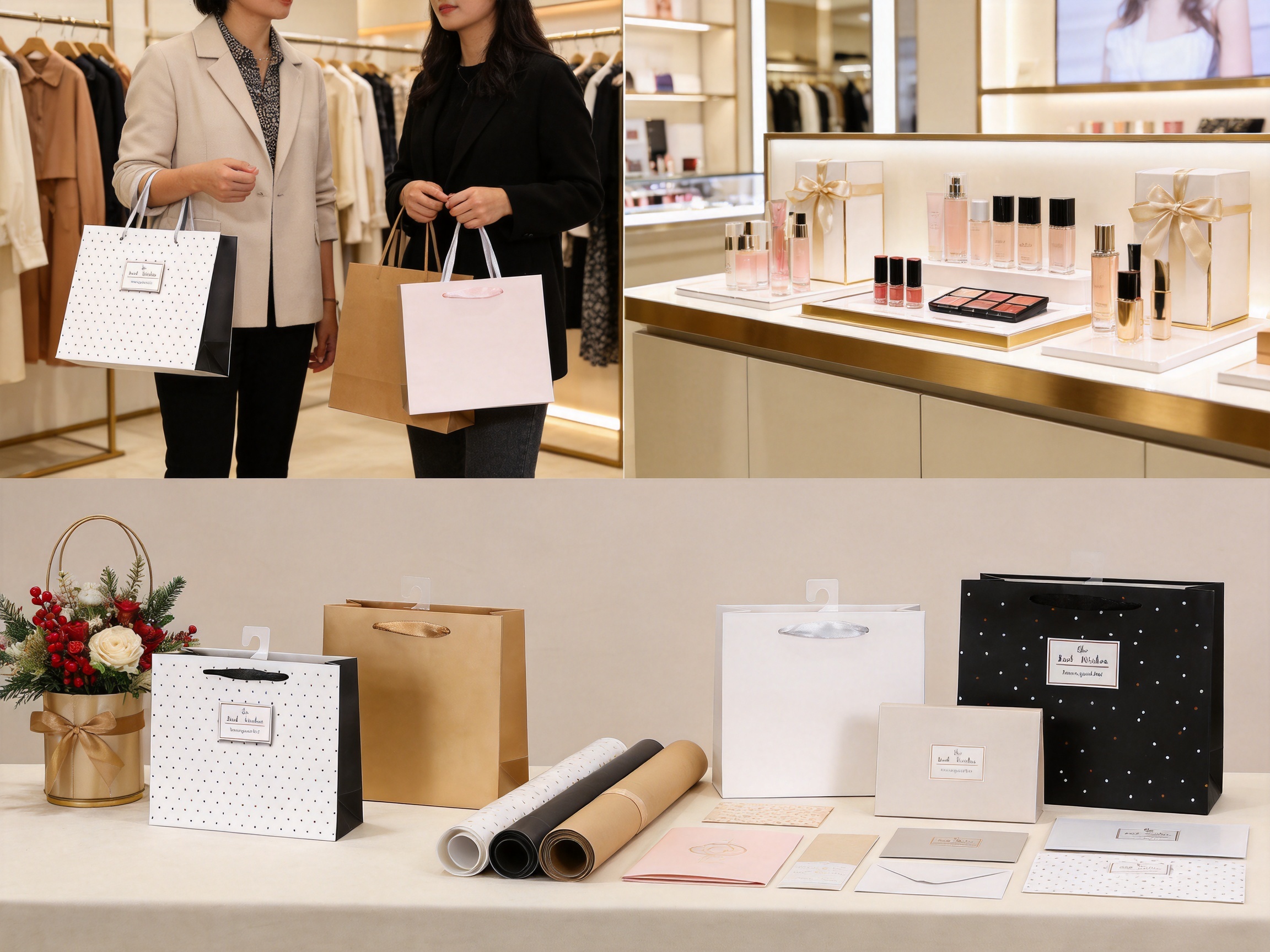
Premium paper gift bags have become an important part of modern retail packaging. They do more than transport products from a store to a customer. A well-designed paper bag contributes to the shopping experience, reinforces brand recognition, protects the packaged goods, and creates a lasting impression after the purchase has been completed. For boutiques, department stores, cosmetics brands, fashion retailers, gift shops, corporate buyers, and event organizers, packaging is now an essential part of product presentation.
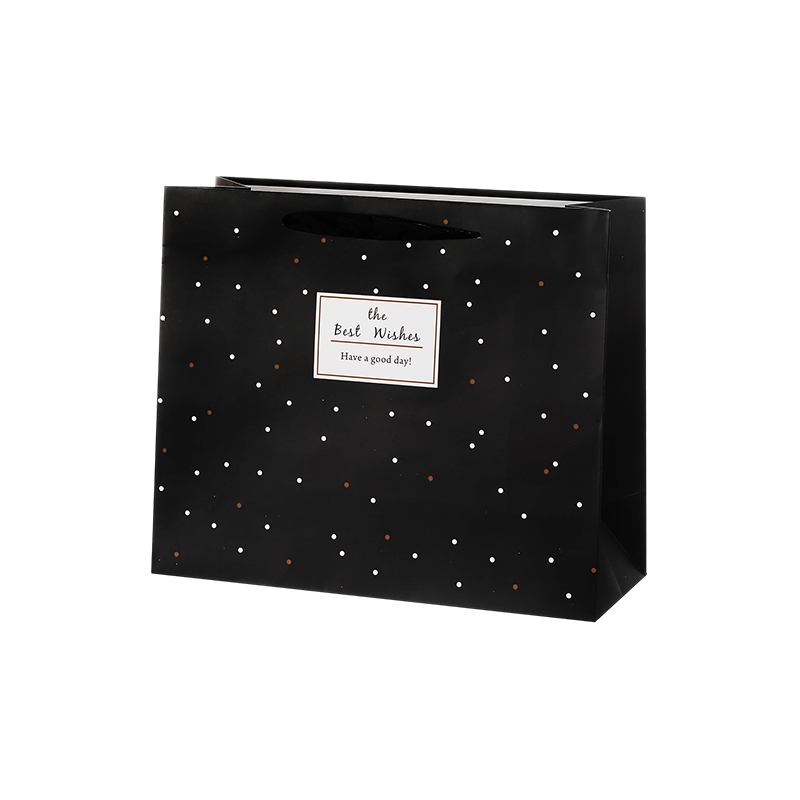
Premium Gift Paper Bags for Retail Shopping and Gift Packaging are developed for businesses that require an attractive appearance without sacrificing practical performance. Manufactured from thick paperboard and supported by reinforced construction, these bags are suitable for apparel, accessories, cosmetics, gift sets, promotional products, and many other retail items. Their combination of structural stability, customizable printing, convenient carrying, and refined visual quality makes them suitable for both everyday shopping and special occasions.
Unlike thin disposable carriers or generic stock bags, these paper gift bags can be adapted to a brand’s specific dimensions, colors, artwork, finishing requirements, and handle preferences. This flexibility enables buyers to create packaging that communicates the character of a business. A minimalist matte bag may support a premium cosmetics line, while a colorful laminated bag may be more appropriate for seasonal campaigns, children’s products, or festival promotions.
The product is manufactured by Yiwu Magic Tree Gift Bag Co., Ltd., a paper packaging supplier with nearly 30 years of industry experience. The company provides integrated services covering design, prepress preparation, printing, lamination, hot stamping, creasing, bag making, and manual finishing. By managing production processes in its own facility, the manufacturer can coordinate quality control, customization, and delivery more efficiently for wholesale and OEM/ODM customers.
This article examines the main advantages of premium custom paper gift bags, the manufacturing processes behind them, their applications across different industries, and the reasons they can provide a stronger packaging solution than ordinary paper carriers or purely decorative alternatives.
Premium Gift Paper Bags for Retail Shopping and Gift Packaging
What Are Premium Paper Gift Bags?
Premium paper gift bags are structured paper packaging products designed to carry and present merchandise in a reliable and visually appealing format. They generally use high-quality white cardboard, coated paper, kraft paper, or comparable paperboard materials. The selection of material depends on the required strength, surface appearance, color, printing method, environmental objectives, and budget.
The construction usually includes a flat bottom, folded side panels, reinforced upper edges, and handles attached to support comfortable carrying. Depending on the product design, the handles may be made from ribbon, twisted paper, cotton, cord, or another suitable material. Reinforcement can be added around the handle attachment points and other high-stress areas to improve durability during normal retail use.
The flat-bottom structure is particularly valuable for retailers. It allows the bag to stand upright while products are being packed, which makes the packing process faster and more organized. Once filled, the stable base helps maintain the bag’s shape and improves the appearance of the package in the customer’s hand, on a retail counter, or in a product display area.
These bags are not limited to traditional gift use. They can function as shopping bags, branded delivery bags, event giveaway bags, corporate gift carriers, product launch packaging, and seasonal promotional packaging. Their visual and structural features allow one bag format to serve multiple commercial purposes.
Key Structural Features
The primary structural features include thick paperboard, reinforced construction, a stable base, carefully folded panels, and secure handle installation. Every feature contributes to the product’s performance. Thick paperboard provides stiffness and resistance to bending. Reinforced construction helps the bag maintain its form. A flat bottom distributes the weight of the contents more evenly. Proper folding creates clean edges and consistent dimensions, while securely attached handles make carrying more comfortable.
The manufacturer can adjust the paper weight and overall dimensions according to the buyer’s requirements. Small bags may be designed for jewelry, cosmetics, cards, or small accessories. Medium sizes can accommodate clothing, books, shoes, gift boxes, and personal care products. Larger formats can be produced for retail purchases, corporate gift sets, promotional materials, or bulky merchandise.
Visual and Finishing Features
The smooth surface of the paper supports a wide range of decorative and protective treatments. Printing may be completed with CMYK colors for detailed images and full-color artwork or with Pantone colors for more precise brand color matching. Buyers may also select matte lamination, gloss lamination, hot foil stamping, spot UV, embossing, and debossing.
These finishing methods allow businesses to create different visual effects without changing the basic structure of the bag. Matte lamination offers a soft and understated appearance, while gloss lamination creates a brighter surface with stronger visual impact. Hot foil stamping can add metallic accents, and spot UV can highlight logos or selected graphic elements. Embossing and debossing provide tactile depth that encourages customers to interact with the packaging.
Advantages Over Standard and Competing Packaging Options
Businesses can choose from many types of retail carriers, including thin plastic bags, low-weight paper bags, fabric totes, rigid boxes, and generic unprinted packaging. Premium paper gift bags provide several advantages because they balance appearance, usability, customization, and production flexibility within one product.
Stronger Presentation Than Ordinary Shopping Bags
Basic shopping bags are often produced primarily for transportation. They may have limited printing, simple handles, low paper weight, and minimal structural support. Although they can be suitable for short-term use, they do not always communicate quality or brand value.
Premium paper gift bags are designed as part of the product presentation. A smooth surface, consistent folds, accurate printing, and refined finishing can transform the bag into an extension of the brand. This is especially important for fashion, cosmetics, jewelry, home décor, specialty food, and luxury gift businesses, where visual details influence customer perception.
The bag can also continue promoting the business after the customer leaves the store. When customers reuse a well-made branded bag, the printed logo and design become visible in public spaces, offices, homes, and social settings. This creates additional exposure without requiring a separate advertising format.
More Structural Stability Than Lightweight Alternatives
Lightweight paper carriers may be economical, but they can lose their shape when filled or carried for extended periods. Weak bottoms, narrow handles, and insufficient paper weight can cause inconvenience and may negatively affect the customer experience.
The reinforced structure of premium gift bags is intended to provide improved load-bearing performance for appropriate retail products. Reinforced ribbon handles offer a comfortable grip, while the flat bottom helps distribute contents and keeps the package upright. These characteristics make the bag more dependable for boutiques, exhibitions, shopping centers, and corporate events where the packaging may be handled repeatedly.
As with all paper packaging, the recommended capacity depends on paper weight, bag dimensions, handle construction, and the type of contents. Buyers can work with the manufacturer to select an appropriate configuration rather than relying on a single standard specification for every application.
Greater Customization Than Stock Packaging
Stock bags are generally limited to a small number of sizes, colors, and designs. They may not accurately reflect a company’s brand identity, and they can force products into packaging that is either too large or too small. Excess space increases material use and reduces presentation quality, while insufficient space can damage the product or make the bag difficult to carry.
Custom production allows businesses to determine the bag’s height, width, gusset, paper weight, handle type, color, artwork, and finishing. This makes it possible to create packaging for specific products and campaigns. A buyer can request a compact bag for a small gift set, a wide bag for folded apparel, or a deeper format for a boxed product.
Customization also supports brand consistency. Corporate colors can be matched with Pantone references, while logos and graphic elements can be reproduced through suitable printing and finishing processes. When a business uses coordinated bags, boxes, greeting cards, and wrapping paper, customers receive a more unified brand experience.
More Suitable for Premium and Sustainable Brand Positioning
Many brands are seeking alternatives to excessive plastic packaging and are communicating stronger environmental values to customers. Paper packaging can support this direction when the material, coatings, inks, and disposal expectations are selected responsibly.
Paper bags made from white cardboard, coated paper, or kraft paper can provide a more natural or environmentally conscious impression than conventional plastic carriers. Eco-friendly grades may be considered according to the customer’s specifications and intended market requirements. However, environmental performance depends on the complete product design, including paper sourcing, laminations, adhesives, inks, transport, reuse, and local recycling infrastructure.
The reusable nature of a sturdy paper bag can also extend its practical life. Customers may reuse it for storage, gifting, shopping, or carrying personal items. A bag that remains attractive and functional after the original purchase has greater value than a package designed for only one brief use.
| Packaging Consideration | Premium Custom Paper Gift Bags | Basic Stock Paper Bags | Thin Plastic Carriers |
|---|---|---|---|
| Brand customization | High; dimensions, colors, artwork, and finishing can be customized | Usually limited to available stock options | Possible, but often less aligned with premium presentation goals |
| Structural appearance | Stable flat bottom and reinforced construction | Varies according to paper weight and design | Flexible and usually lacks a structured form |
| Surface finishing | Matte or gloss lamination, foil, spot UV, embossing, and debossing | Often limited printing and basic finishing | Usually limited to printed graphics |
| Retail presentation | Suitable for premium stores, gifts, events, and product launches | Suitable for routine shopping requirements | Primarily focused on carrying products |
| Reuse potential | Can be reused when properly designed and handled | Depends on construction and paper quality | May have limited perceived reuse value |
| Order flexibility | Suitable for wholesale, OEM, and ODM programs | Generally based on standard specifications | Often dependent on commodity supply formats |
Materials and Paper Selection
Material selection is one of the most important stages in producing a successful paper gift bag. The right paper must support the intended size, weight, printing process, finishing requirements, and brand image. It must also work effectively with folding, gluing, handle attachment, and final inspection.
White Cardboard
White cardboard provides a clean and bright surface for detailed printing. It is suitable for bags that require clear brand colors, product images, fine text, or a polished appearance. Its relatively firm structure can support retail and gift packaging applications where the bag must maintain its shape.
White cardboard is often selected for cosmetics, apparel, corporate gifting, specialty retail, and premium promotional packaging. Its neutral surface also provides a useful foundation for both minimalist designs and highly detailed artwork.
Coated Paper
Coated paper has a treated surface that can support sharp image reproduction and a smooth tactile finish. Depending on the selected coating and additional lamination, it can provide a bright or refined visual effect. It is useful when the bag design includes high-resolution graphics, colorful artwork, or photographic elements.
Coated paper can be combined with matte or gloss lamination to achieve a specific appearance. Matte surfaces generally reduce reflections and create a sophisticated finish, while gloss surfaces make colors appear more vivid and can provide additional surface protection.
Kraft Paper
Kraft paper is often chosen for its natural appearance and association with simple, practical, or environmentally aware packaging. Its brown or bleached surface can support rustic graphics, single-color logos, botanical themes, handmade product branding, and casual retail presentation.
Kraft paper packaging can also be customized with printing and selected finishing techniques. The final appearance depends on the paper shade, ink coverage, artwork, and desired visual contrast. Buyers should confirm how brand colors will appear on natural or unbleached paper before approving mass production.
Paper Weight and Capacity
Paper weight should be selected together with bag size and intended contents. A large bag with heavy products may require a stronger paperboard structure and additional reinforcement, while a small bag for lightweight items may not require the same specification.
Appropriate paper selection helps control costs while preserving performance. Using unnecessarily heavy material may increase shipping weight and material consumption, whereas using paper that is too light may reduce durability and visual quality. A professional manufacturer can review the dimensions, contents, handle design, and expected carrying conditions before recommending a practical specification.

Advanced Manufacturing Process
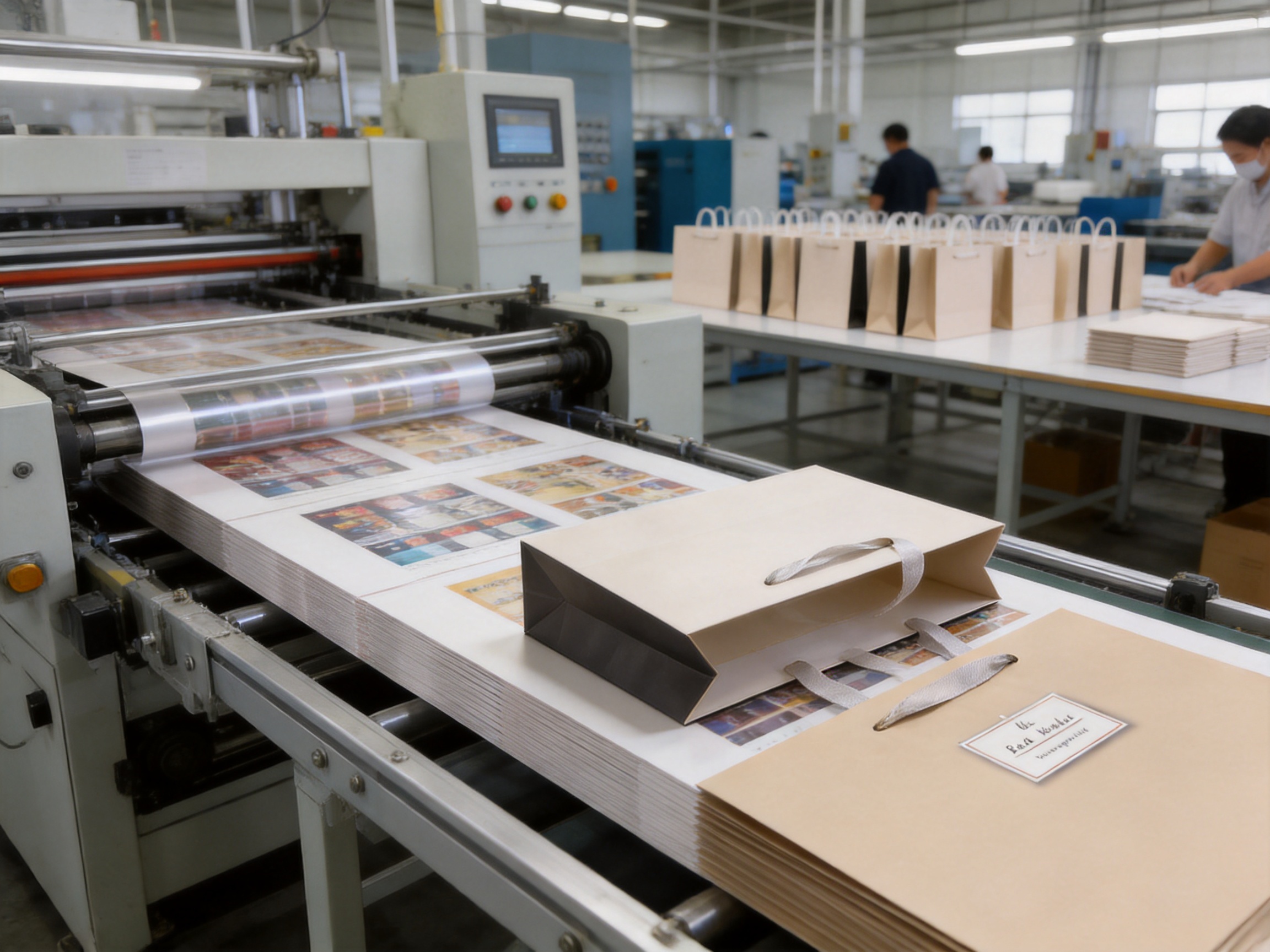
The quality of a finished paper gift bag depends on more than the selected paper. It also depends on how accurately the material is printed, cut, folded, laminated, assembled, and inspected. An integrated manufacturing process allows the supplier to coordinate these stages and reduce inconsistencies between departments or external subcontractors.
1. Design and Prepress Preparation
Production begins with artwork review and structural planning. The manufacturer evaluates the customer’s logo, graphics, text, color references, dimensions, folding lines, handle position, and finishing requirements. The artwork is then prepared for the selected printing process and adapted to the bag’s dieline.
Prepress preparation is important because a paper bag is a three-dimensional product created from a flat printed sheet. Graphic elements must be positioned correctly so that logos, patterns, and text appear in the intended location after folding and gluing. Bleed areas, safe margins, handle placement, and bottom folds must also be considered.
A careful prepress stage helps prevent common problems such as incorrect panel alignment, distorted graphics, incomplete coverage, or text positioned too close to a fold. It also provides an opportunity to review color references and finishing effects before production begins.
2. Material Preparation
After the specification is confirmed, the required paper or paperboard is prepared for printing. Material checks may include paper type, thickness, surface condition, color consistency, and suitability for the selected finishing process. Proper storage and handling are important because paper can respond to humidity and temperature changes.
Consistent material preparation supports stable printing and folding. If paper sheets vary significantly in thickness or moisture content, the final bags may show differences in stiffness, creasing, or shape. Organized material control helps maintain uniformity across a production order.
3. Printing
Printing transfers the customer’s artwork onto the paper surface. CMYK printing is suitable for full-color images and detailed graphics, while Pantone colors can be used when precise brand color matching is required. The choice depends on the artwork, quantity, color expectations, and intended visual effect.
Printing quality affects both the appearance and perceived value of the finished bag. Clear text, consistent color density, clean edges, and accurate registration are important for professional retail packaging. Logos must remain recognizable, and fine graphic details should be reproduced without excessive spreading or loss of definition.
For businesses operating across multiple markets, reliable color control is particularly valuable. Consistent color reproduction helps maintain a unified identity across bags, gift boxes, greeting cards, wrapping paper, and other printed materials.
4. Lamination and Surface Protection
Lamination adds a film layer to the printed surface and can influence both appearance and resistance to handling. Matte lamination creates a low-reflection surface with a soft visual character. Gloss lamination creates a brighter, more reflective appearance and can make printed colors appear more vivid.
The appropriate finish depends on the brand image and intended use. A luxury fashion brand may prefer a matte surface with restrained foil details, while a promotional campaign may use gloss lamination and vibrant full-color printing. Lamination should be selected together with folding and creasing requirements to ensure that the final bag remains neat and durable.
5. Hot Foil Stamping
Hot foil stamping applies a metallic or special-effect foil to selected areas of the design. Gold, silver, copper, and other foil effects can be used to emphasize a logo, product name, border, or decorative element. Foil is especially effective when applied selectively rather than covering the entire bag.
Correct temperature, pressure, timing, and tooling are important for achieving clean foil transfer. The design must also allow sufficient spacing between fine details so that the final result remains legible and visually balanced.
6. Spot UV, Embossing, and Debossing
Spot UV applies a localized glossy effect to selected portions of the surface. It can highlight a logo, pattern, icon, or graphic area against a matte background. This contrast adds visual depth without requiring additional colors.
Embossing raises selected details above the paper surface, while debossing presses them into the material. Both methods create a tactile effect that can make packaging feel more distinctive. These techniques may be used on logos, monograms, borders, symbols, or other brand features.
Because special finishing adds production steps, the artwork and structural specification should be reviewed carefully before manufacturing. The manufacturer’s prepress and production teams can help determine whether the selected details are suitable for the paper type and bag size.
7. Cutting, Creasing, and Folding
After printing and surface treatment, the paper is cut and creased according to the bag’s structural design. Creasing creates controlled fold lines, allowing the paper to form clean side panels, gussets, top edges, and bottom sections. Accurate creasing is essential for a symmetrical and stable finished bag.
Cutting accuracy affects dimensions and the alignment of the bag’s panels. Inconsistent cutting can cause uneven edges, shifted graphics, or difficulties during assembly. Coordinated cutting and creasing help the bag form correctly during the folding and gluing stages.
8. Bag Making and Adhesive Assembly
The prepared paper is folded into the bag shape, and the relevant panels are joined using suitable adhesive methods. The adhesive must provide a secure bond without damaging the printed surface or creating visible defects. The production team must also ensure that the side seam and bottom structure are properly formed.
Bag making requires consistent pressure, alignment, and curing time. If the adhesive is not evenly applied or the panels are misaligned, the bag may not stand correctly or may show visible irregularities. Integrated production capabilities allow the manufacturer to coordinate these details more effectively.
9. Handle Installation and Manual Finishing
Handles are installed after the main bag structure has been formed or at an appropriate stage in the assembly process. Reinforced ribbon handles are commonly used for premium gift bags because they provide a comfortable grip and contribute to the product’s refined appearance.
Manual finishing may include handle tying, reinforcement placement, edge checking, surface cleaning, shape correction, and other detail-oriented tasks. These steps are particularly useful for customized orders with special handle styles or decorative requirements.
10. Quality Inspection and Packing
Finished bags should be checked for dimensions, printing, surface quality, structure, handle attachment, adhesive condition, and overall appearance. Inspection helps identify issues before the goods are packed for shipment.
Quality control is especially important for wholesale buyers because inconsistent packaging can create problems across multiple stores or distribution channels. A reliable production system should aim for consistent color, size, folding, handle position, and finishing from the beginning of the order to the end.
Manufacturing Strengths of an Integrated Supplier
Yiwu Magic Tree Gift Bag Co., Ltd. has operated in the paper packaging field for nearly three decades. The business was founded in 1996 as Fushida Plastic Factory and was rebranded in 2019 as Magic Tree Paper Products Co., Ltd. Its experience includes the development and production of paper bags, gift bags, gift boxes, greeting cards, and patterned wrapping paper.
The company’s manufacturing capabilities cover professional design and prepress, laminating, hot stamping, creasing, printing, bag making, and manual finishing. These in-house capabilities support a more coordinated workflow than a fragmented supply chain in which every stage is assigned to a different vendor.
Control From Raw Materials to Finished Products
Managing the production process from raw materials to finished products gives the manufacturer greater visibility over quality and scheduling. Material decisions can be coordinated with printing and structural requirements. Finishing choices can be reviewed alongside folding and assembly considerations. Problems can be communicated more quickly between teams working within the same production system.
This type of control is valuable for custom orders because customized packaging often requires more coordination than standard stock products. A change to the bag dimensions may affect the dieline, paper consumption, printing layout, creasing position, handle placement, and packing method. Integrated management reduces the risk that one production stage will overlook the impact of a change made in another stage.
Experience With Multiple Paper Products
Experience in related paper products can strengthen the manufacturer’s understanding of packaging design. Gift boxes, greeting cards, wrapping paper, and paper bags share many requirements involving printing, color control, coatings, folding, and finishing. This broader product knowledge can help buyers develop coordinated packaging collections rather than isolated items.
For example, a retailer may require a paper bag, matching gift box, branded greeting card, and patterned wrapping paper for a holiday program. Producing these items through one experienced supplier can improve visual consistency across the complete packaging range.
Support for Wholesale and OEM/ODM Buyers
Wholesale buyers often need consistent production across large quantities, while OEM/ODM buyers may require more extensive design and specification support. A manufacturer with design, prepress, printing, and assembly capabilities can support both types of customers.
OEM services may involve producing bags according to an established buyer design. ODM services may include assistance with structure, materials, visual treatments, and product development. In either case, clear communication about dimensions, contents, artwork, quantities, packaging method, and delivery schedule is essential.
Production Capacity and Delivery Coordination
The company reports an annual output value exceeding 50 million yuan and serves customers in the United States, Canada, Mexico, the United Kingdom, Japan, and China. International experience requires attention to export packaging, production scheduling, documentation, communication, and buyer-specific quality expectations.
Capacity alone does not guarantee performance, but an established production base can help support repeat orders and larger wholesale programs. Buyers should still confirm current lead times, minimum order quantities, sample procedures, shipping arrangements, and inspection standards for each project.
Applications Across Retail and Promotional Markets
Fashion and Apparel Retail
Clothing, shoes, scarves, handbags, and accessories often require packaging that is both attractive and practical. A structured paper bag can accommodate folded garments or boxed items while presenting the retailer’s logo at the point of sale. Larger dimensions and reinforced handles may be selected for coats, footwear, or multi-item purchases.
Fashion brands can use matte lamination, restrained colors, foil stamping, or embossed logos to create a refined image. Seasonal artwork can be introduced without changing the basic bag structure, allowing the same retailer to maintain consistent packaging while adapting to different collections or campaigns.
Cosmetics and Personal Care
Cosmetic products are frequently purchased as gifts, making presentation particularly important. Paper gift bags can carry skincare sets, fragrances, makeup collections, salon products, and wellness packages. Smaller formats can be designed for individual items, while deeper bags can accommodate boxed gift sets.
Gloss lamination can emphasize bright colors and detailed graphics, while matte finishes may support a clean, premium appearance. Spot UV, foil, and embossing can be used to emphasize a brand mark or product line without making the design visually crowded.
Jewelry and Specialty Gifts
Jewelry and specialty gift retailers often require compact packaging with a high-quality appearance. A small paper bag can be used together with a rigid gift box, pouch, greeting card, or wrapping paper. Although the bag may not carry a heavy product, precise dimensions and refined finishing are important to the customer experience.
Metallic foil, dark backgrounds, smooth paper, and tactile embossing are frequently considered for this category. The final specification should reflect the product’s size and value while avoiding unnecessary excess material.
Corporate Gifting
Companies use paper gift bags for employee gifts, client appreciation programs, conferences, exhibitions, product launches, and holiday campaigns. These applications often require logos, corporate colors, event dates, slogans, or campaign artwork.
Custom paper bags can help present corporate gifts in a more organized and professional manner. They can also be coordinated with greeting cards and wrapping paper to create a complete event package. For large programs, buyers may request multiple sizes or designs while maintaining a common visual identity.
Exhibitions and Trade Events
At exhibitions, a bag may carry brochures, samples, catalogs, promotional items, and small products. It must be comfortable to carry and sufficiently durable for visitors who move through a venue for several hours. A clear logo and strong visual design can also help exhibitors remain visible after the event.
Event bags are often produced with high-contrast printing, campaign graphics, or simple brand messages. Buyers should consider the expected contents and the distance attendees may carry the bag when selecting paper weight and handle construction.
Seasonal and Holiday Promotions
Gift bags are particularly useful during Christmas, New Year, Valentine’s Day, weddings, birthdays, anniversaries, and other seasonal occasions. Patterned artwork, festive colors, foil effects, and coordinated wrapping paper can increase the emotional value of the package.
Retailers may use a standard bag structure with different seasonal designs, or they may develop a fully customized format for a limited campaign. Because seasonal projects often operate on fixed dates, early planning is recommended for artwork approval, sampling, production, and delivery.
Design Guidance for Better Results
Match the Bag to the Product
The bag should be sized according to the product or gift set rather than selected only for visual impact. A bag that is too large may look inefficient and allow contents to move excessively. A bag that is too small may create pressure on the side seams or make packing difficult.
Buyers should provide the product’s length, width, height, weight, packaging format, and any internal protection requirements. If the bag will carry multiple products, the complete arrangement should be considered rather than measuring only one item.
Use a Clear Visual Hierarchy
The logo, product name, pattern, and supporting text should be arranged so that the main message is immediately recognizable. Excessive decoration can reduce readability and weaken the impact of premium finishing.
A strong design often uses one primary brand element, one supporting graphic system, and carefully controlled color contrast. Finishing techniques should enhance the design rather than compete with it. For example, a small foil logo may be more effective than extensive foil coverage across every panel.
Consider Both Sides of the Bag
Retail bags are visible from multiple directions. The front panel usually receives the main logo, but the side panels, back panel, and gussets can also contribute to brand recognition. A repeated pattern, short message, website-free social statement, or complementary color may be used to create a complete appearance.
When the bag is intended for corporate or event use, it may be helpful to place the main identity on both broad sides so that it remains visible as the bag moves through a crowd or venue.
Select Handles for Comfort and Image
Handle material affects both carrying comfort and visual character. Ribbon handles are often associated with gift packaging and can provide a refined appearance. Other handle styles may be more appropriate for practical retail shopping bags or natural kraft designs.
The handle length should be evaluated according to whether the bag will be carried by hand, over the wrist, or over the shoulder. Handle attachment points should be positioned symmetrically and reinforced according to the expected load.
Balance Finishing With Budget
Custom finishing adds value, but not every bag requires every available technique. Buyers can prioritize the features most important to the brand. For example, a high-quality paper and accurate logo printing may be sufficient for a clean minimalist bag, while a special event may justify foil, embossing, and spot UV.
A professional supplier can help compare alternative specifications based on quantity, paper type, printing coverage, lamination, handle style, and finishing. The most effective design is not necessarily the one with the greatest number of effects; it is the one that communicates the brand clearly while meeting practical and financial requirements.
Ordering Process for Custom Paper Gift Bags
A successful order usually begins with a detailed product brief. The brief should include the intended use, bag dimensions, product weight, paper preference, artwork, quantity, target market, handle style, finishing requirements, and expected delivery date.
The manufacturer can then evaluate the technical requirements and prepare a quotation or initial recommendation. If the buyer is uncertain about the correct dimensions or paper weight, product samples or structural mock-ups may be useful before final approval.
Artwork should be supplied in an appropriate format and include confirmed color references where necessary. Buyers should review the proof carefully, especially the logo placement, text, folds, handle holes, bottom structure, and special finishing areas.
After approval, the production team prepares materials and begins manufacturing according to the confirmed specification. Quality checks should be performed during and after production. For large or highly customized orders, buyers may also arrange pre-shipment inspection based on agreed quality standards.
Packaging for shipment should protect the finished bags from moisture, crushing, contamination, and deformation. The shipping method and carton configuration should be considered together with the order quantity and destination.
Quality Considerations for Buyers
Before placing a large order, buyers should confirm the following points:
Paper type, paper weight, and surface finish should be clearly identified. The selected material should be appropriate for the product size and expected load.
Bag dimensions should be specified in a consistent format, including width, height, and gusset depth where applicable.
Printing requirements should identify whether the design uses CMYK, Pantone colors, or a combination of printing methods.
Lamination, foil stamping, spot UV, embossing, and debossing areas should be shown clearly in the artwork or finishing proof.
Handle type, color, length, attachment method, and reinforcement requirements should be confirmed before production.
Acceptable tolerances for dimensions, color variation, printing position, adhesive marks, and surface imperfections should be discussed for commercial orders.
Packaging and shipping requirements should be reviewed in advance, particularly for international deliveries or seasonal campaigns.
Buyers should also confirm minimum order quantities, sample charges, production lead time, payment arrangements, and replacement or claim procedures. Clear expectations reduce misunderstandings and support a more efficient supplier relationship.
Q&A: Frequently Asked Questions
Q1: What products can these paper gift bags carry?
They can be designed for apparel, cosmetics, accessories, gift sets, books, specialty products, promotional merchandise, corporate gifts, and many other retail items. The correct bag size and paper specification depend on the dimensions and weight of the contents.
Q2: Can the bags be customized with a company logo?
Yes. Buyers can provide logo artwork and request custom printing. CMYK printing is suitable for detailed or full-color artwork, while Pantone colors can be considered when a specific brand color must be matched more precisely.
Q3: Which finishing options are available?
Available options include matte lamination, gloss lamination, hot foil stamping, spot UV, embossing, and debossing. The appropriate combination depends on the paper type, artwork, desired appearance, and budget.
Q4: Are different sizes available?
Yes. The bags can be produced in multiple sizes and capacities, from small formats for compact gifts to larger formats for apparel, retail purchases, and gift sets. Custom dimensions can be developed according to the customer’s products.
Q5: Are the handles strong enough for retail shopping?
Reinforced ribbon handles are designed to provide a comfortable grip and improved load-bearing performance for suitable retail applications. The final capacity depends on the paper weight, bag dimensions, handle attachment, reinforcement, and contents. Buyers should provide accurate product information so the specification can be selected appropriately.
Q6: Can the bags be made with eco-friendly paper grades?
Eco-friendly paper packaging options can be considered according to the buyer’s requirements. Environmental performance should be evaluated across material selection, coatings, inks, adhesives, reuse, recycling, and local disposal systems. Buyers should confirm the specific paper grade and any required documentation before production.
Q7: Can the bags be coordinated with other packaging products?
Yes. The manufacturer also specializes in gift boxes, greeting cards, and patterned wrapping paper. These products can be developed with coordinated colors, logos, patterns, and finishing to create a consistent packaging collection.
Q8: Does the supplier support OEM and ODM orders?
The company serves wholesalers, retailers, packaging distributors, and OEM/ODM buyers. OEM projects can follow the buyer’s established artwork and specifications, while ODM projects may involve support with product structure, materials, finishing, and design development.
Q9: What information should be provided for a quotation?
Useful information includes the bag size, quantity, paper type or preferred material, printing colors, artwork, handle style, finishing requirements, intended contents, destination, and target delivery date. Providing complete details allows the manufacturer to prepare a more accurate recommendation.
Q10: What makes these bags different from generic paper shopping bags?
They are designed with a stronger focus on presentation, structural stability, customization, and finishing. Thick paperboard, reinforced construction, flat-bottom support, custom printing, and decorative options make them suitable for premium retail, gift packaging, corporate programs, exhibitions, and seasonal campaigns.
Conclusion
Premium custom paper gift bags offer businesses a practical way to combine product protection, carrying convenience, brand presentation, and promotional value. Their thick paperboard construction, reinforced handles, flat-bottom structure, and flexible sizing make them suitable for a broad range of retail and gift applications. At the same time, printing and finishing options such as Pantone color matching, CMYK artwork, lamination, foil stamping, spot UV, embossing, and debossing allow each buyer to develop packaging that reflects a distinct brand identity.
The main advantage over ordinary stock carriers is the ability to coordinate structural performance and visual design in one product. Instead of treating the shopping bag as a disposable afterthought, businesses can use it as a visible part of the customer experience and a reusable brand communication tool.
Yiwu Magic Tree Gift Bag Co., Ltd. supports this product category through nearly 30 years of paper packaging experience and an integrated manufacturing process. Its capabilities include design, prepress, printing, lamination, hot stamping, creasing, bag making, and manual finishing. This production structure supports custom projects for retailers, wholesalers, packaging distributors, corporate buyers, and OEM/ODM customers in domestic and international markets.
For buyers seeking reliable custom packaging, the most important steps are to match the bag specification to the product, approve the artwork carefully, select suitable paper and finishing, and establish clear quality expectations before mass production. With the right design and manufacturing partner, premium paper gift bags can improve retail presentation, strengthen brand recognition, and add value to every purchase.
References
1. Yiwu Magic Tree Gift Bag Co., Ltd. Company Information and Product Materials, including manufacturing capabilities, paper packaging categories, and international market service information.
2. Paperboard Packaging Design Principles, industry guidance on paper weight, structural stability, folding, creasing, and packaging performance.
3. Fundamentals of Commercial Printing, reference material concerning CMYK printing, Pantone color systems, prepress preparation, and print quality control.
4. Decorative Finishing Techniques for Paper Packaging, reference material concerning lamination, hot foil stamping, spot UV, embossing, and debossing.
5. Sustainable Paper Packaging Considerations, reference material concerning paper grades, reuse, recycling, coatings, inks, adhesives, and life-cycle considerations.
6. Retail Packaging and Brand Presentation Studies, reference material concerning packaging aesthetics, customer experience, brand recognition, and promotional visibility.
7. Packaging Quality Control Guidelines, reference material concerning dimensional inspection, color consistency, handle attachment, adhesive quality, packing, and shipment preparation.