中文简体
 русский
 Français
 Español
 Deutsch
 عربى

In an age when many greetings are sent through screens, a paper card still offers something digital messages cannot fully reproduce: a physical expression of care. A handwritten card can be held, saved, displayed, placed inside a gift, or revisited years later. For weddings, engagement parties, anniversary celebrations, family gatherings, and other meaningful events, the right card helps turn a simple message into a lasting keepsake.
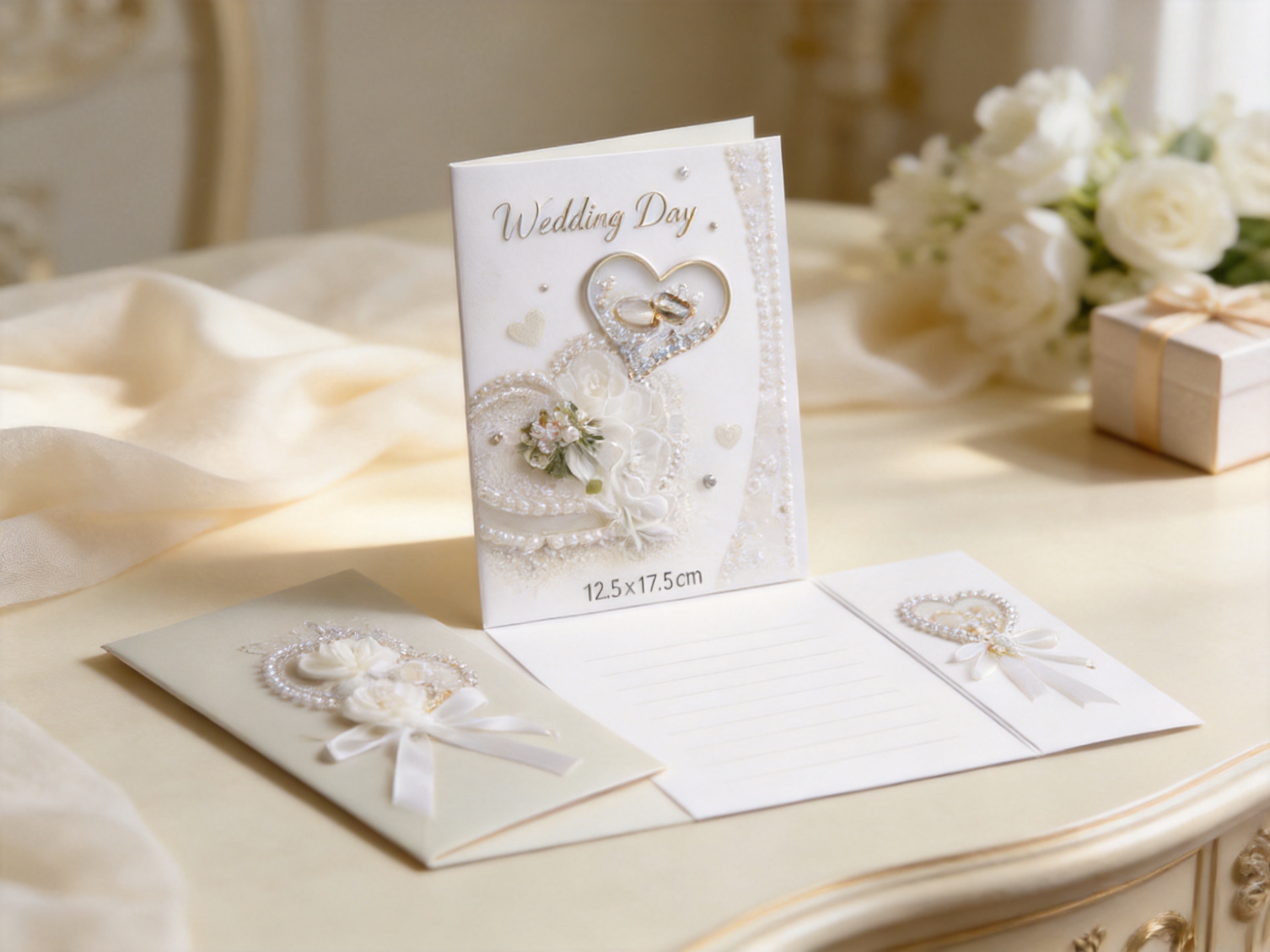
The Wedding Style Merry Gift Paper Greeting Card is designed for people and businesses that value this personal quality. It provides a clean writing surface, a comfortable 12 x 17 cm format, a coordinating 12.5 x 17.5 cm envelope, and a decorative 3D bead foil treatment. Rather than overwhelming the recipient with excessive ornamentation, the card combines a celebratory wedding-oriented appearance with enough open space for a personal note.
This balance makes the card suitable for individual gift-givers, wedding planners, event organizers, retailers, stationery suppliers, gift shops, and brands that want to add a more thoughtful element to their packaging. It can be used as a wedding wish card, a small party note, a thank-you card, or an insert placed inside a gift box or paper bag.
For wholesale buyers, product quality depends on more than the visible design. Paper selection, printing control, foil treatment, creasing accuracy, manual finishing, packaging, and delivery consistency all influence how the finished card feels in the customer’s hands. The manufacturer behind this product combines these capabilities through an integrated production process, allowing buyers to source greeting cards and other paper packaging products from an experienced factory rather than coordinating multiple suppliers.

Wedding Style Merry Gift Paper Greeting Card
What Makes This Greeting Card Different?
The central strength of this greeting card is its practical simplicity. Many decorative cards are visually attractive but provide very little usable writing space. Others offer a large blank area but look too plain for a wedding or celebration. This product is positioned between those two extremes. It has a festive presentation while maintaining a clear area for a short handwritten message.
The 12 x 17 cm card size is large enough for several lines of writing without becoming difficult to store or place inside a gift. It can accommodate a short blessing, a congratulatory note, a thank-you message, or a personal sentence written by a guest. The format also works well as an insert for a gift box, welcome package, wedding favor, or retail packaging set.
The corresponding 12.5 x 17.5 cm envelope gives the card a neat and complete presentation. An envelope helps protect the card during handling and allows the sender to address the recipient directly. For retail stores, the inclusion of a matching envelope means the product can be displayed and sold as a ready-to-use stationery item rather than as an unfinished card component.
The 3D bead foil treatment adds a raised, reflective, and tactile element to the design. Foil details can catch light on a retail display, while the three-dimensional effect gives the surface more depth than standard flat printing. This is especially useful for wedding-related products, where a refined decorative finish supports the feeling of importance and celebration.
At the same time, the treatment is not the only feature that creates value. The card is made for normal writing, and smooth paper allows common pens to move across the surface comfortably. That matters because a beautiful card can become inconvenient if ink skips, spreads, or fails to dry properly. A smooth writing experience encourages users to complete the card and makes the final message look more polished.
A Useful Format for Short Personal Messages
The card is intentionally sized for a short note rather than a long letter. This makes it suitable for modern gifting situations in which the sender wants to add meaning without preparing a full page of correspondence. A few lines can express congratulations, appreciation, encouragement, or good wishes in a direct and sincere way.
For wedding guests, the card can carry a blessing for the couple. For a retailer, it can become a branded or coordinated insert placed inside a customer’s purchase. For a gift company, it can complete a seasonal packaging set. For a family member, it can accompany a box of chocolates, a small keepsake, or another present.
This flexibility gives the product a broader use range than a card created only for one formal occasion. Although its main visual direction is wedding style, it can also support engagement parties, anniversaries, bridal showers, birthdays, holiday gift exchanges, thank-you packages, and small celebrations.
Decorative Appeal Without Losing Function
Some competing greeting cards focus almost entirely on surface decoration. They may include heavy embellishment, multiple layers, bulky attachments, or complex structures. These features can increase visual impact, but they may also raise shipping volume, complicate storage, and reduce usable writing space.
The Wedding Style Merry Gift Paper Greeting Card takes a more practical approach. Its decorative treatment enhances the front of the card, while the interior remains suitable for handwriting. This combination gives buyers a product that looks special on a display shelf but remains easy for the end user to handle, write on, package, and store.
The card’s relatively compact format also supports efficient merchandising. Retailers can place it in stationery displays, gift sections, wedding collections, or seasonal presentation areas. Because the envelope is slightly larger than the card, the pair can be packaged as a complete set while retaining a compact footprint.
Product Specifications at a Glance
The following specifications provide a concise overview of the standard product configuration.
| Item | Specification | Practical Benefit |
|---|---|---|
| Product type | Paper greeting card | Suitable for handwritten wishes, gift inserts, and celebration notes |
| Primary use | Wedding and small celebration messages | Supports weddings, parties, anniversaries, and thank-you occasions |
| Card size | 12 x 17 cm | Provides room for a short message while remaining easy to handle |
| Envelope size | 12.5 x 17.5 cm | Protects the card and creates a complete ready-to-use set |
| Surface treatment | 3D bead foil | Adds reflective detail, texture, and a more premium appearance |
| Writing compatibility | Suitable for normal pens | Allows convenient handwritten personalization |
| Typical packaging use | Gift boxes, gift bags, and product inserts | Helps brands make shipped or presented products feel more personal |
Advantages Over Standard Greeting Cards
When buyers compare greeting cards, they often look beyond the printed message. They consider how the card feels, how it looks under store lighting, whether it can be written on easily, whether it includes an envelope, and whether the product is reliable enough for repeat purchasing. This product addresses each of these practical points.
1. A More Tangible Customer Experience
A handwritten card creates a physical touchpoint between the sender and the recipient. This is valuable for individuals, but it is also increasingly important for brands. A business that adds a thoughtful note to a gift order can create a warmer unboxing experience. A wedding supplier can include cards that help guests participate in the celebration. A retailer can use them to make a purchase feel more complete.
Compared with a digital message, a paper card has a visible and lasting presence. It can be placed on a table, displayed beside flowers, kept in a memory box, or stored with wedding photographs. That lasting quality gives the product emotional value beyond its material cost.
2. A Refined Finish for Celebratory Events
The 3D bead foil treatment helps the card stand apart from basic flat-printed stationery. The raised decorative effect can communicate celebration, care, and quality before the recipient reads the message. It is particularly appropriate for wedding-related environments, where invitation suites, table details, favors, and gift packaging often use coordinated decorative finishes.
For retail buyers, surface treatment also contributes to shelf appeal. A card with texture and reflective detail can attract attention more effectively than an entirely plain product. For wholesale customers, this means the card can occupy a premium or mid-premium product category without relying on complicated construction.
3. Practical Writing Performance
Good greeting card design must consider the user’s writing experience. Smooth paper allows common pens to glide across the surface and helps handwritten text look clear. This product is intended for normal pens, making it practical for wedding guests, family members, employees, and customers who may not have special stationery tools available.
The writing area is also appropriate for the product’s purpose. Users can write a short blessing, a few sentences of congratulations, or a personal thank-you message. The card does not require a long letter to look complete, which reduces pressure on the sender and makes it convenient for large events where many guests may want to add a note.
4. A Coordinated Envelope
Purchasing a card without an envelope can create an unnecessary inconvenience. The buyer must find a suitable envelope separately, and the result may not fit the card or match its appearance. By providing an envelope designed for the card’s dimensions, this product offers a more organized and professional presentation.
The envelope also helps protect the card during transportation and storage. This is important for wholesale distribution, where products may move through several stages before reaching a consumer. A complete card-and-envelope set is easier to display, package, and sell than loose cards that require additional preparation.
5. Multiple Uses Beyond Weddings
Although the product is styled for weddings, its use is not restricted to one event type. The simple message format can support engagement celebrations, anniversary gifts, bridal showers, birthday packages, holiday presents, corporate appreciation gifts, and customer thank-you campaigns.
This versatility can help retailers reduce the risk associated with narrow seasonal inventory. A wedding-oriented design may remain relevant throughout the year because weddings and personal celebrations take place in every season. Businesses can also position the card as a general celebration product when a customer wants a small, elegant message insert.
How the Card Supports Gift Packaging Programs
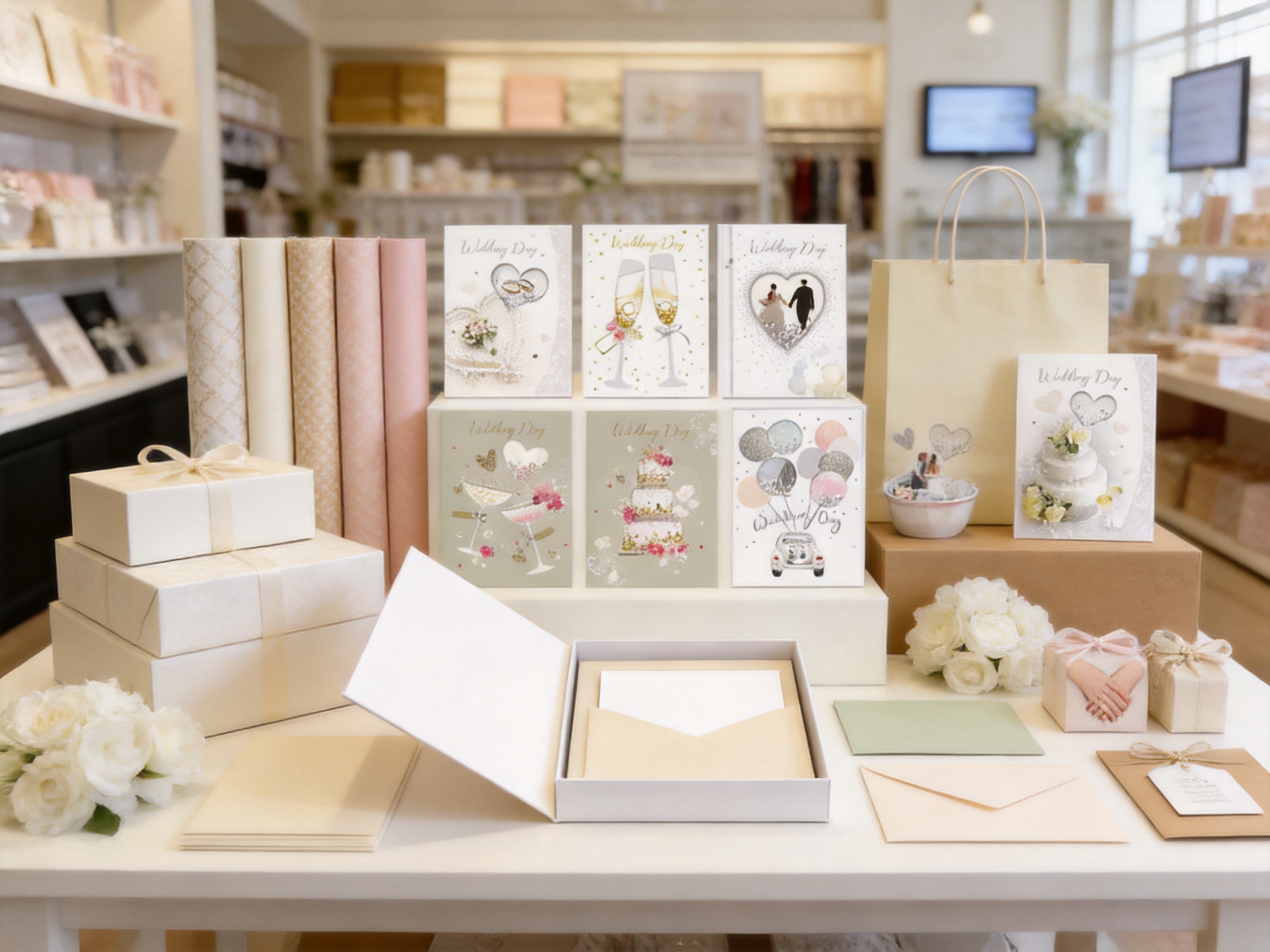
Greeting cards are often purchased as independent stationery products, but they can also play an important role in a broader packaging system. Gift bags, gift boxes, wrapping paper, and greeting cards work together to create a consistent presentation. A card provides the personal message that paper packaging alone cannot deliver.
For a gift shop, the card can be displayed near wedding gift bags and patterned wrapping paper. Customers can select a complete presentation from one area rather than searching through separate departments. For an online retailer, the card can be offered as an optional add-on during checkout. For a packaging supplier, it can be included in a coordinated collection aimed at event planners, florists, bakeries, jewelry stores, or wedding favor businesses.
Businesses that sell premium products can use a greeting card to reinforce the emotional meaning of the purchase. A jewelry retailer may include it with an engagement gift. A hotel or event venue may use it in a wedding welcome package. A wedding planner may place it inside a guest gift box. A bakery may add it to an anniversary or wedding cake delivery.
Because the card is compact, it can be incorporated into existing fulfillment processes without requiring a major change to packing stations. Staff can write a message, insert the card into the envelope, or place it directly inside a larger gift package. This operational simplicity gives it an advantage over bulky decorative accessories that require extra storage or special handling.
Suitable for Retail and Wholesale Presentation
Retail buyers generally need products that are easy to explain and simple to display. A card with a clear purpose, a recognizable format, and a decorative finish can fit naturally into stationery and gift merchandising. The size is large enough to show the design but compact enough to place in racks, bins, shelves, or counter displays.
Wholesale buyers also consider carton efficiency, product consistency, and replenishment. Standardized dimensions help simplify inventory planning. When a product is manufactured through a structured factory process, repeat orders are easier to manage because the supplier can maintain production records, material specifications, and finishing procedures.
For brands that sell customized packaging, the product may also serve as a reference for future development. The standard card demonstrates how paper selection, printing, foil application, and finishing can be combined. Buyers can then discuss adjustments to artwork, color, dimensions, material, or packaging according to their market needs and order requirements.
Manufacturing Capabilities Behind the Product
The quality of a greeting card is the result of several linked production stages. A strong design can lose its value if the paper is poorly selected, the print is misaligned, the foil is uneven, or the folds are inaccurate. For this reason, the manufacturing system behind the product is an important part of its competitive advantage.
Magic Tree has nearly three decades of manufacturing experience in paper packaging and related products. Its business began in 1996 as Fushida Plastic Factory and was rebranded in 2019 as Magic Tree Paper Products Co., Ltd. The company’s experience has developed across different materials, production methods, and packaging categories, including paper bags, gift bags, gift boxes, greeting cards, and patterned wrapping paper.
This background supports a broader understanding of packaging than a single-product workshop may possess. Greeting cards often need to coordinate with bags, boxes, wrapping paper, and other paper items. A manufacturer with experience across these categories can better understand the requirements of a complete packaging program.
Professional Design and Prepress
The manufacturing process begins before paper reaches the production line. Artwork must be prepared for the chosen material, printing method, dimensions, folding structure, and surface treatment. Prepress work includes checking files, preparing color separations, confirming cutting and creasing lines, and ensuring that decorative elements are placed accurately.
Professional prepress reduces the risk of avoidable production problems. Text should remain legible, important design features should not fall into fold lines, and artwork should allow sufficient space for foil or other finishing operations. Proper preparation is particularly important for small products, where a few millimeters of error can affect the visual balance.
For customized orders, prepress coordination also helps buyers evaluate how their design will translate from a digital file to a physical card. Colors, foil areas, line thickness, and text size may need to be considered differently when printed on paper. A capable prepress team can identify such issues before mass production begins.
Printing and Color Management
Printing determines the base appearance of the card and creates the visual foundation for the finishing process. Consistent color management helps ensure that repeated production runs remain close to the approved sample. This is important for retailers and brands that need products to match existing packaging, marketing materials, or seasonal collections.
Printing quality involves more than color strength. Registration, edge definition, surface coverage, and ink behavior all influence the final result. Accurate registration is especially important when printed graphics are combined with foil, creasing, or die-cut elements. If decorative components do not align properly, the card may look less refined even when the paper and artwork are high quality.
Laminating and Surface Protection
Laminating can be used to provide additional protection or create a particular surface feel, depending on the design requirements. It may help improve resistance to scuffing during handling and transportation while also influencing the visual character of the card.
Not every greeting card requires the same surface treatment. The appropriate approach depends on the paper, artwork, intended tactile effect, and finishing sequence. An experienced manufacturer can select a suitable combination rather than applying the same process to every product. This flexibility is valuable for buyers who need different card collections for different price points or markets.
Hot Stamping and 3D Bead Foil
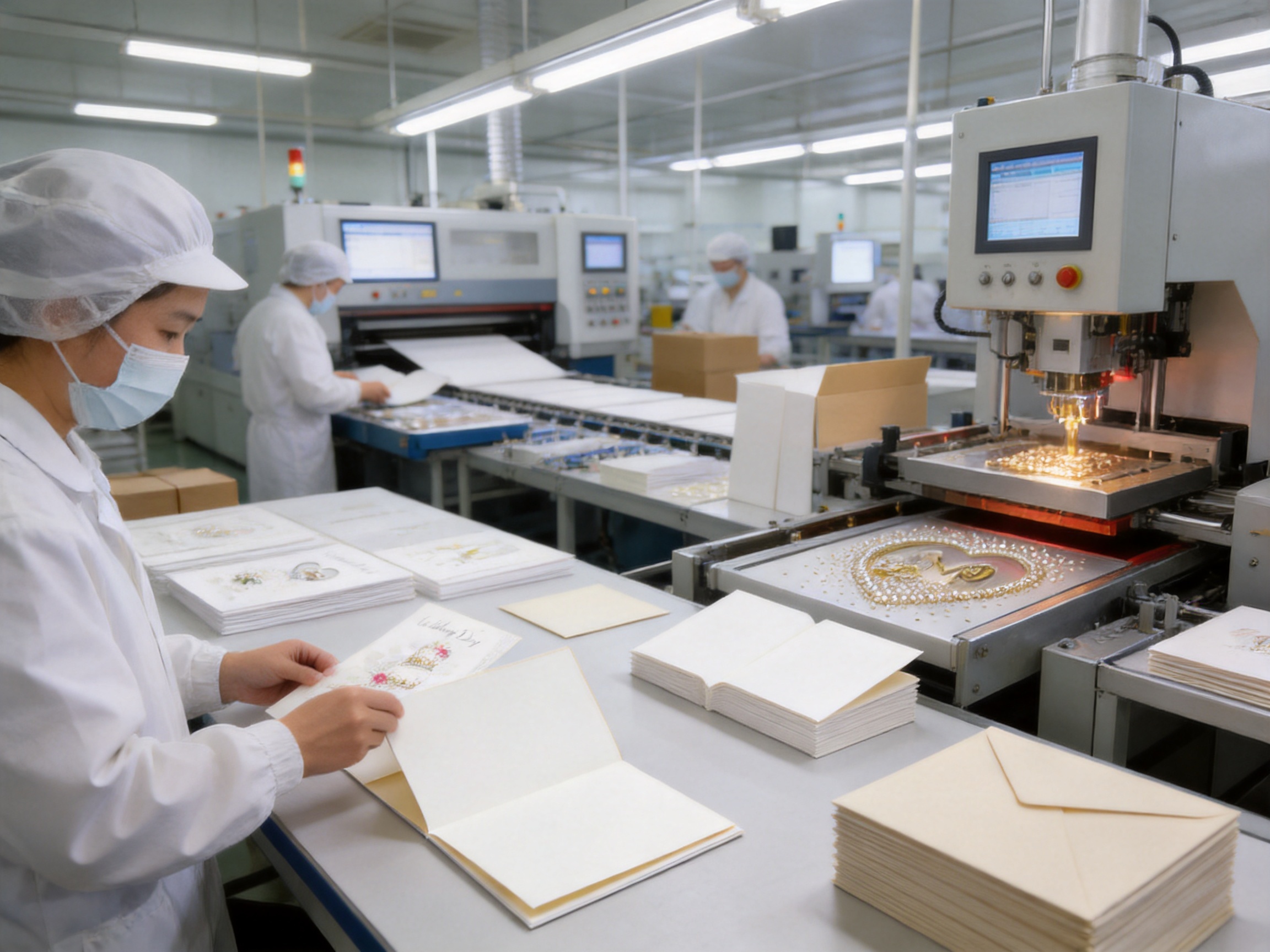
Hot stamping and foil processes add reflective details to paper products. In the case of a 3D bead foil treatment, the objective is not only to create shine but also to build a raised, tactile effect. The result can make selected details more prominent and give the card a richer surface experience.
Foil finishing requires careful control of temperature, pressure, registration, and material compatibility. Too much pressure may affect the paper or reduce the intended texture, while insufficient pressure can produce incomplete transfer. Accurate setup helps maintain clean edges and consistent decorative detail across production batches.
For wholesale buyers, process control is essential because customers expect individual units in the same order to look consistent. A reliable finishing department can reduce variation and help preserve the appearance approved during sampling.
Creasing and Folding
Creasing prepares the paper for clean folding and helps reduce the risk of cracking or uneven bends. This is especially relevant when the card uses coated paper, printed coverage, or surface decoration. A well-formed crease supports a more professional appearance and makes the card easier for the user to open and close.
Accurate folding also helps the card sit properly inside the envelope. If the folded dimensions are inconsistent, cards may become difficult to insert or may create an untidy appearance. Controlled creasing and folding therefore contribute to both visual quality and operational convenience.
Bag Making and Manual Finishing
Although this specific product is a greeting card, the manufacturer’s broader bag-making and manual-finishing capabilities are relevant to buyers seeking complete paper packaging solutions. Manual finishing can be used for tasks that require careful inspection, special assembly, or attention to decorative details.
Human inspection and finishing remain valuable when products include multiple materials, delicate foil, special folds, or packaging components. Skilled workers can identify issues that automated processes may not detect easily, such as small surface marks, loose elements, irregular folds, or mismatched sets.
The combination of automated production stages and manual quality attention allows the factory to handle both repeatable volume and products that require a more careful final review.
Integrated Factory Production and Quality Consistency
One of the company’s important strengths is its control over the production process. The factory manages stages from raw materials to finished products, including design and prepress, printing, finishing, and manual work. An integrated structure can reduce the communication gaps that sometimes occur when a buyer uses separate suppliers for printing, foil treatment, folding, and final assembly.
When multiple suppliers are involved, responsibility for a defect may become unclear. One supplier may attribute a problem to the previous process, while another may have different standards for color, dimensions, or finishing. An integrated factory can make it easier to identify the source of a problem and coordinate corrective action.
Factory control also supports more consistent scheduling. Production stages can be planned together, which may help reduce delays caused by transferring semi-finished goods between independent facilities. For wholesale customers, reliable scheduling is important because greeting cards may need to arrive before a wedding season, retail launch, holiday campaign, or promotional event.
Magic Tree reports an annual output value exceeding 50 million yuan, reflecting substantial production activity and market experience. The company serves customers in the United States, Canada, Mexico, the United Kingdom, Japan, and China. This international customer base indicates experience with different packaging expectations, communication requirements, and market applications.
Material Experience
The company specializes in white cardboard, coated paper, and kraft paper products. These materials support different visual and functional objectives. White cardboard can provide a clean, bright surface for detailed printing. Coated paper may support smooth graphics and decorative treatments. Kraft paper offers a natural appearance and is often selected for packaging programs that emphasize a paper-based or eco-conscious aesthetic.
Material selection should always be matched to the product’s purpose. A greeting card intended for refined wedding stationery may require a different surface and weight from a kraft gift bag or a shipping-oriented packaging insert. A manufacturer with experience across several paper types can help buyers evaluate these differences more effectively.
Eco-Conscious Packaging Direction
Paper packaging is increasingly selected by brands seeking alternatives to certain plastic-based presentation materials. The environmental profile of a finished product depends on many factors, including raw materials, coatings, inks, adhesives, transportation, product lifespan, and disposal conditions. It is therefore important to evaluate sustainability claims carefully and according to the specific product configuration.
Magic Tree positions its paper packaging products as high-quality, eco-friendly, and customizable solutions. For buyers, this means the company can be considered when developing paper-based packaging collections that align with a brand’s environmental objectives. Specific material grades, finishes, and recyclability requirements should be confirmed during product development, especially when a project has formal sustainability standards.
The Wedding Style Merry Gift Paper Greeting Card can contribute to a more paper-centered gifting experience. It may be used alongside paper bags, gift boxes, and patterned wrapping paper to create a coherent presentation based on paper materials. Its small size also makes it a relatively efficient addition to a larger package.
Customization Opportunities for Business Buyers
The standard product provides a practical starting point, but wholesale buyers may require adjustments for their market. Customization can involve artwork, colors, wording, logo placement, dimensions, paper type, surface treatment, packaging method, or the combination of the card with other products.
A wedding planner may want a card that matches a particular event color palette. A gift retailer may request a seasonal version. A hotel or venue may need a card that carries a welcome message. A brand may want a private-label card for customer orders. These applications can require different design and production decisions even when the basic card structure remains similar.
Artwork and Branding
Custom artwork allows buyers to connect the card with an existing visual identity. A logo, short brand message, or coordinated pattern can turn a general greeting card into a packaging asset. However, branding should be used with restraint. The purpose of the card is to support a personal message, so the brand element should enhance the experience rather than dominate it.
Designers should consider the writing area, envelope presentation, foil placement, and how the card will appear when placed inside a gift. A small brand mark may be appropriate on the back or inside cover, while the front can remain focused on the celebration theme.
Material and Finish Selection
Buyers may evaluate different paper surfaces, weights, and treatments according to their budget and desired positioning. A smooth surface is useful for handwriting, while a more textured surface may create a craft-oriented feel. Foil, embossing, lamination, and other treatments can be combined selectively to manage cost and visual impact.
For large orders, material decisions should be confirmed through physical samples. Digital images cannot fully communicate paper thickness, stiffness, texture, reflectivity, or writing performance. Sampling helps buyers make a more informed decision before approving mass production.
Packaging and Shipment Preparation
Individual cards may be packed in sets, grouped with envelopes, placed in retail sleeves, or combined with other paper products. The appropriate arrangement depends on the sales channel. A stationery shop may prefer small retail-ready packs, while a packaging distributor may require bulk cartons for later sorting and assembly.
Packaging should protect the foil surface and prevent bending, scuffing, or moisture exposure during transportation. Wholesale buyers should discuss carton configuration, inner packing, labeling, and inspection procedures with the supplier before production begins.
Applications Across Different Markets
The card’s straightforward design supports several business and consumer applications.
Wedding and Event Retail
Wedding boutiques, stationery stores, florist shops, and event suppliers can offer the card as part of a celebration collection. It can be sold individually, in multipacks, or alongside wrapping paper and gift bags. Its decorative finish suits formal events, while its writing space keeps it practical for guests.
Gift Shops and Lifestyle Stores
Gift shops can position the product as a general celebration card rather than a single-use wedding item. Customers may choose it for engagements, anniversaries, birthdays, or meaningful thank-you gifts. Displaying it beside small gifts can encourage customers to add a card to their purchase.
Online Gift Fulfillment
Online gift businesses frequently need a way to include personal messages with shipped products. The card can be offered as a message option during checkout or used by fulfillment teams when preparing gift orders. Its envelope provides an organized way to separate the handwritten message from the product while preserving the presentation.
Corporate and Hospitality Gifting
Hotels, restaurants, event venues, and corporate gifting companies can use the card for guest welcome packages, client appreciation, employee recognition, and celebration orders. A small handwritten note can make a standardized package feel more individualized.
Packaging Sets and Seasonal Collections
Brands that sell gift bags, boxes, and wrapping paper may add the card to a coordinated collection. The card can serve as the message component in a broader paper packaging range. Seasonal artwork can be introduced for wedding periods, holidays, anniversaries, or other retail campaigns.
Ordering Considerations for Wholesale Buyers
Before placing an order, buyers should clearly define the intended use, sales channel, quantity, design requirements, and delivery schedule. A detailed product brief helps the manufacturer recommend a suitable production approach and reduces misunderstandings during sampling.
Important questions include whether the card will be sold individually or in sets, whether the envelope should be included in every unit, whether the product will be handwritten by staff or by end customers, and whether the card needs to match other packaging items. Buyers should also confirm paper specifications, foil treatment, fold position, packing method, and quality inspection standards.
Sampling is particularly important for greeting cards because the physical experience is central to the product. Buyers should review the card’s stiffness, surface smoothness, writing performance, print clarity, foil registration, crease quality, envelope fit, and overall appearance. If the product will be used with other gift packaging, it should be tested as part of the complete set.
Production schedules should account for artwork approval, sampling, material preparation, printing, finishing, inspection, packing, and transportation. Custom products may require more time than standard stock items. Early communication gives the factory a better opportunity to coordinate raw materials and production capacity.
Why Manufacturing Experience Matters
Greeting cards may appear simple because they are small, but they combine design, material, printing, finishing, and packaging requirements in a limited space. Manufacturing experience helps a supplier understand how these elements interact.
A company with nearly 30 years of related production experience can draw on established knowledge of paper behavior, printing preparation, finishing methods, and packaging workflows. Experience does not eliminate the need for sampling or quality control, but it can improve the supplier’s ability to anticipate problems and propose practical solutions.
The company’s broader product range is another advantage. Since it produces paper bags, gift bags, gift boxes, greeting cards, and patterned wrapping paper, buyers can potentially coordinate multiple packaging categories through one manufacturing relationship. This can simplify communication for brands that want a consistent appearance across their gift presentation.
In-house capabilities in design, prepress, laminating, hot stamping, creasing, printing, bag making, and manual finishing also support product development. Buyers do not need to treat the greeting card as an isolated item. They can discuss how it will work with a box, bag, wrapper, or other paper accessory from the beginning of the project.
Care, Handling, and Presentation Recommendations
To maintain the card’s appearance, finished products should be stored in a clean, dry environment away from excessive moisture, direct sunlight, and heavy pressure. Foil details and folded paper can be affected by rough handling, so cartons should not be overloaded or stacked in a way that bends the cards.
Retailers should display the cards where customers can see the front design without repeatedly touching the decorative surface. If cards are sold individually, protective sleeves or organized display racks may help reduce scuffing and corner damage. Envelopes should remain paired with their corresponding cards to prevent incomplete sets.
For businesses that write messages before shipment, staff should test the selected pens on a sample card. Although the paper is intended for normal pens, ink behavior can vary by pen type. Allowing ink to dry before closing the card or placing it in the envelope can help prevent smearing.
When the card is used inside a gift box, it should be positioned so the recipient can find it easily. A visible card can make the unboxing experience more personal. When used with a gift bag, it can be placed inside the bag or attached in a way that keeps the message accessible without damaging the packaging.
Frequently Asked Questions
What is the size of the greeting card?
The standard card measures 12 x 17 cm. This size provides room for a short handwritten note while remaining compact enough for gift packaging, retail display, and easy storage.
What is the envelope size?
The corresponding envelope measures 12.5 x 17.5 cm. Its slightly larger dimensions are designed to accommodate the card and provide a complete presentation for the user.
What type of finish does the card have?
The product uses a 3D bead foil treatment. This finish adds reflective detail and a raised tactile effect, helping the card appear more decorative and premium than a standard flat-printed greeting card.
Can people write on the card with ordinary pens?
Yes. The smooth paper surface is intended to support normal pens, making the card suitable for handwritten wedding wishes, congratulations, thank-you messages, and short personal notes.
Is the card only suitable for weddings?
No. Its primary style is wedding-oriented, but it can also be used for engagement parties, anniversaries, birthdays, bridal showers, seasonal gifts, small celebrations, and customer appreciation packages.
Can the card be used as a gift insert?
Yes. It can be placed inside a gift box, gift bag, product package, or fulfillment order. It gives the package a more personal quality by providing a dedicated space for a handwritten message.
Can the design be customized?
Customization options should be discussed with the manufacturer according to the order requirements. Potential areas may include artwork, colors, wording, logo placement, paper selection, dimensions, finishing, and packing format.
Why is an integrated factory useful for this product?
An integrated factory can coordinate design preparation, printing, foil treatment, creasing, folding, inspection, and packing through one production system. This may improve communication, reduce handoff problems, and support more consistent quality across repeat orders.
What other products can be sourced from the manufacturer?
The company produces paper bags, gift bags, gift boxes, greeting cards, and patterned wrapping paper. Its material experience includes white cardboard, coated paper, and kraft paper products, allowing buyers to explore coordinated packaging solutions.
Should buyers request a sample before mass production?
Yes. A physical sample allows buyers to assess the paper feel, writing performance, color, foil detail, crease quality, envelope fit, and overall presentation. Sampling is especially important for customized designs or coordinated packaging programs.
Who may benefit from purchasing this product wholesale?
Potential buyers include gift shops, stationery retailers, wedding planners, event suppliers, florists, hospitality businesses, online gift companies, packaging distributors, and brands that want to add personalized paper inserts to customer orders.
Conclusion
The Wedding Style Merry Gift Paper Greeting Card combines a useful writing format with a refined decorative finish. Its 12 x 17 cm size gives users enough room for a short personal message, while the matching 12.5 x 17.5 cm envelope creates a complete and convenient set. Smooth paper supports ordinary pens, and the 3D bead foil treatment adds visual and tactile interest for wedding and celebration applications.
Its competitive value comes from the balance between appearance and practicality. The card looks special without becoming difficult to write on, store, display, or include in a gift package. It can function as an independent stationery product or as part of a larger presentation involving gift bags, gift boxes, and patterned wrapping paper.
Behind the product, the manufacturer offers experience in paper packaging, professional design and prepress, printing, laminating, hot stamping, creasing, bag making, and manual finishing. Factory control from raw materials to finished products can support communication, scheduling, quality consistency, and coordinated product development. The company’s experience serving customers in multiple international markets also provides a foundation for wholesale and custom packaging projects.
For buyers seeking a wedding-style card that feels personal, looks polished, and fits naturally into modern gift packaging, this product offers a practical solution. Its value is not limited to the card itself. It comes from the connection between the physical message, the quality of the paper, the finishing details, the manufacturing process, and the broader packaging experience.
References
1. Product specification information for the Wedding Style Merry Gift Paper Greeting Card, including card size, envelope size, and 3D bead foil treatment.
2. Manufacturer-provided company information concerning paper packaging materials, factory capabilities, product categories, and international markets served.
3. General principles of paper product manufacturing, including printing preparation, creasing, folding, foil finishing, manual inspection, and packaging control.
4. General stationery and gift packaging practices concerning handwritten messages, envelope presentation, retail display, and product inserts.