中文简体
 русский
 Français
 Español
 Deutsch
 عربى

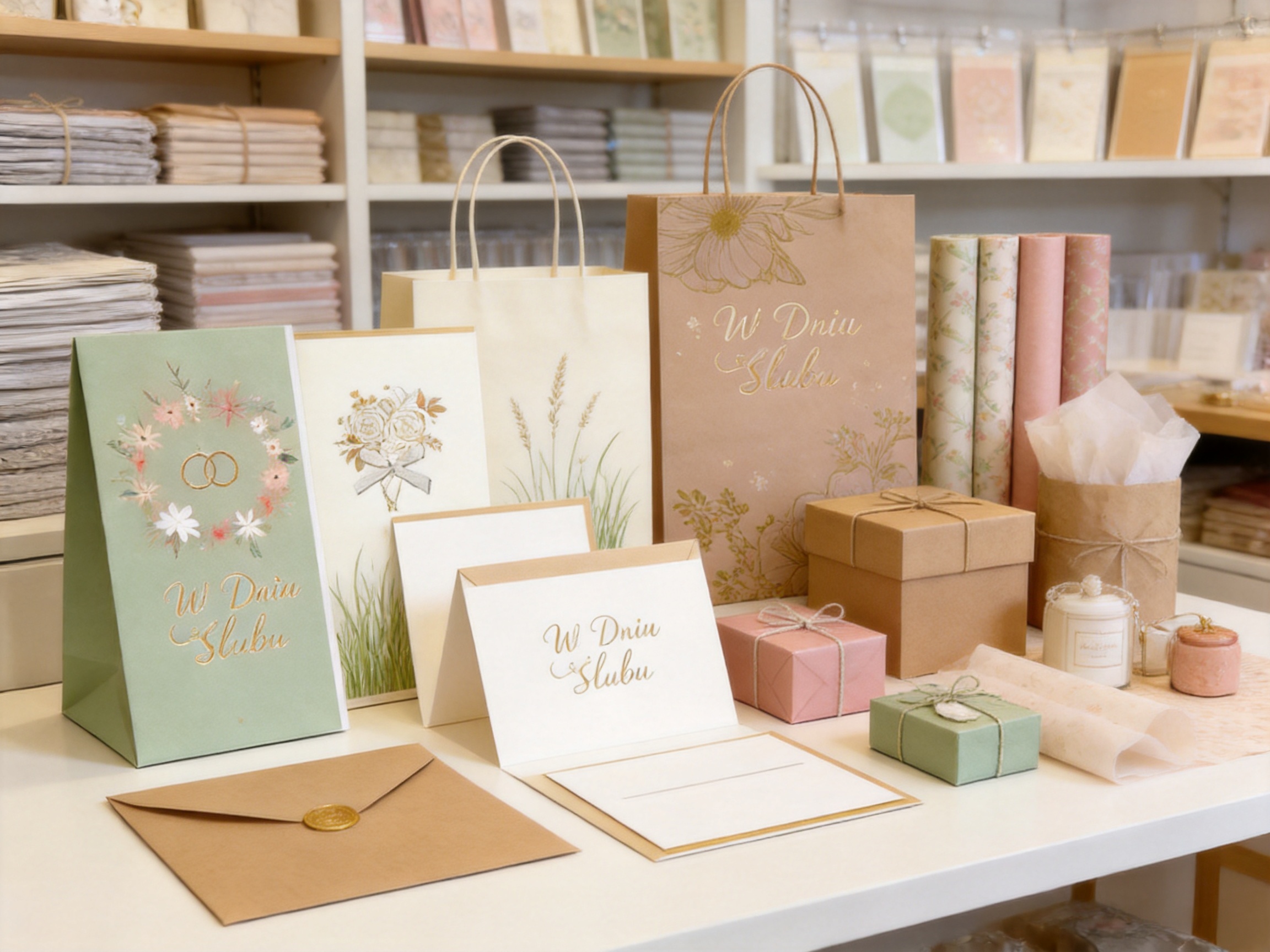
In a world filled with instant messages, digital invitations, and quickly assembled greetings, a thoughtfully made paper card still offers something distinctive: a physical moment of connection. The Flower & Grass Style Paper Gift Greeting Card is designed for that moment. It combines a calm botanical appearance, a practical writing format, a coordinated envelope, and a tactile 3D Bead Emboss foil treatment to create a greeting card that feels personal without becoming excessive.
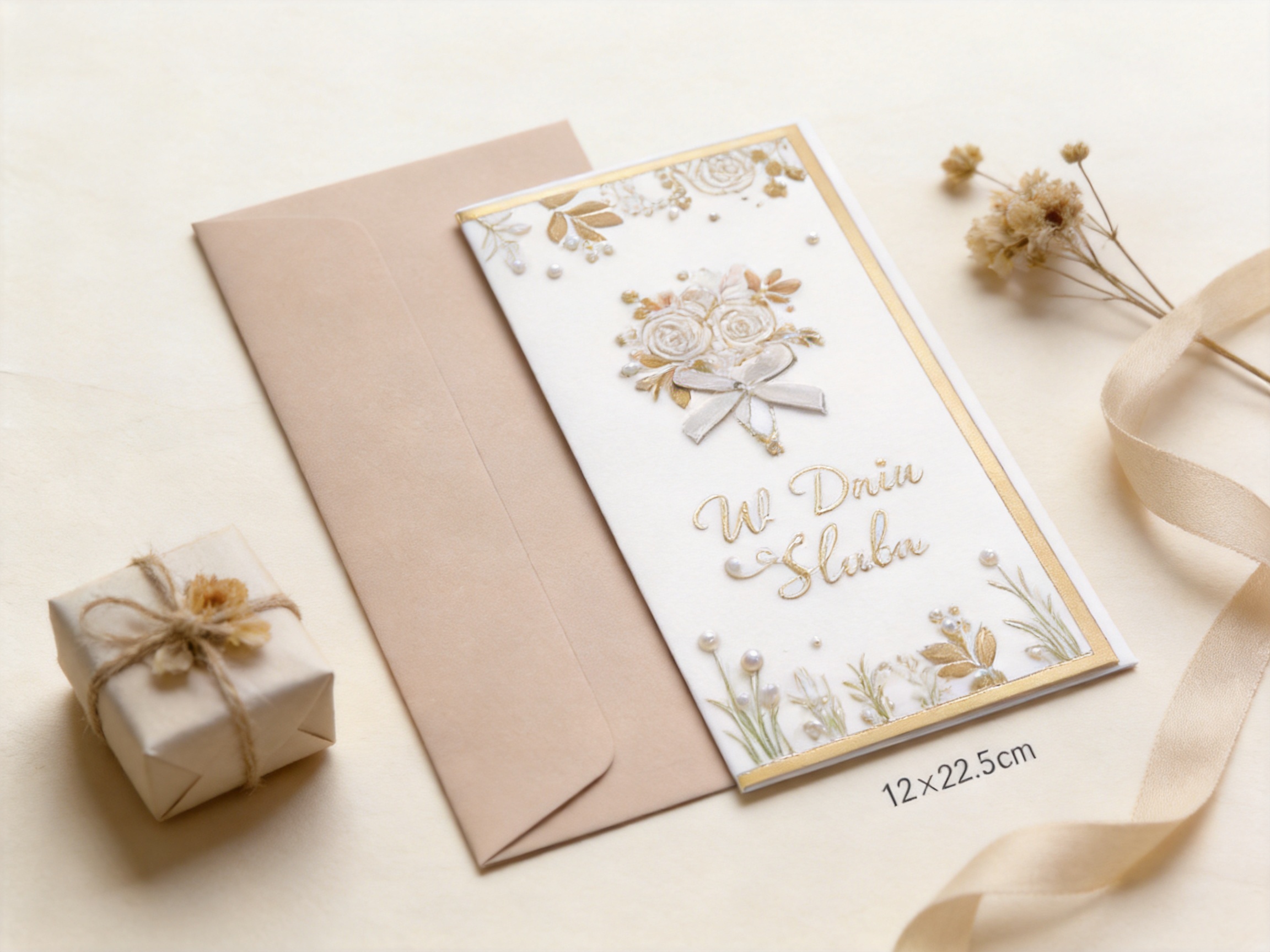
The card is suitable for short handwritten notes, seasonal greetings, small celebrations, thank-you messages, and gift presentation. Its floral and grass-inspired styling gives it a gentle decorative character, while its elongated 11.5 × 22 cm format provides useful writing space. The matching 12 × 22.5 cm envelope helps maintain a neat presentation from the time the card is prepared until it reaches the recipient.
For retailers, gift shops, stationery distributors, florists, lifestyle brands, and businesses purchasing paper accessories in wholesale quantities, this design offers a balanced product proposition. It is decorative enough to stand out among ordinary greeting cards, yet restrained enough to suit many occasions. It can complement gift bags, gift boxes, wrapping paper, and other paper packaging products without competing with the main gift.
The product is manufactured by Yiwu Magic Tree Gift Bag Co., Ltd., a paper packaging producer with experience in design, prepress, printing, laminating, hot stamping, creasing, bag making, and manual finishing. Its factory-based production model supports coordinated manufacturing across several paper product categories, helping buyers source related packaging items from one experienced supplier.
1. Product Overview
The Flower & Grass Style Paper Gift Greeting Card is a paper greeting product created around a quiet botanical theme. Instead of relying on highly saturated colors, oversized typography, or complicated decoration, the design provides a soft visual impression that works well with personal messages. The floral and grass elements suggest nature, calmness, and simplicity, making the card appropriate for both everyday and seasonal use.
The card measures 11.5 × 22 cm. This format is noticeably longer than many conventional small greeting cards, giving the user a generous vertical or horizontal writing area depending on how the card is opened and used. The size is suitable for a short letter, a few lines of appreciation, a blessing, or a personal message accompanying a gift.
The envelope measures 12 × 22.5 cm. Its dimensions are closely coordinated with the card, allowing the card to be inserted neatly while preserving an orderly overall appearance. A properly matched envelope is more than a practical accessory. It affects how the product is stored, displayed, transported, and presented to the final recipient.
The main decorative treatment is 3D Bead Emboss foil. This process combines visual shine with raised tactile detail. When the surface is viewed from different angles, the foil can catch light, while the embossed bead effect introduces a textured quality that can be felt by hand. The result is decorative but not aggressively glossy, supporting the quiet floral theme rather than overwhelming it.
| Product Category | Greeting Card |
| Card Size | 11.5 × 22 cm |
| Envelope Size | 12 × 22.5 cm |
| Surface Treatment | 3D Bead Emboss foil |
| Primary Style | Flower and grass-inspired botanical design |
| Typical Uses | Personal notes, seasonal greetings, gift messages, thank-you cards, and small celebrations |
The combination of size, surface treatment, and coordinated packaging gives the card a stronger product identity than a plain printed insert. It can be used as an independent greeting card or as part of a broader paper gift presentation.

Flower & Grass Style Paper Gift Greeting Card
2. A Botanical Design with Broad Appeal
One of the product’s main strengths is its adaptable visual language. Floral and grass motifs are familiar across many markets, age groups, and gifting occasions. They can suggest spring, renewal, appreciation, friendship, affection, nature, or simple warmth without forcing the buyer into one highly specific message.
This flexibility is valuable for retailers. A card with a very narrow theme may sell strongly during one holiday or event but remain difficult to merchandise at other times. A restrained botanical card can be displayed in a general stationery section, a gift shop, a flower shop, a seasonal collection, or beside wrapping paper and gift boxes. Its design can also work with multiple handwritten messages, allowing the purchaser to define the occasion.
The flower and grass theme is particularly suitable for consumers who prefer understated decoration. Some greeting cards depend on heavy metallic effects, large printed statements, or dense graphic compositions. Those designs may be appropriate for certain celebrations, but they can feel less suitable when the sender wants the message itself to remain central. This card takes a quieter approach, leaving visual space for the handwritten content.
That restraint can also support premium positioning. A refined design does not necessarily need to be complicated. Controlled decoration, balanced spacing, and tactile finishing can communicate care more effectively than excessive visual elements. For brands that emphasize simplicity, natural inspiration, or thoughtful gifting, this style can fit naturally within an existing product range.
The card can be paired with gifts such as flowers, candles, cosmetics, handmade products, books, apparel, food items, and small lifestyle accessories. It may also complement eco-conscious or nature-inspired retail collections, subject to the specific paper materials and sustainability requirements selected for a production order.
Visual versatility for different occasions
The card can be used for birthday messages, thank-you notes, congratulations, seasonal greetings, get-well wishes, wedding-related messages, housewarming gifts, sympathy notes, and everyday expressions of appreciation. The botanical appearance creates an emotional background without prescribing a single occasion.
For a retailer, this versatility can simplify stock planning. Instead of carrying many highly specialized designs, a store can select a smaller number of adaptable styles that serve multiple customer needs. For a brand, the design can become part of a coordinated stationery collection, especially when other packaging products use related paper colors, patterns, or finishing details.
3. The Advantage of a Tactile 3D Bead Emboss Foil Treatment
Surface finishing is one of the features that helps distinguish this greeting card from a basic flat-printed alternative. The 3D Bead Emboss foil treatment introduces two forms of sensory appeal: a raised surface structure and a reflective foil effect. Together, these details can make the card more memorable when it is picked up, opened, or displayed.
Embossing creates relief by shaping selected areas of the paper. A bead-like raised effect can add delicacy to floral details, borders, stems, or decorative accents. The tactile quality gives the recipient a reason to touch the card, while the three-dimensional surface can create subtle changes in shadow and light.
Foil adds a controlled highlight. Depending on the selected foil color and artwork, the reflective detail may appear warm, elegant, celebratory, or contemporary. Because the product uses the treatment in connection with a botanical theme, the finish can remain harmonious rather than becoming visually dominant.
Compared with a standard flat greeting card, this treatment offers stronger shelf presence and a more distinctive unboxing or gifting experience. Compared with a heavily embellished card, it can provide a more restrained alternative for customers who want refinement rather than high intensity. This middle position is one of the product’s competitive advantages.
The treatment can also support gift-value perception. Consumers often judge a small paper product through several cues, including paper feel, printing quality, surface detail, envelope coordination, and the overall neatness of the package. A carefully executed embossed foil surface can help a card appear more considered and special, even when the message itself remains simple.
Balancing decoration and usability
A common challenge in greeting card design is achieving visual interest without reducing writing space. If decoration occupies too much of the interior or creates an uneven surface across the entire writing area, the card may become less practical. The Flower & Grass Style Paper Gift Greeting Card is positioned as a product that retains a useful writing area while using surface treatment to enhance the outer presentation.
This balance is important for buyers who want the card to function as a genuine communication product rather than only a decorative accessory. The recipient should be able to read the message comfortably, and the sender should have sufficient room to write naturally. The 11.5 × 22 cm format contributes to this practical purpose.
4. Card and Envelope Coordination
The envelope is an essential part of the greeting card experience. It protects the card, provides a clean presentation, and allows the sender to offer a message privately. An envelope that is too small can damage edges or create folding pressure. One that is too large may allow the card to move excessively or appear poorly matched. The 12 × 22.5 cm envelope is sized closely to the 11.5 × 22 cm card, supporting a neat fit.
This dimensional relationship provides several benefits. It helps the finished card remain flat during storage and transportation. It can also make retail presentation more orderly because the card and envelope function as one coordinated unit. For gift sellers, the compact format is convenient when arranging cards beside paper bags, boxes, and wrapping accessories.
A coordinated envelope also improves the perceived completeness of the product. Customers do not need to search for a separate envelope, and the recipient receives a unified presentation from the outside to the inside. This is especially valuable for gift shops and e-commerce sellers, where product completeness can influence customer satisfaction and reviews.
For wholesale buyers, the envelope can also support customized branding or collection development, depending on the project requirements. Buyers may discuss paper selection, printing, color matching, logo placement, packaging, and finishing options with the manufacturer during product development.
5. Advantages Compared with Ordinary Greeting Cards
The greeting card market includes many low-cost, flat-printed products. These may satisfy basic communication needs, but they do not always create a strong tactile or visual impression. The Flower & Grass Style Paper Gift Greeting Card offers several points of differentiation.
5.1 More memorable physical interaction
The raised bead embossing gives the recipient a tactile feature that is absent from ordinary smooth cards. The surface invites touch and can make the card feel more like a keepsake. This is useful when the buyer wants the message to carry a sense of occasion without choosing a large or expensive gift.
5.2 A calmer alternative to highly elaborate designs
Some competing greeting cards use dense patterns, oversized slogans, strong color contrasts, or multiple decorative materials. Those products can be attractive, but they may not suit every sender or gifting situation. The botanical style of this card provides a quieter alternative for customers who prefer elegance, simplicity, and emotional subtlety.
5.3 A useful elongated format
The 11.5 × 22 cm size gives the card a distinctive silhouette and enough space for a meaningful note. Its proportions can help it stand apart from common square or small rectangular formats. At the same time, it remains compact enough to accompany a gift without becoming difficult to handle or store.
5.4 A matched envelope included in the product concept
The coordinated 12 × 22.5 cm envelope strengthens the presentation and protects the card. Buyers seeking a ready-to-use greeting product benefit from having the essential outer component designed around the card rather than treated as an afterthought.
5.5 Compatibility with wider paper packaging collections
Because the manufacturer produces gift bags, gift boxes, greeting cards, and patterned wrapping paper, buyers can explore coordinated sourcing across several paper packaging categories. A retailer may develop a botanical gift collection that combines a card with a paper bag and wrapping paper. A brand may also create a consistent packaging system using related colors, patterns, and finishing effects.
These advantages do not mean the product replaces every other greeting card style. Instead, it occupies a useful position between a simple everyday card and a highly elaborate premium card. It is decorative, tactile, practical, and adaptable.
6. Manufacturing Strengths Behind the Product
The quality of a finished greeting card depends on more than the visible artwork. It also depends on material selection, prepress preparation, printing control, surface finishing, cutting, folding, assembly, inspection, and packing. Yiwu Magic Tree Gift Bag Co., Ltd. has developed capabilities across these stages through long-term paper packaging production.
The company was founded in 1996 as Fushida Plastic Factory and was rebranded in 2019 as Magic Tree Paper Products Co., Ltd. Its experience now extends across nearly three decades of manufacturing development. This history provides a foundation for understanding different packaging materials, production requirements, and buyer expectations.
The company specializes in white cardboard, coated paper, and kraft paper products. Its product range includes paper bags, gift bags, gift boxes, greeting cards, and patterned wrapping paper. This category coverage is relevant to the Flower & Grass Style Paper Gift Greeting Card because greeting cards often need to coordinate with other components of a gift presentation.
Professional design and prepress
Design and prepress preparation are critical when a product includes detailed floral artwork and a specialized surface treatment. Artwork must be prepared with attention to line quality, registration, foil areas, embossing details, color separation, and the relationship between printed elements and the final die-cut or folded format.
A professional prepress process can help identify potential production problems before printing begins. These may include very fine lines, insufficient spacing, artwork that is too close to a fold, mismatched treatment layers, or details that may not reproduce clearly at the selected size. Early review reduces unnecessary waste and helps align customer expectations with manufacturing possibilities.
For customized orders, prepress coordination is especially valuable. Buyers may provide brand artwork, seasonal graphics, logos, text, or collection guidelines. The manufacturer can review the files, clarify production specifications, and prepare the design for printing and finishing.
Printing capabilities
Printing establishes the base visual quality of the card. Consistent ink coverage, accurate color reproduction, sharp details, and clean edges are important to botanical artwork because thin stems, leaves, and floral outlines can lose clarity if printing is poorly controlled.
Printing quality also affects the relationship between the artwork and the foil treatment. The printed image must provide an appropriate foundation for the reflective and raised elements. Good alignment helps the finished surface appear intentional rather than irregular.
Laminating and surface protection
Laminating can be used when the project requires additional surface protection or a particular tactile effect. The suitable structure depends on the paper stock, artwork, intended finish, and product positioning. Lamination may influence color depth, surface feel, durability, and resistance to handling marks.
Not every greeting card requires the same surface structure. A manufacturer with experience in multiple paper packaging categories can evaluate the relationship between materials and finishing methods more effectively than a supplier focused only on one basic production method.
Hot stamping and foil finishing
Hot stamping is an important capability for products that use foil details. It requires control of temperature, pressure, timing, tooling, and material compatibility. When the design includes reflective elements, these process variables influence the clarity, adhesion, and consistency of the finished foil.
The 3D Bead Emboss foil treatment combines foil appearance with raised detail, making process coordination particularly important. The embossing and foil effects must correspond to the artwork and remain visually balanced. Accurate tooling and careful setup help ensure that the decorative surface supports the intended botanical character.
Creasing, folding, and finishing
Creasing prepares the paper for clean folding and helps reduce uncontrolled cracking or deformation, especially when the product uses coated stock or surface treatments. Correct folding is important for a greeting card because the opening action affects the writing area, the appearance of the outer design, and the overall sense of quality.
Manual finishing can support detailed inspection and assembly. Depending on the order, manual processes may include sorting, folding, inserting, checking, bundling, and packing. These operations are useful when a product includes multiple components or requires attention to presentation details that are difficult to manage through a single automated step.
7. Integrated Factory Production and Quality Control
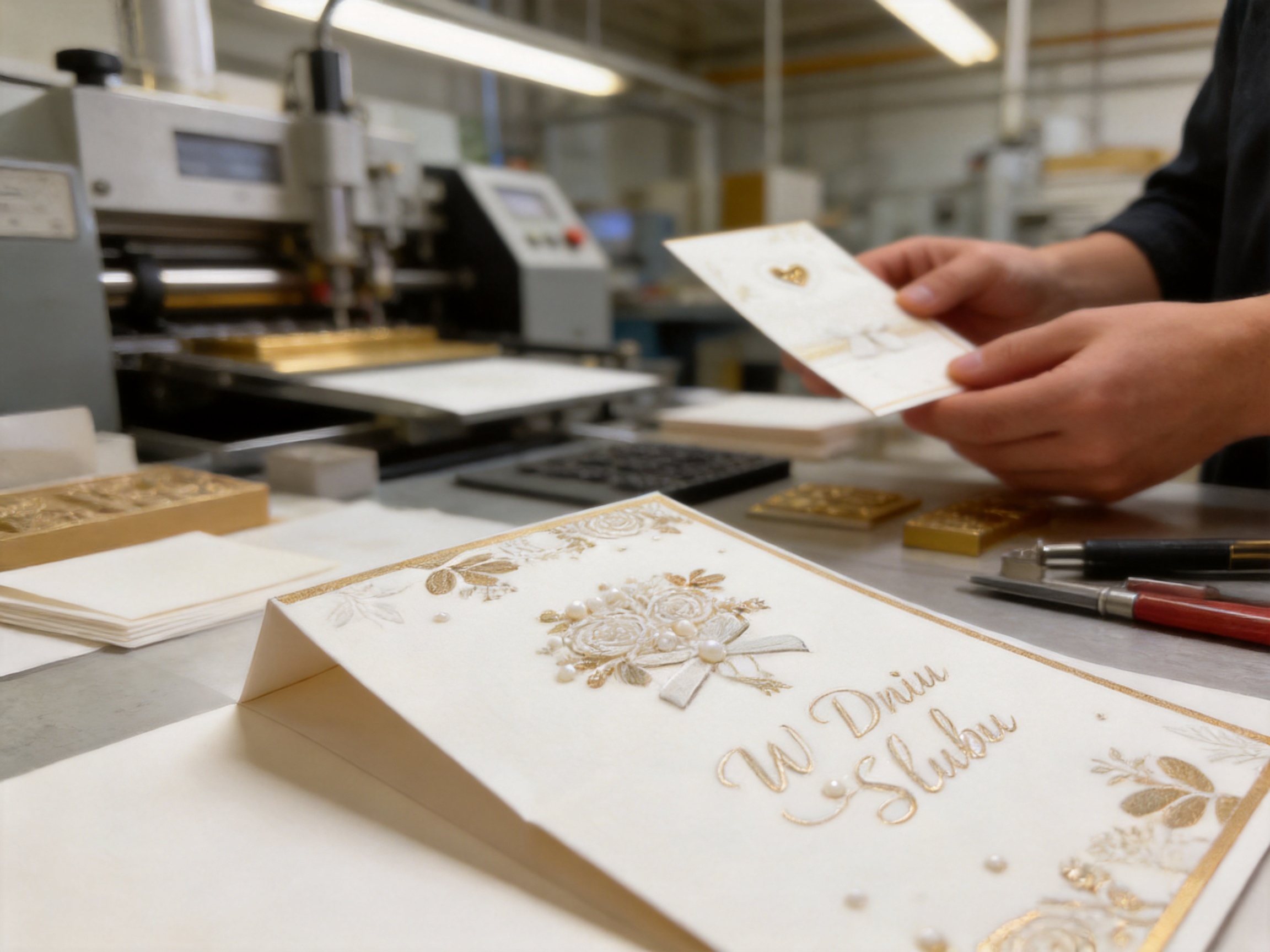
Magic Tree manages production from raw materials to finished products within its own factory operation. This integrated structure can provide advantages in communication, scheduling, process coordination, and quality control. When design, printing, finishing, assembly, and packing are handled through connected internal systems, it may be easier to trace an order and respond to production questions.
For wholesale customers, supplier coordination is a significant consideration. Working with several separate vendors can create inconsistencies in paper tone, print color, finishing quality, packaging dimensions, and delivery timing. An integrated factory can simplify the process, particularly when a buyer needs multiple related products for one collection.
Quality control for a greeting card may include checking paper condition, printing clarity, color consistency, foil coverage, embossing definition, folding accuracy, envelope dimensions, insertion fit, and final packing. The exact inspection plan should be confirmed according to the product specification and order requirements.
Consistency is especially important for repeat orders. A retailer or brand may need the same design to remain visually stable across different production batches. Clear specifications, retained samples, approved artwork, and documented finishing requirements can help support this continuity.
The company’s annual output value exceeds 50 million yuan, reflecting an established manufacturing operation with the capacity to serve professional buyers. Production scale does not replace quality control, but it can provide the infrastructure needed to manage larger orders, recurring programs, and multiple product categories.
8. Material Options and Responsible Packaging Considerations
Paper selection influences appearance, stiffness, print performance, fold behavior, and environmental positioning. Magic Tree works with white cardboard, coated paper, and kraft paper products. The most suitable material for a particular greeting card depends on the desired color reproduction, tactile feel, structural strength, surface treatment, and target market.
For botanical greeting cards, paper selection can be used to support the visual message. A smooth coated surface may present delicate artwork and foil highlights clearly. A more natural-feeling stock may reinforce an understated or nature-inspired identity. The choice should be made in relation to the embossing process and the required writing experience.
Eco-friendly paper packaging is an important consideration for many buyers. However, responsible packaging claims should be based on the actual paper grade, coatings, inks, adhesives, certifications, and recycling conditions associated with a specific order. Buyers should discuss these details with the manufacturer rather than applying general environmental statements to every product configuration.
The company describes its production approach as focused on high-quality, eco-friendly, and customized paper packaging solutions. For a purchasing program, this objective can be developed through material selection, efficient nesting, responsible packaging formats, reduced unnecessary components, and clear communication about applicable standards.
Paper efficiency can also affect production economics. Appropriate layout planning may reduce offcuts, while accurate size specifications can help optimize material use. These decisions should be balanced with the visual requirements of the product, including the card’s elongated shape and envelope dimensions.
9. Wholesale and Customization Opportunities
The standard Flower & Grass Style Paper Gift Greeting Card provides a ready design concept, but the same manufacturing capabilities can support customized paper greeting card projects. Buyers may explore variations in artwork, language, paper stock, color, foil color, embossing pattern, card dimensions, envelope design, packaging, and branding.
Customization is valuable for retailers that want a distinct product range rather than a generic stock item. A flower shop may request a botanical style aligned with its visual identity. A lifestyle brand may require a coordinated card for a seasonal gift set. A distributor may need several languages or regional versions. A corporate buyer may request a branded thank-you card for customer orders.
Potential customization areas include:
- Alternative floral or grass artwork
- Private-label branding and logo placement
- Different foil colors or foil coverage
- Embossed borders, motifs, or decorative details
- Custom interior messages or blank writing areas
- Different paper stocks and surface finishes
- Matching envelopes and insert cards
- Retail packaging, bundling, and barcode preparation
- Coordinated gift bags, boxes, and wrapping paper
Before mass production, buyers should confirm the complete specification. This normally includes final dimensions, folding direction, paper thickness, artwork files, color references, treatment locations, envelope construction, packing method, carton quantities, and inspection expectations.
Sampling is also valuable for customized products. A physical sample can reveal details that are difficult to judge on a screen, including paper stiffness, tactile relief, foil brightness, color balance, fold behavior, and how easily the card fits into the envelope. Approval of a preproduction sample can reduce misunderstandings before the full order is manufactured.
10. Applications Across Retail and Gifting
The card’s format and styling make it suitable for several sales channels. In a stationery store, it can be displayed as a premium botanical greeting card. In a gift shop, it can be placed beside gift bags, boxes, and wrapping paper. In a flower shop, the floral theme can complement bouquets and plant gifts. In an online store, it can be sold individually, in small sets, or as part of a complete gift-wrapping package.
Brands can also use the card as an order insert. A handwritten or printed thank-you message can add warmth to an e-commerce delivery. Because the card offers more space than a very small tag, it can carry a meaningful note while still remaining compact and easy to pack.
Hospitality businesses, event planners, wedding suppliers, and boutique service providers may also find the format useful for invitations, thank-you messages, welcome notes, or small event gifts, subject to customization of the interior content and design.
The card can be marketed throughout the year because its botanical styling is not restricted to one holiday. Seasonal positioning can be created through color variations, wording, or coordinated products. For example, softer colors may support spring collections, while richer tones may suit autumn or holiday gift ranges.
Retailers may also create multi-card sets. A set could include several botanical designs or use one consistent outer style with different interior messages. Bundling can increase perceived value and encourage repeat purchasing, especially when the cards are packaged with matching envelopes.
11. Merchandising and Presentation Benefits
Presentation affects how customers evaluate small paper goods. A greeting card needs to communicate its quality quickly while remaining easy to browse. The Flower & Grass Style Paper Gift Greeting Card has several merchandising advantages: a distinctive elongated profile, a visible tactile finish, and a nature-inspired design that can be grouped with related products.
In a physical store, the card may be displayed on a rack, in a shallow tray, or alongside gift accessories. The embossed foil surface can attract attention when light moves across the card. The long format can create visual variation when placed beside square or standard rectangular cards.
For online merchandising, product photography should show the front artwork, the envelope, the scale, and the surface treatment. Buyers should be given accurate dimensions and clear information about the treatment. Since tactile quality is difficult to communicate digitally, close-up photography and concise material descriptions can help set expectations.
Wholesale packaging should protect the card edges and surface during storage and transportation. The card and envelope should remain aligned, clean, and free from pressure marks. Buyers can discuss protective packing, inner quantities, master cartons, labeling, and shipment requirements with the factory.
12. Practical Product Evaluation for Buyers
When evaluating this greeting card for a purchasing program, buyers should consider how it fits their target customer, sales channel, price range, and existing product assortment. The product is most compelling when the customer values tactile detail, a calm botanical look, and a meaningful writing space.
Important evaluation points include the actual paper specification, the appearance and depth of the embossing, foil adhesion, printing clarity, interior writing area, envelope fit, and packing quality. If the product is intended for a premium retail environment, buyers may also assess edge finishing, consistency between units, and how the card looks under store lighting.
For custom projects, buyers should evaluate minimum order requirements, sampling procedures, production timelines, payment terms, shipping arrangements, and documentation. These commercial details vary by project and should be confirmed directly with the manufacturer.
Buyers should also clarify whether the selected materials and finishes meet their local market requirements. If environmental claims, recycled content, recyclability, or specific certifications are important, those requirements should be identified at the beginning of the project.
13. Why Supplier Experience Matters
A greeting card may be small, but it can involve several interconnected manufacturing operations. A supplier’s experience matters because the final result depends on how those operations work together. A design that looks attractive on screen may require adjustments to survive printing, embossing, folding, inserting, and packing.
A company with experience in paper bags, gift boxes, wrapping paper, and greeting cards can view the product as part of a broader packaging system. This perspective is useful when a buyer wants consistent paper tones, matching finishing effects, or coordinated dimensions across a product line.
Magic Tree’s capabilities include professional design and prepress, laminating, hot stamping, creasing, printing, bag making, and manual finishing. These services cover many of the processes needed to develop and produce paper gift packaging. Its factory-based structure also supports communication between production stages.
The company serves clients in the United States, Canada, Mexico, the United Kingdom, Japan, and China. Experience with customers in different markets can help a supplier understand that packaging requirements may vary according to language, retail presentation, shipping conditions, and customer expectations. Specific export requirements should still be confirmed for each order.
14. Product Positioning in a Competitive Market
Competition in the greeting card sector is not based only on price. Buyers compare designs, material feel, production consistency, finishing quality, packaging completeness, customization support, and supplier reliability. The Flower & Grass Style Paper Gift Greeting Card responds to these criteria through a combination of visual restraint and physical detail.
Its strongest competitive position is its balance. It is more distinctive than a plain printed card because of the 3D Bead Emboss foil treatment. It is more restrained than many heavily decorated cards because the floral styling remains gentle and uncluttered. It provides more writing space than a small message tag while remaining compact enough for gift packaging.
The product can also compete through collection compatibility. A greeting card is more valuable to many professional buyers when it can be sourced alongside matching bags, boxes, and wrapping paper. This can reduce the complexity of supplier management and help retailers build a cohesive visual assortment.
Competitive advantage should ultimately be verified through samples, specifications, and commercial review. A product’s success depends on the needs of the target market and the execution of each order. Nevertheless, the design concept and manufacturing foundation provide a credible basis for premium everyday gifting and customized paper packaging programs.
15. Recommended Quality Checkpoints
A structured quality review can help buyers evaluate both standard and customized orders. The following checkpoints are useful for the Flower & Grass Style Paper Gift Greeting Card:
- Confirm the card dimensions and folding accuracy.
- Check that the envelope dimensions correspond to the approved specification.
- Verify that the card fits inside the envelope without excessive force or looseness.
- Review the sharpness and consistency of printed floral details.
- Inspect the 3D Bead Emboss effect for clear relief and even application.
- Check foil alignment, brightness, adhesion, and coverage.
- Look for scratches, stains, dents, paper cracks, or edge damage.
- Confirm that the interior provides the intended writing area.
- Review unit counting, bundling, labels, and carton protection.
- Compare production samples with the approved reference sample.
These checkpoints can be adapted to the buyer’s quality standard and the complexity of the order. They are especially helpful for repeat programs in which consistency from one shipment to the next is important.
16. Customer Q&A
Q1: What is the main style of this greeting card?
The card uses a flower and grass-inspired botanical style. Its appearance is gentle and understated, making it suitable for personal notes, seasonal greetings, thank-you messages, and gift presentation.
Q2: What are the card and envelope dimensions?
The card measures 11.5 × 22 cm. The matching envelope measures 12 × 22.5 cm.
Q3: What does 3D Bead Emboss foil mean?
It refers to a surface treatment that combines raised bead-like embossing with foil decoration. The result provides both tactile relief and reflective detail, giving the card a more distinctive finish than standard flat printing.
Q4: Is the card suitable for writing a personal message?
Yes. The format provides useful space for a short personal note or handwritten greeting. The exact writing area depends on the interior artwork and the selected customization specification.
Q5: Can the card be used for occasions other than birthdays?
Yes. Its botanical design is adaptable and can be used for thank-you notes, congratulations, seasonal greetings, friendship messages, small celebrations, gift enclosures, and everyday expressions of appreciation.
Q6: Can buyers request customized artwork?
Customization can be discussed with the manufacturer. Possible options may include artwork, interior wording, paper stock, foil color, embossing details, dimensions, envelope design, branding, and retail packaging.
Q7: Can matching gift packaging be sourced from the same supplier?
Yes. The company manufactures paper bags, gift bags, gift boxes, greeting cards, and patterned wrapping paper. Buyers can discuss coordinated packaging collections and related product requirements.
Q8: What manufacturing processes does the company provide?
The company’s stated capabilities include professional design and prepress, laminating, hot stamping, creasing, printing, bag making, and manual finishing. These capabilities support the production of customized paper packaging products.
Q9: Are environmentally focused material options available?
The company focuses on high-quality, eco-friendly, and customized paper packaging solutions. Specific environmental features depend on the selected paper, coatings, inks, adhesives, certifications, and packaging configuration, so buyers should confirm the details for each order.
Q10: Why is sampling recommended before mass production?
A sample allows buyers to assess paper feel, color, embossing, foil effect, folding, writing space, envelope fit, and overall presentation before approving a full production run. It can also identify artwork or specification changes at an early stage.
Q11: Is the product suitable for wholesale purchasing?
Yes. The product is suitable for retailers, gift shops, stationery distributors, florists, lifestyle brands, and businesses purchasing greeting cards or coordinated paper packaging. Order quantities, pricing, lead times, and packing arrangements should be confirmed directly for the specific project.
Q12: What should buyers provide when requesting a quotation?
Useful information includes the required quantity, card and envelope dimensions, artwork status, paper preference, printing requirements, foil and embossing details, packing method, delivery destination, and any certification or compliance requirements.
17. Conclusion
The Flower & Grass Style Paper Gift Greeting Card combines a calm botanical design with a practical format and a tactile 3D Bead Emboss foil treatment. Measuring 11.5 × 22 cm and paired with a 12 × 22.5 cm envelope, it offers enough space for a personal note while maintaining a compact and orderly presentation.
Its key advantage is balance. The design is more memorable than a plain flat-printed card, yet it avoids the excessive decoration that can limit everyday use. The flower and grass theme gives the card broad occasion flexibility, while the raised foil finish adds a premium sensory detail. The matched envelope completes the product and supports convenient gift presentation.
For professional buyers, the product is supported by a manufacturer with nearly 30 years of production experience and capabilities covering design, prepress, printing, laminating, hot stamping, creasing, bag making, and manual finishing. The company’s integrated factory operation and broader paper packaging range create opportunities for customized cards and coordinated gift packaging collections.
Whether used as a standalone greeting product, a gift enclosure, a retail stationery item, or part of a complete paper packaging program, this card offers a refined way to turn a short message into a more memorable physical experience.
References
1. Product specification supplied for the Flower & Grass Style Paper Gift Greeting Card, including card size, envelope size, category, and 3D Bead Emboss foil treatment.
2. Company information supplied by Yiwu Magic Tree Gift Bag Co., Ltd., including manufacturing history, product categories, factory capabilities, market coverage, and production approach.
3. General principles of paper packaging design, including material selection, printing, folding, embossing, foil finishing, quality inspection, and retail presentation.
4. General considerations for greeting card merchandising, gift packaging coordination, wholesale sourcing, sampling, and product specification control.