中文简体
 русский
 Français
 Español
 Deutsch
 عربى

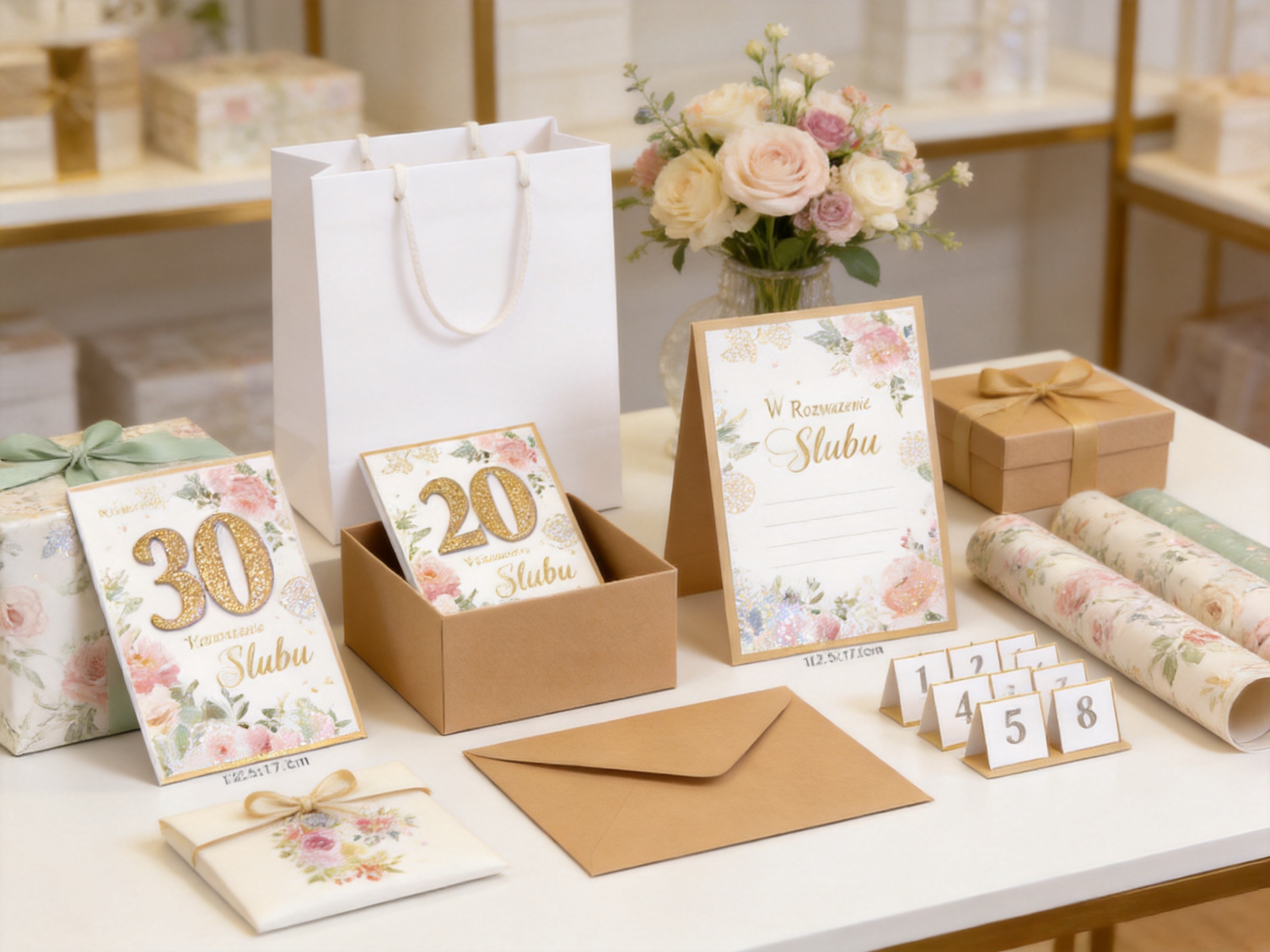
Paper products often influence the atmosphere of an event in quiet but meaningful ways. A table setting may contain flowers, glassware, candles, menus, place cards, and carefully selected table numbers, yet a small greeting card can be the detail that gives the arrangement a personal voice. The Floral-Patterned Table Number Greeting Card is designed for this purpose. It combines a practical card format with a decorative floral presentation, giving hosts, planners, retailers, and gift brands a flexible paper product for weddings, parties, thank-you moments, and other celebrations.
Although the card can function as a table number card, its use is not limited to identifying tables. It can also carry a short blessing, welcome message, gift note, party instruction, name, event number, or thank-you message. The format is large enough for several handwritten lines while remaining compact enough to place beside a centerpiece, inside a gift box, or in an envelope.
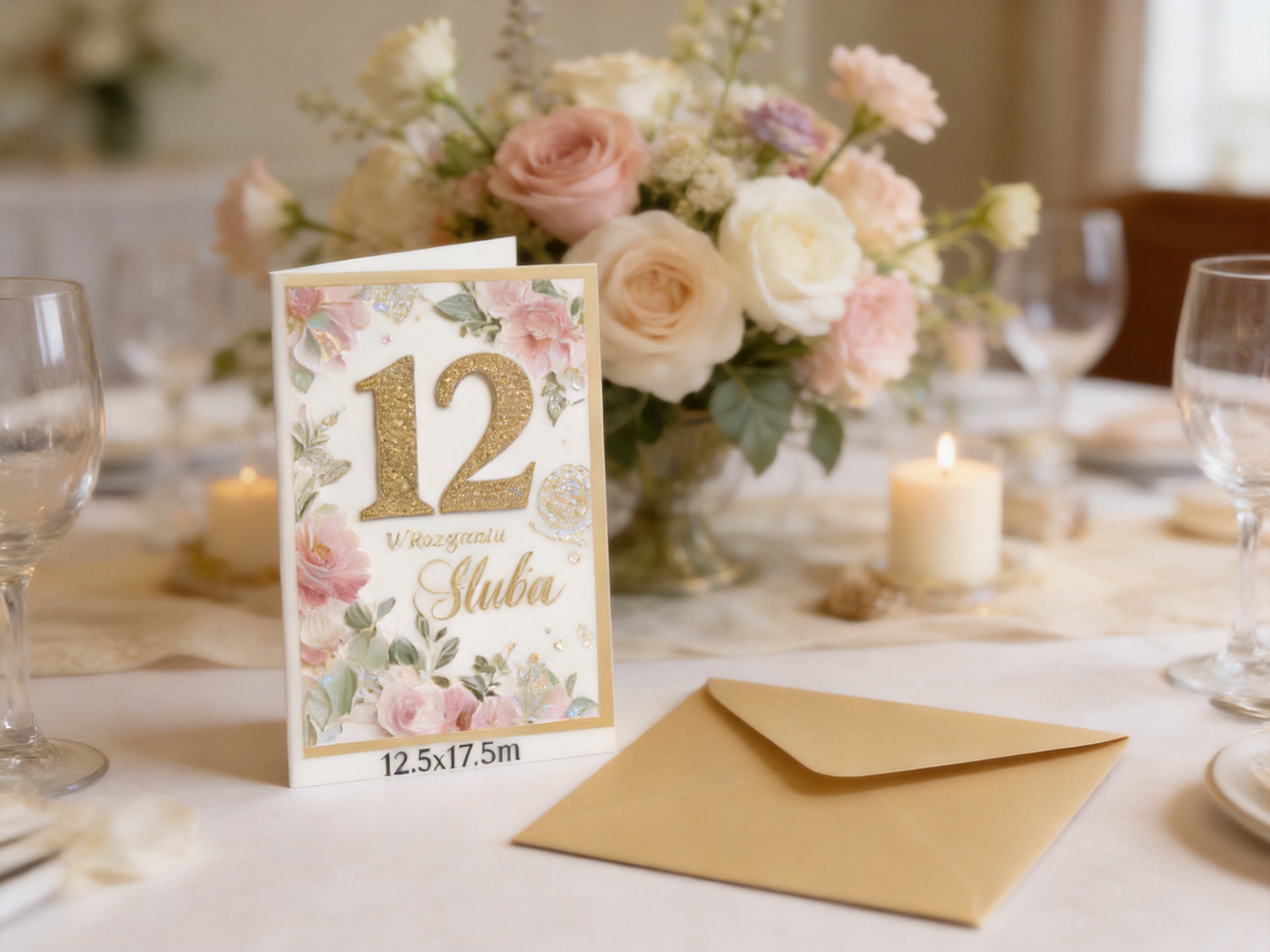
The card measures 12 x 17 centimeters, and the matching envelope measures 12.5 x 17.5 centimeters. This proportion provides a comfortable fit without requiring the card to be folded or forced into the envelope. The smooth paper surface supports ordinary writing instruments, while decorative treatments such as three-dimensional paper details, holographic foil, embossing, and glitter can create a more distinctive visual and tactile impression.
For buyers comparing greeting cards and event stationery, the product offers a practical balance between appearance, usability, and manufacturing flexibility. It does not depend solely on a complicated structure or excessive decoration. Instead, it uses proportion, surface treatment, printing potential, and finishing quality to create a product that can work across different occasions and customer groups.

Floral-Patterned Table Number Greeting Card
What Makes This Greeting Card Suitable for Weddings and Events?
Weddings and small celebrations require many coordinated details. A table number, menu, welcome note, or favor tag may appear simple, but these pieces help guests understand the event and experience its style. The Floral-Patterned Table Number Greeting Card is useful because it can combine identification and communication in one compact format.
When printed as a table number, the card can be placed upright or displayed with a suitable holder. The 12 x 17 centimeter size gives the printed number enough presence to be read across a table while still leaving room for floral decoration, a short phrase, or an event date. A planner may choose a large central number, while a retailer may offer versions with personalized names or different motifs.
When used as a greeting card, the same format provides a private space for a handwritten message. Guests can write wedding blessings, congratulations, appreciation, or a personal note to the host. The card may also be included in a gift box as an insert, making the product relevant to both event stationery and gift packaging.
This dual-purpose nature is one of its key advantages over highly specialized stationery. A card produced only as a table number may have limited use after an event. A card that supports table identification, greetings, gift inserts, and party notes can serve a broader market. Retailers can sell it as part of a wedding collection, a celebration stationery range, or a seasonal paper-goods assortment.
Balanced Dimensions for Writing, Display, and Packaging
Product dimensions directly influence how a greeting card is used. At 12 x 17 centimeters, this card is larger than a small note card but more compact than a standard letter-sized format. That makes it suitable for a short message without making it difficult to display on a table.
The size provides several practical benefits. First, it offers enough surface area for a few lines of handwriting. A sender can include a short blessing, thank-you note, or greeting without compressing the message into a very small space. Second, the card can accommodate decorative artwork without sacrificing writing space. Third, the format is easy to organize in packaging, storage cartons, retail displays, and event-planning inventories.
The envelope measures 12.5 x 17.5 centimeters. The additional space allows the card to slide inside smoothly, reducing the need to bend, press, or adjust the paper. A properly matched envelope also improves the complete customer experience. The card and envelope look intentional when presented together, whether they are sold individually, packed in sets, or placed inside a gift package.
| Product Element | Specification | Practical Benefit |
| Greeting card | 12 x 17 cm | Provides room for a short message, table number, or decorative layout |
| Envelope | 12.5 x 17.5 cm | Allows the card to slide in without bending or forcing |
| Surface | Smooth writing paper | Supports normal pens and handwritten notes |
| Decorative treatment | Three-dimensional paper details, holographic foil, embossing, and glitter | Adds texture, reflection, and visual distinction |
| Primary category | Greeting card | Suitable for events, gifts, retail, and stationery collections |
For wholesale customers, consistent dimensions also simplify merchandising. Cards can be packed in standard bundles, displayed in coordinated racks, or combined with matching paper bags, gift boxes, and patterned wrapping paper. This makes the product useful for businesses that want to build a complete paper packaging collection rather than purchase isolated items.
Decorative Details That Add Value Without Overcomplicating the Design
The card includes decorative treatments intended to create a more special impression when it is held or viewed under event lighting. The listed treatments include three-dimensional paper details, holographic foil, embossing, and glitter. The product description also refers to a three-dimensional bead foil detail on parts of the surface. These effects can be used selectively so that the floral pattern remains attractive and the card remains suitable for writing.
Three-Dimensional Paper Details
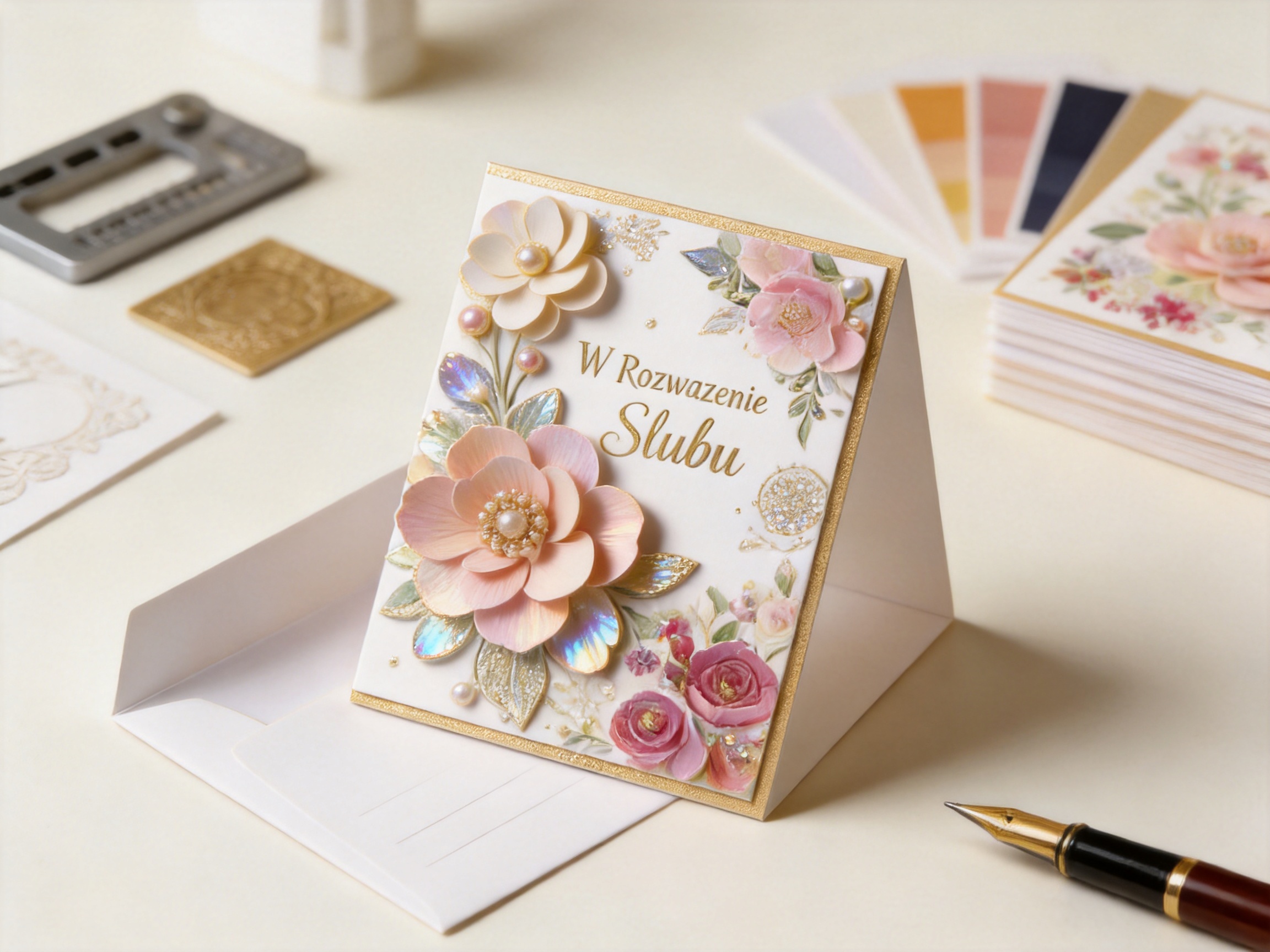
Raised paper elements can give a floral pattern greater depth than a flat printed image. A layered petal, leaf, bead, or decorative accent may catch light differently from the surrounding paper. This creates a tactile quality that customers can notice immediately when they pick up the card.
Three-dimensional finishing is particularly suitable for weddings because it supports the sense of craftsmanship associated with formal celebrations. It can also help a product stand apart in a retail display. Cards with only flat printing may blend into a crowded stationery shelf, while carefully placed raised elements can make the design easier to recognize.
Holographic Foil
Holographic foil introduces changing reflections as the card moves. Under natural light, indoor lighting, or photography, the surface may show different highlights. This effect can help bring attention to selected parts of the floral pattern, border, lettering, or table number.
Foil is most effective when used with restraint. Excessive reflective material can make a card look visually crowded, especially when combined with floral graphics. Selective application allows the decorative areas to stand out while preserving a clear writing zone. The result is a product that feels festive without becoming difficult to use.
Embossing
Embossing creates a raised or pressed pattern in the paper. It can be applied to flowers, leaves, borders, numbers, initials, or selected text. This process gives the card a physical contour that cannot be fully reproduced by ordinary printing.
Embossing can also improve the perceived quality of a card. Buyers often associate dimensional paper surfaces with careful finishing and premium stationery. For wedding planners and gift retailers, that perception can support higher-value product positioning when the design, paper, and packaging are coordinated.
Glitter Accents
Glitter can provide small points of brightness within the floral design. It may be used on petals, decorative lines, lettering, or event-related motifs. A controlled glitter application can make the card more celebratory while preserving the elegance of the overall layout.
For practical use, the placement and adhesion of glitter matter. It should be applied as part of a controlled finishing process rather than scattered without a clear design purpose. A well-produced card should present the glitter as an integrated decorative feature, allowing the product to remain attractive during handling, packing, and display.
A Smooth Surface for Handwritten Messages
Many greeting cards are purchased because people want to communicate in their own handwriting. Digital invitations and printed messages are convenient, but a handwritten note has a different emotional quality. It shows time, attention, and personal involvement. The smooth paper surface of this card is designed to make ordinary writing comfortable.
Customers can use common pens for short greetings, signatures, blessings, and thank-you messages. This is important because most buyers do not want to purchase a special writing tool simply to complete a card. A surface that accepts familiar pens makes the product more accessible for individual consumers, event hosts, retailers, and hospitality businesses.
The writing area also increases the product's flexibility. A wedding planner may print the table number on the front and leave the interior open for a message. A gift shop may sell the card as a floral greeting card with a blank writing area. A brand may place a logo, event name, or short printed greeting in one section while preserving space for a personal note.
Compared with highly decorative cards that leave little room for writing, this product is more functional. The decorative finish supports the emotional purpose of the card without completely taking over the available surface. That balance can be valuable for buyers who want stationery that looks distinctive but still performs its basic function.
Flexible Uses Beyond Table Numbers
The product title highlights the table number application, but the format can support many additional uses. This flexibility makes it appropriate for both seasonal and year-round sales.
Wedding Table Identification
For wedding receptions, the card can display table numbers, names, or short descriptions. Floral decoration makes it suitable for romantic, garden, botanical, spring, and classic wedding themes. The card may be placed in a stand, leaned against a centerpiece, or combined with a matching table arrangement.
Wedding Greeting and Blessing Card
Guests can use the card to write congratulations, memories, blessings, or personal wishes. The envelope gives the message a finished presentation and protects the card during transport. It may be handed directly to the couple or placed in a designated card box.
Party Notes
Birthday celebrations, anniversaries, engagement parties, bridal showers, baby showers, and seasonal gatherings can all use short notes. A host may prepare cards for guests to complete, or a guest may purchase one as a small greeting item.
Gift Box Insert
The card can be inserted into a gift box to add a personal message. This is especially useful for small brands, florists, bakeries, beauty retailers, lifestyle shops, and online sellers that want to provide customers with an attractive note option.
Thank-You Messages
After an event, hosts can use the cards to thank guests, vendors, friends, or family members. A coordinated floral pattern can make the note feel connected to the original celebration.
Retail Stationery Collections
Retailers can position the card with gift bags, gift boxes, patterned wrapping paper, ribbons, and other paper accessories. Since the manufacturer specializes in several paper packaging categories, buyers can explore coordinated product programs instead of sourcing every item separately.
Advantages Over Less Flexible Greeting Card Options
Competition in the paper goods market includes basic flat cards, heavily embellished cards, generic note cards, and disposable event signs. The Floral-Patterned Table Number Greeting Card has several characteristics that can help it compete effectively.
First, it supports more than one purpose. A basic event sign may be useful only during the event. This card can be used as signage, stationery, a greeting, or a gift insert. Multiple use cases can make inventory more valuable for retailers because the product is not dependent on a single occasion.
Second, it combines visual decoration with writing practicality. Some premium-looking cards focus so heavily on ornament that there is little room for a personal note. Here, the 12 x 17 centimeter format provides a usable writing area while allowing decorative treatments to enhance the surface.
Third, the matching envelope improves presentation. A card without the right envelope may feel incomplete or require customers to find separate packaging. The 12.5 x 17.5 centimeter envelope is proportioned for the card, helping create a ready-to-use set.
Fourth, the range of finishing techniques creates design opportunities. Embossing, glitter, holographic foil, and raised paper features can be combined or adjusted according to the desired visual level. This gives buyers more room to create collections for different price points and event styles.
Fifth, the product is compatible with broader paper packaging programs. A customer sourcing greeting cards may also need paper bags, gift boxes, and wrapping paper. Working with a manufacturer that handles these categories can simplify communication, artwork coordination, sampling, and production planning.
| Comparison Point | Basic Flat Note Card | Floral-Patterned Table Number Greeting Card |
| Primary use | Usually limited to a written message | Greeting, table number, event note, or gift insert |
| Surface appeal | Primarily dependent on printed artwork | Can include dimensional details, foil, embossing, and glitter |
| Writing function | Varies by paper and layout | Smooth surface designed for ordinary pens |
| Envelope compatibility | May require separate sourcing | Matched 12.5 x 17.5 cm envelope included in the product format |
| Event suitability | General stationery use | Especially appropriate for weddings and celebration settings |
| Collection potential | May be sold as a single item | Can be coordinated with broader gift packaging products |
Manufacturing Strengths Behind the Product
The quality of a greeting card depends on more than its printed image. Paper selection, prepress preparation, color control, lamination, foil application, creasing, cutting, assembly, and inspection all influence the final result. Yiwu Magic Tree Gift Bag Co., Ltd. has developed manufacturing capabilities across these stages, supporting the production of greeting cards and related paper packaging products.
The company was founded in 1996 as Fushida Plastic Factory and rebranded in 2019 as Magic Tree Paper Products Co., Ltd. With nearly three decades of experience, the company has built knowledge in paper converting, packaging production, and finishing operations. Its product range includes paper bags, gift bags, gift boxes, greeting cards, and patterned wrapping paper.
Its material focus includes white cardboard, coated paper, and kraft paper. These materials serve different visual and functional requirements. White cardboard can provide a clean base for detailed printing and decorative effects. Coated paper can support smooth image reproduction and a polished appearance. Kraft paper can offer a more natural look for customers seeking an earthy or eco-conscious packaging style.
Design and Prepress
Professional design and prepress capabilities help prepare artwork for the physical limitations of paper production. Floral patterns, table numbers, lettering, foil areas, embossing zones, and glitter applications must be planned with appropriate spacing and registration. Prepress preparation can help reduce avoidable errors before plates, dies, or finishing tools are produced.
For customized orders, accurate artwork preparation is especially important. A customer may request a particular flower arrangement, event date, monogram, brand mark, color palette, or table numbering system. The prepress stage helps translate those requirements into files that can be printed and finished consistently.
Printing and Color Reproduction
Printing establishes the visual foundation of the card. Floral artwork often contains multiple colors, fine lines, gradients, and small decorative elements. Careful preparation and production control help preserve the intended appearance across a batch.
For wholesale buyers, consistency between samples and mass production is a major consideration. The goal is not simply to make one attractive card, but to produce a complete quantity with a stable appearance. This is important when the cards are used at the same wedding, sold as a coordinated set, or packed alongside matching products.
Laminating and Surface Protection
Laminating can be used to influence the surface feel and protection of selected paper products. Depending on the design and material, it may help create a smoother visual finish or reinforce the surface around printed areas. The precise treatment should be selected according to the intended design, paper type, and required tactile effect.
When combined with foil, embossing, or glitter, surface preparation becomes even more important. The finishing sequence must be planned so that each treatment performs properly and does not interfere with the next production step.
Hot Stamping and Foil Application
Hot stamping supports reflective and metallic effects. Holographic foil can bring movement and brightness to floral details, borders, numbers, or lettering. The process requires appropriate pressure, temperature, tooling, and material compatibility. Correct control helps maintain clean edges and a more uniform finish.
For custom projects, hot stamping can also support brand identity. A retailer or event company may select a foil color that coordinates with its packaging range. A wedding collection may use a subtle metallic shade, while a festive collection may choose a brighter reflective effect.
Creasing, Cutting, and Structural Accuracy
Creasing and cutting influence the final shape and handling of the card. Accurate dimensions help ensure that the 12 x 17 centimeter card fits the 12.5 x 17.5 centimeter envelope. Clean edges improve the appearance of the product and make it easier to pack, stack, display, and write on.
Even a simple card benefits from precise converting. Uneven edges, inconsistent cuts, or inaccurate dimensions can reduce customer confidence. For this reason, structural accuracy is an important part of overall product quality rather than a minor technical detail.
Manual Finishing
Some decorative paper products require manual finishing after automated processes. Three-dimensional paper elements, selected embellishments, assembly, inspection, and packing may involve handwork. In-house manual finishing capabilities can be valuable when a design includes details that are difficult to complete using only automated equipment.
Manual finishing also allows production teams to check the appearance of decorative features before packing. This can help identify misplaced elements, incomplete adhesion, surface marks, or other issues that may affect the finished card.
Integrated Production for More Reliable Paper Packaging Programs
One of the company's strengths is its ability to manage multiple stages of production within its own factory. The company describes its process as covering raw materials through finished products. This integrated model can support more consistent communication between design, printing, finishing, and packing teams.
For a buyer, integrated production may reduce the complications associated with coordinating multiple suppliers. If the same project includes greeting cards, gift bags, gift boxes, and wrapping paper, a unified manufacturing partner can help align colors, patterns, sizes, materials, and finishing details.
This is particularly useful for seasonal collections and event programs. A wedding retailer may want floral greeting cards, paper favor bags, patterned wrapping paper, and gift boxes that share a common design language. Coordinating these products through one production source can make the final collection appear more deliberate and professional.
In-house capabilities also support production visibility. Communication about artwork changes, sample revisions, finishing requirements, packaging instructions, and quality expectations can take place through a connected manufacturing team. This does not remove the need for customer approvals, but it can make the process more organized.
Material Choices and Eco-Conscious Packaging Considerations
Paper packaging buyers increasingly examine material origin, recyclability, coating choices, packaging efficiency, and responsible production. The company specializes in paper-based products made from materials such as white cardboard, coated paper, and kraft paper. These materials provide different combinations of print quality, strength, texture, and appearance.
Kraft paper is often selected for a natural or understated appearance. White cardboard can provide a clean and bright foundation for floral artwork. Coated paper can support a smooth presentation where detailed printing and surface effects are important. The right choice depends on the intended design, use environment, finishing process, and customer expectations.
Eco-conscious packaging should be considered as a complete product decision rather than a single marketing phrase. Buyers may evaluate the paper grade, decorative treatments, packaging volume, shipping method, product lifespan, and disposal requirements. A greeting card that is kept as a memento or reused as a note may provide more continued value than a disposable event sign.
Businesses seeking eco-friendly paper packaging bags and related products can discuss material and finishing requirements with the manufacturer. The final specification should be selected according to the product's appearance, structural needs, print performance, and applicable market expectations.
Quality Control for a Finished Greeting Card
Quality control should address both appearance and function. For this card, inspection can include the following areas:
Dimension accuracy: The card and envelope should correspond to the specified 12 x 17 centimeter and 12.5 x 17.5 centimeter formats.
Paper condition: The surface should be clean, smooth, and free from obvious creases, stains, tears, or unwanted marks.
Print quality: Floral graphics, lines, text, and numbers should appear clear and appropriately aligned.
Finishing registration: Foil, embossing, glitter, and raised paper details should be positioned according to the approved artwork.
Adhesion and assembly: Decorative elements should be securely attached, and the card should maintain a neat finished structure.
Writing performance: The writing area should remain usable with normal pens and should not be completely obstructed by decorative treatments.
Envelope fit: The card should slide into the envelope without excessive pressure, bending, or adjustment.
Packaging condition: Finished cards should be packed to reduce abrasion, crushing, moisture exposure, and deformation during handling and transport.
For wholesale buyers, a clear approval process is helpful. A typical project may include artwork confirmation, material selection, a pre-production sample, finishing approval, production, inspection, and final packing. The exact process can vary according to the order, but documented approvals help ensure that the final product matches the intended specification.
Customization Opportunities for Wholesale Buyers
The card's format allows buyers to develop different versions for specific markets. Customization may include floral patterns, color combinations, event wording, table numbers, names, dates, logos, interior messages, envelope printing, and decorative finishes.
A wedding stationery company may request a soft botanical pattern with an elegant number layout. A hotel or event venue may prefer a refined design that matches its table setting. A gift retailer may develop a broader floral greeting collection with several colorways. A brand selling luxury gift boxes may add a logo or coordinated message to the card.
Finishing can also be customized. Some buyers may want subtle embossing and limited foil for a restrained premium look. Others may select glitter and holographic effects for a more festive product. The manufacturer’s capabilities in printing, hot stamping, laminating, creasing, and manual finishing provide a foundation for these variations.
Customization should be planned with the final use in mind. A card intended for handwritten notes needs sufficient open space. A card used as a table number needs readable typography and visibility from a reasonable distance. A card sold as a gift insert may need a balanced front cover and a clean interior. Effective customization is not simply about adding more decoration; it is about aligning the design with the customer's behavior.
How Retailers Can Position the Product
Retailers can present the card in several ways. As a wedding item, it can be placed near invitations, table decorations, favor packaging, and thank-you stationery. As a general greeting card, it can be displayed with floral designs, celebration cards, and small gift accessories. As a gift insert, it can be sold near gift boxes, paper bags, and wrapping paper.
Packaging and merchandising should make the card's multiple uses clear. A simple product label can mention wedding greetings, table numbers, party notes, thank-you messages, and gift-box inserts. Showing the card with its envelope can also communicate that it is a complete presentation rather than an unfinished paper component.
Wholesale buyers may choose to sell the cards in single units, coordinated packs, or event-specific sets. Sets of numbered cards may be useful for planners and venues. Mixed floral greeting sets may appeal to general consumers. Custom branded versions may be suitable for corporate gifting and hospitality applications.
The product can also be included in seasonal sales programs. Floral designs are naturally relevant to spring celebrations, wedding seasons, Mother's Day gifting, anniversaries, and garden-themed events. With modified artwork, the same manufacturing approach can support other decorative paper collections throughout the year.
Why Work with an Experienced Paper Packaging Manufacturer?
Experience matters in paper packaging because the final product depends on the interaction of many production variables. A company with long-term manufacturing experience is more likely to understand how paper weight, printing, finishing, cutting, folding, adhesion, and packing affect one another.
Magic Tree has operated in the paper products sector for nearly 30 years, beginning with its earlier factory history in 1996 and adopting the Magic Tree identity in 2019. The company serves customers in the United States, Canada, Mexico, the United Kingdom, Japan, and China. This international customer base indicates experience working with different product expectations, packaging requirements, and commercial markets.
The company reports an annual output value exceeding 50 million yuan and operates its own factory. Its capabilities include professional design, prepress, laminating, hot stamping, creasing, printing, bag making, and manual finishing. Together, these resources support both standard paper products and customized packaging programs.
For a buyer, the main benefit is not simply factory size. It is the ability to connect design ideas with practical production. A floral greeting card may require coordinated artwork, accurate foil placement, a smooth writing area, matched envelopes, and careful packing. A manufacturer that understands all these steps can help turn a concept into a repeatable finished product.
Ordering and Product Development Considerations
Before placing an order, buyers should define the intended use, quantity, paper preference, artwork, finishing requirements, envelope needs, packaging method, and delivery schedule. Clear information at the beginning helps the manufacturer evaluate the project more accurately.
Buyers should also decide whether the card will be blank, partially printed, or fully customized. A blank card may be suitable for general retail, while a table number card may require variable numbering. A wedding planner may need a complete set of table numbers, whereas a gift retailer may need one repeated design in multiple colors.
Finishing specifications should be described clearly. If the design includes holographic foil, embossing, glitter, or three-dimensional paper details, the buyer should identify the placement and desired visual intensity. Samples are useful because tactile finishes can be difficult to judge from a digital image alone.
Packaging requirements also deserve attention. Cards may be packed individually, in sets, or with envelopes and accessories. Protective packing is important when raised elements or glitter are present. The buyer should confirm how the finished product will be separated, stacked, labeled, and prepared for shipment.
Careful Design for Better User Experience
A successful greeting card is attractive at first sight but also easy to use. The front design should create an emotional response, while the inside should provide enough space for writing. If the card is used as a table number, the number should be clear and prominent. If it is used as a greeting card, decorative elements should not interfere with the message.
Typography should be selected for readability. A decorative floral pattern can include intricate details, but the important information should remain visible. For table settings, numbers should be large enough to identify the table without requiring guests to approach closely.
Color selection should consider the event environment. Light floral shades may suit daytime weddings and spring celebrations. Deeper tones may work for evening events or premium gift collections. Reflective finishes can appear differently under warm indoor lighting, daylight, or photography, so a physical sample is valuable during approval.
The envelope should complement rather than compete with the card. It can use a matching color, a coordinating pattern, or a simple neutral finish. Since the card and envelope are proportioned together, the complete set can be presented neatly in retail packaging or event stationery kits.
Q&A: Common Questions About the Greeting Card
What is the main purpose of the product?
The main purpose is to provide a decorative greeting card that can also be used as a wedding table number card. It is suitable for short handwritten messages, event identification, party notes, thank-you messages, and gift-box inserts.
What are the card and envelope dimensions?
The card measures 12 x 17 centimeters. The envelope measures 12.5 x 17.5 centimeters, giving the card a slightly larger enclosure for easy insertion without bending.
Can the card be used for occasions other than weddings?
Yes. It can be used for birthdays, anniversaries, engagement parties, bridal showers, baby showers, holiday gatherings, thank-you notes, congratulations, and general gift presentation.
Is there enough room to write a message?
The card is designed to provide a comfortable area for a few lines of text. The smooth paper surface is suitable for normal pens, making it practical for handwritten blessings, greetings, signatures, and short notes.
What decorative treatments are available?
The listed treatments include three-dimensional paper details, holographic foil, embossing, and glitter. The product description also refers to a three-dimensional bead foil detail. The exact combination and placement can be confirmed during the design and sampling process.
Can the floral artwork be customized?
Wholesale buyers can discuss customized artwork, colors, event wording, table numbers, names, dates, logos, and other design elements with the manufacturer. Customization should be reviewed against the intended paper, printing, and finishing process.
Can the product be coordinated with other packaging?
Yes. The manufacturer produces gift bags, gift boxes, patterned wrapping paper, and other paper packaging products. Buyers can explore coordinated designs and materials for a more complete event or retail collection.
What paper materials does the manufacturer work with?
The company specializes in white cardboard, coated paper, and kraft paper products. The best material depends on the required appearance, printing quality, strength, texture, finishing, and market positioning.
What manufacturing services are available?
The reported in-house capabilities include professional design and prepress, laminating, hot stamping, creasing, printing, bag making, and manual finishing. These services support the development of customized paper packaging and stationery.
Why is a matched envelope important?
A matched envelope protects the card, improves presentation, and makes the product easier for customers to use. The specified envelope is sized to receive the 12 x 17 centimeter card without forcing or bending it.
Can the card be produced for wholesale orders?
The company serves wholesale buyers and supports customized paper packaging production. Order details such as quantity, artwork, materials, finishing, packing, and delivery requirements should be confirmed directly during project planning.
How should buyers evaluate a sample?
Buyers should check the dimensions, color, paper feel, writing performance, print clarity, foil registration, embossing, glitter adhesion, raised details, envelope fit, and packaging method. These checks help confirm that the sample meets the intended product specification.
Conclusion
The Floral-Patterned Table Number Greeting Card is a versatile paper product for weddings, celebrations, retail stationery, and gift packaging. Its 12 x 17 centimeter format provides room for a short handwritten message or a clearly presented table number, while the 12.5 x 17.5 centimeter envelope creates a complete and practical set.
Its main competitive advantages come from the combination of function and decoration. The product can serve several occasions instead of being limited to one event role. Its smooth writing surface supports personal communication, while three-dimensional paper details, holographic foil, embossing, and glitter add visual and tactile value. These qualities make it suitable for customers who want more character than a basic flat card but still need a usable writing area.
The manufacturing foundation behind the product is equally important. Magic Tree brings nearly three decades of paper packaging experience, an in-house factory, design and prepress support, printing and finishing capabilities, and production experience across several international markets. Its ability to produce greeting cards alongside gift bags, gift boxes, and patterned wrapping paper can help wholesale buyers develop coordinated product collections.
For retailers, event planners, gift brands, and packaging distributors, the card offers a flexible platform for customization. With thoughtful artwork, suitable materials, controlled finishing, and careful quality inspection, it can become a refined detail within a wedding setting or a practical addition to a broader paper packaging range.
References
1. Product specification sheet for the Floral-Patterned Table Number Greeting Card, including card and envelope dimensions and listed finishing treatments.
2. Company information supplied by Yiwu Magic Tree Gift Bag Co., Ltd., including company history, product categories, material capabilities, and manufacturing services.
3. General principles of paper packaging design, including format planning, writing-surface usability, envelope fitting, and retail presentation.
4. General production references for printing, hot stamping, embossing, laminating, creasing, cutting, and manual finishing of paper products.
5. General considerations for eco-conscious paper packaging, including material selection, product durability, coordinated packaging systems, and end-use planning.