中文简体
 русский
 Français
 Español
 Deutsch
 عربى

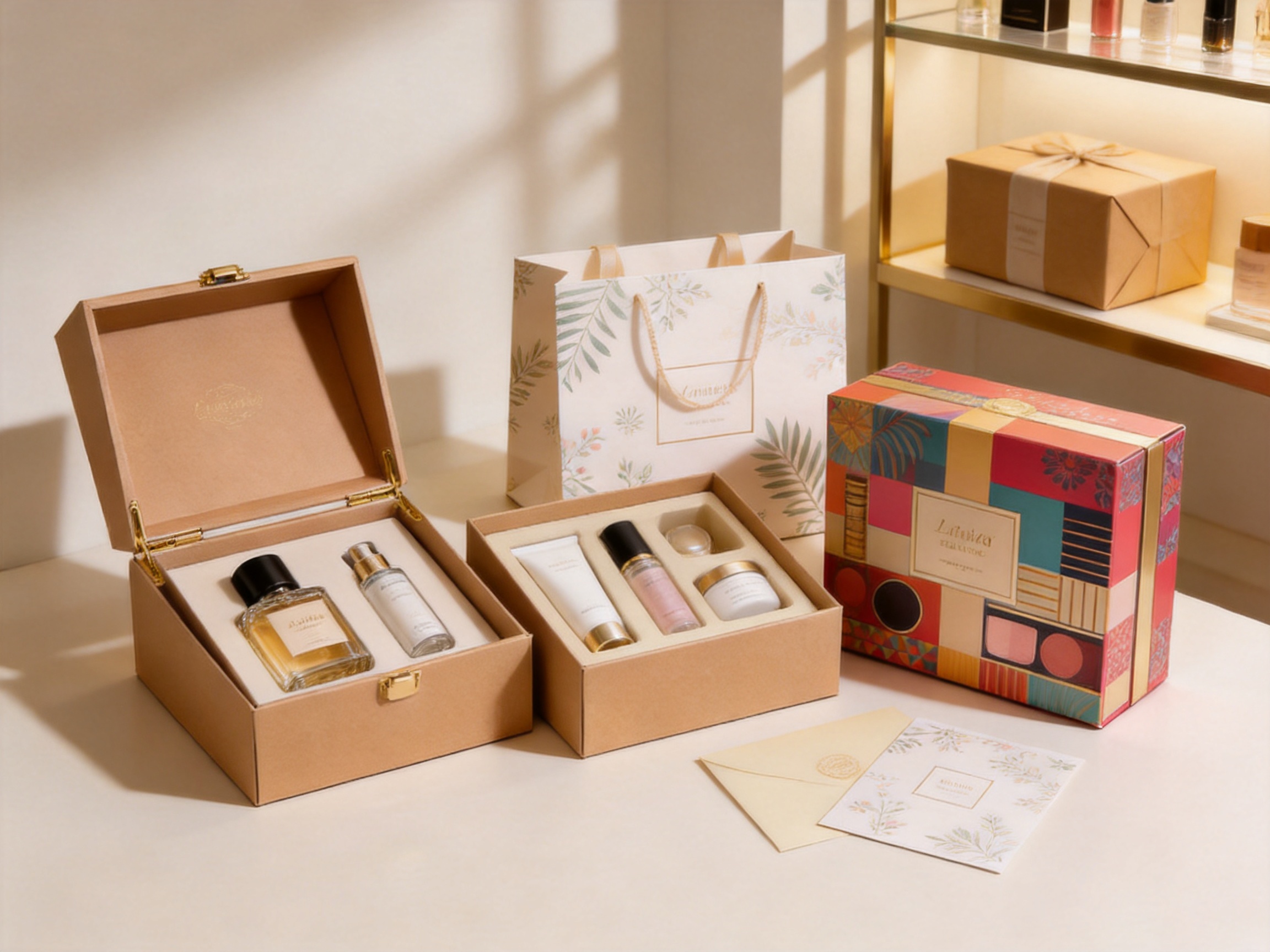
Packaging has become an important part of the customer experience, especially in the cosmetics, fragrance, skincare, and personal-care industries. A product may be carefully formulated and beautifully branded, but the first physical interaction a customer has with it is often the box. The packaging must protect the product, communicate quality, support the brand image, and create a memorable unboxing experience. For this reason, a custom cardboard gift box for cosmetic or perfume bottles can offer much more value than a simple shipping carton or standard folding box.
The custom beautiful big cardboard gift box described in this article is designed for brands that need attractive, durable, and adaptable packaging for cosmetic products, perfume bottles, beauty gift sets, and promotional collections. Its thick cardboard structure gives the box a stable shape, while the magnetic lid provides a smooth opening and closing experience. Custom printing, color selection, branding, and interior inserts allow the packaging to be adapted to different product sizes, brand identities, and retail requirements.
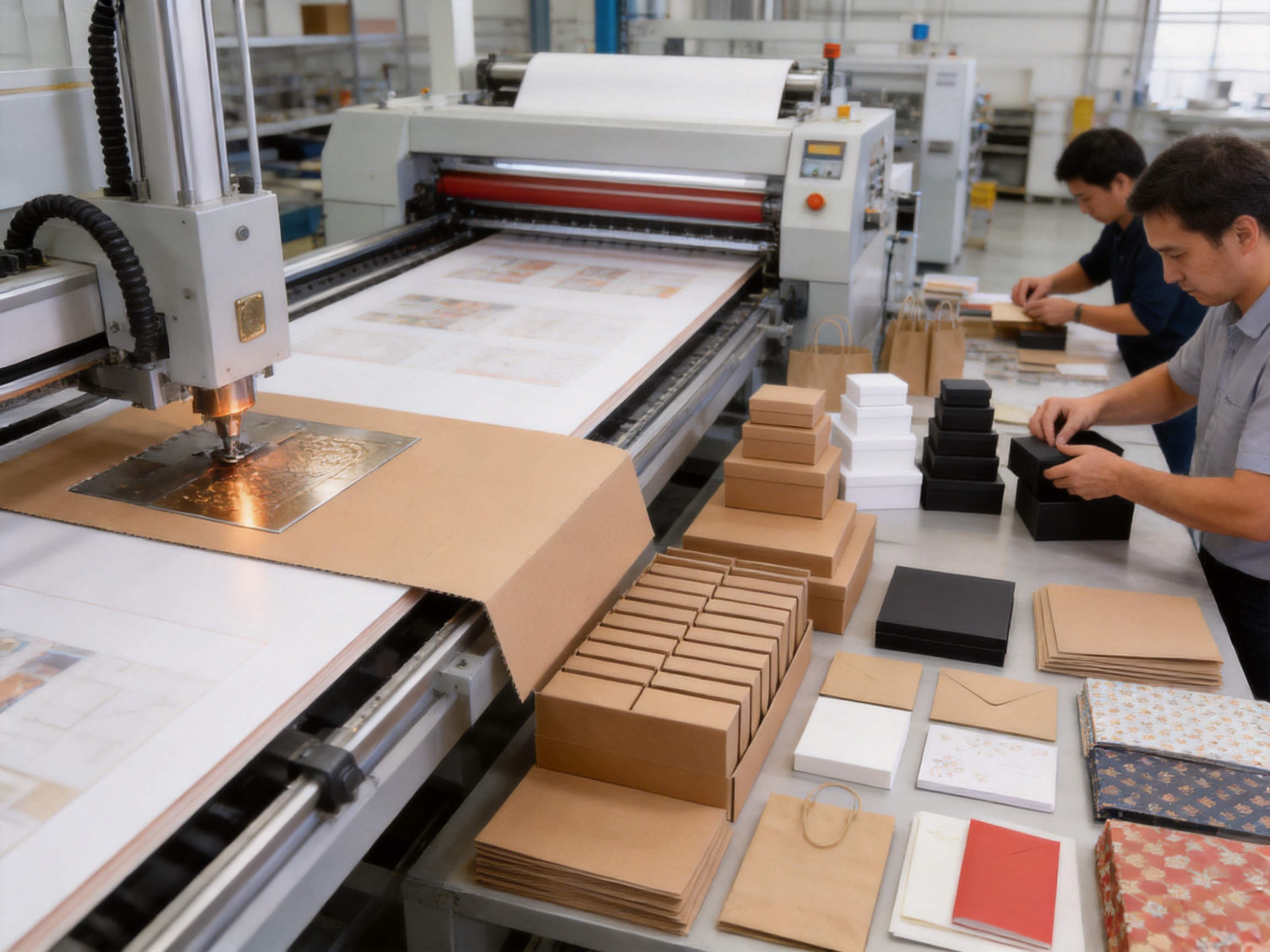
Manufactured by Yiwu Magic Tree Gift Bag Co., Ltd., this type of paper gift box benefits from an integrated production system that includes design and prepress preparation, printing, laminating, hot stamping, creasing, box making, and manual finishing. The company’s experience in paper packaging production enables it to support both practical packaging requirements and high-end visual presentation.
Unlike low-cost packaging that may lose its shape, appear plain, or provide limited protection, a well-produced magnetic cardboard gift box creates a more refined presentation from the moment it reaches the customer. It is suitable for retail displays, corporate gifting, seasonal campaigns, e-commerce orders, and customized beauty sets.

Custom Beautiful Big Cardboard Gift Box for Cosmetic Perfume Bottle Hard Packaging
Why Packaging Matters for Cosmetic and Perfume Products
Cosmetic and perfume products are strongly connected to appearance, emotion, lifestyle, and personal identity. Customers often judge a beauty product before they use it. The color, texture, typography, and structure of the packaging can influence whether the product feels luxurious, natural, modern, playful, or professional.
Perfume bottles and cosmetic containers also tend to be visually distinctive. They may include glass, metallic components, unusual shapes, pumps, caps, or delicate surface treatments. Such products need packaging that protects their physical condition while presenting them attractively. A box that is too thin may collapse during transport. A poorly fitted interior may allow the product to move. A plain package may fail to communicate the value of the item inside.
A custom cardboard gift box addresses these concerns by combining structural support and visual flexibility. The thick paperboard helps the box maintain its form, while custom printing allows the outside surface to match a particular brand system. Internal inserts can be added when a bottle, jar, tube, card, or accessory needs additional stability.
Packaging is also increasingly important in online retail. In a physical store, a customer can examine a product on a shelf before purchasing it. In e-commerce, the delivery package may provide the first real-world impression. A well-made gift box can make an online order feel more considered and valuable. It can also support social-media sharing, repeat purchases, and positive customer reviews by improving the unboxing experience.
Product Overview
The product is a large custom cardboard gift box intended for cosmetic, perfume, and other beauty-related products. It is produced from thick cardboard and can be customized with printed colors, logos, graphics, and other brand elements. The box uses a magnetic lid, allowing the top to close securely while remaining easy to open.
The design is suitable for individual products as well as gift sets. Depending on the product configuration, the interior may include a paperboard insert, molded support, divider, tray, or other structure. These additions can help prevent movement and reduce the risk of surface damage during handling and delivery.
Its broad application range makes it useful for perfume bottles, skincare collections, cosmetics, holiday gift sets, promotional packages, beauty subscription products, and premium retail presentations. It can also be used for corporate gifts, limited-edition launches, influencer packages, and special seasonal campaigns.
| Product Feature | Practical Benefit | Typical Application |
|---|---|---|
| Thick cardboard construction | Helps maintain shape and improves product protection | Perfume, cosmetics, skincare, and gift sets |
| Magnetic lid | Creates a smooth opening and closing experience | Premium retail and unboxing packaging |
| Custom color printing | Supports brand identity and visual differentiation | Private-label products and promotional campaigns |
| Optional interior inserts | Helps hold bottles and accessories securely | Multi-piece sets and fragile products |
| Paper-based structure | Supports recyclable packaging objectives | Environmentally conscious brands |
| Large format capability | Allows packaging for multiple products or larger containers | Gift collections and presentation boxes |
Advantages of Thick Cardboard Construction
The structural material of a gift box strongly affects its performance. Thin paper packaging may be appropriate for lightweight products, but it can bend, crease, or collapse when used for heavier glass perfume bottles or multi-item beauty sets. Thick cardboard offers greater rigidity and helps the box retain its shape during storage, stacking, transport, and presentation.
For wholesalers and brands, structural stability can reduce problems throughout the supply chain. A box that remains square and firm is easier to stack in warehouses and display on retail shelves. It is also less likely to look damaged when customers receive it. Although packaging cannot eliminate all transport risks, a stronger board structure provides a more dependable foundation for protection.
The substantial feel of the cardboard also affects perceived product value. Customers often associate weight, firmness, and clean construction with quality. When a person picks up a box and notices that it feels stable rather than flimsy, the impression of the product inside can improve. This is particularly valuable for perfume and cosmetics, where presentation is closely related to the buying decision.
Thick cardboard can also support a wider range of finishing options. It provides a suitable surface for printing, lamination, hot stamping, and other decorative treatments. The result is packaging that can be both functional and visually refined.
Support During Storage and Shipping
Cosmetic products may pass through several stages before reaching the final customer. They can be packed at a factory, transported to a distribution center, stored in a warehouse, shipped to a retailer, and eventually delivered to an individual consumer. At each stage, packaging may experience pressure, vibration, movement, and repeated handling.
A rigid gift box helps maintain a consistent presentation through this process. It can protect the primary product container from direct contact with other items and provide an additional layer between the product and external handling. When an insert is included, the bottle or cosmetic container can be positioned more securely inside the box.
For e-commerce sellers, packaging strength is especially important because parcels may be moved through automated sorting systems and multiple transportation vehicles. A carefully designed paperboard box, combined with suitable outer shipping protection, can contribute to a more reliable delivery experience.
The Magnetic Lid and the Unboxing Experience
The magnetic lid is one of the most noticeable design features of this gift box. Unlike a basic tuck-end carton, the magnetic closure allows the lid to open and close in a controlled, straightforward way. The closure does not require additional tying, adhesive strips, or complicated assembly by the user.
When the lid closes, the magnetic component helps guide it into position. When the customer opens the box, the movement feels deliberate and smooth. This small interaction can make the package feel more premium, particularly when the product is intended as a gift or part of a luxury beauty collection.
Unboxing is not only about appearance. It is also about sequence and anticipation. A magnetic box can create a clear opening moment: the customer lifts the lid, discovers the product inside, and then explores any supporting materials or accessories. This sequence is useful for fragrance launches, holiday sets, wedding gifts, and high-value promotional packages.
Compared with an ordinary carton, a magnetic gift box may also have a longer useful life. Customers may keep it for storing jewelry, accessories, letters, cosmetics, or other small items. Continued use extends the practical value of the packaging and may allow the brand name or design to remain visible in the customer’s home.
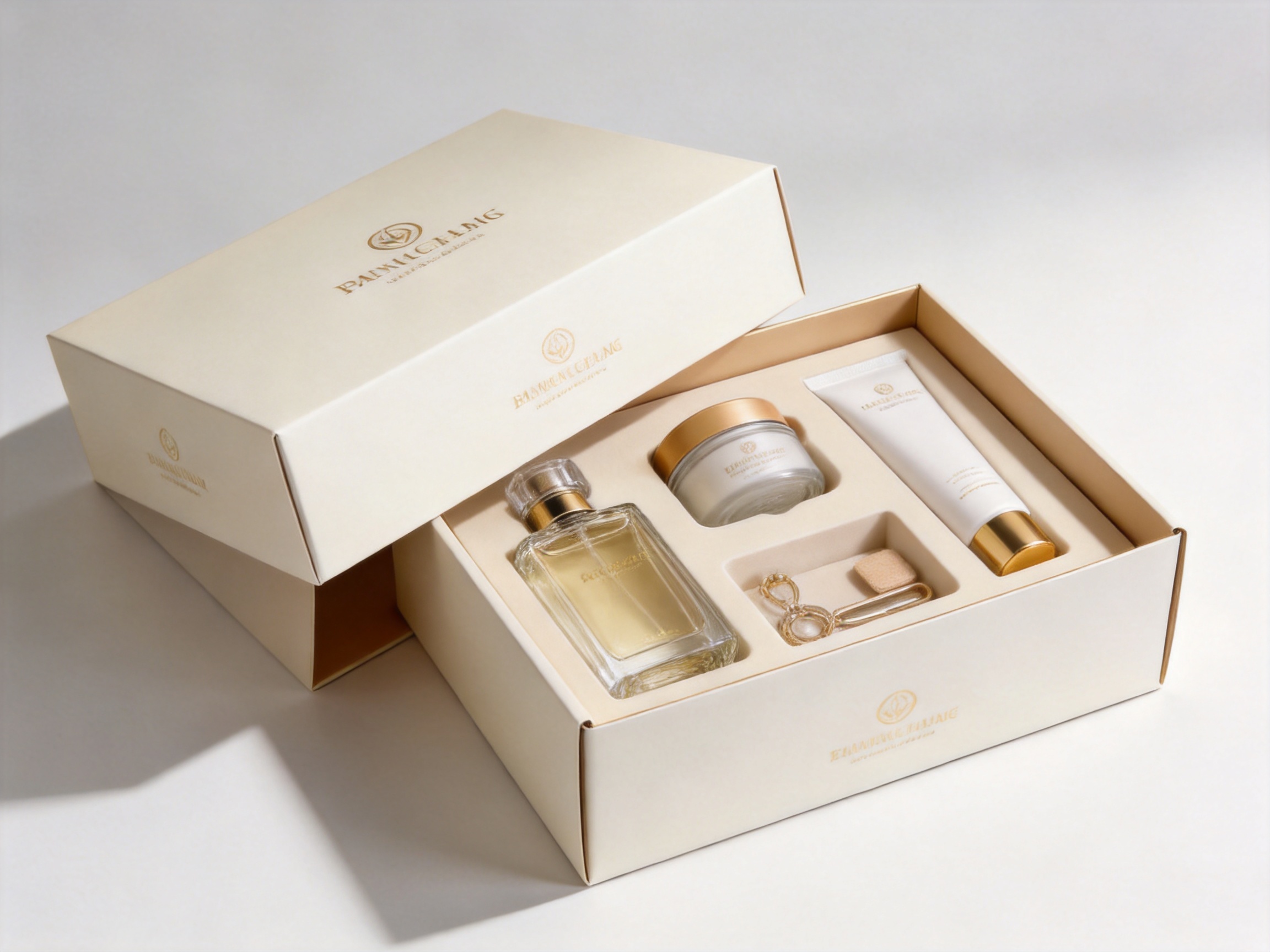
Custom Printing and Brand Presentation
Custom printing allows the box to become part of the product’s visual identity. A company may select a solid color, a combination of brand colors, a photographic pattern, a botanical illustration, a geometric design, or a minimal monochrome layout. The printing approach can be adjusted to match the character of the product and the expectations of its target market.
For a premium perfume, a restrained color palette with metallic details may communicate elegance. For a natural skincare product, earthy tones and botanical graphics may support an environmentally responsible image. For a youthful cosmetics collection, bright colors, contrast, and expressive patterns may be more suitable. Because the box is produced to order, the design can be developed around the product rather than selected from a limited stock range.
Custom printing also helps brands achieve consistency across different packaging materials. The same logo, color system, typography, and imagery can be applied to gift boxes, paper bags, greeting cards, wrapping paper, and promotional inserts. This creates a unified customer experience from the retail shelf to the final unboxing moment.
Printing Options for Different Product Positions
Not every product requires the same level of decoration. Some brands prefer a clean design with a small logo and a single background color. Others may need full-surface graphics or detailed illustrations. The printing process can be planned according to the desired visual effect, quantity, budget, and target market.
Large printed areas can make a gift box highly visible in retail environments. More restrained printing can emphasize the texture and form of the box itself. A combination of printed graphics and selective finishing may produce a balanced result in which the logo, product name, or key design element receives special attention.
Good prepress preparation is essential. Artwork must be reviewed for dimensions, bleed, color separation, image quality, folding positions, and finishing areas. Errors at this stage can affect the final appearance or cause alignment problems. A manufacturer with in-house design and prepress capabilities can identify these issues before mass production begins.
Finishing Processes That Improve Appearance
Finishing is an important part of premium paper packaging. Printing creates the main visual design, but additional processes can influence the surface, texture, reflectivity, and tactile quality of the box.
Laminating may be used to add a protective surface layer and modify the appearance of the printed paper. Depending on the selected material, the finish may look matte, glossy, or otherwise distinctive. A matte finish often creates a soft, understated appearance, while a glossy finish can increase color brightness and visual impact.
Hot stamping can add a metallic or decorative accent to selected areas such as logos, borders, product names, or patterns. Gold, silver, and other foil effects are commonly associated with luxury presentation, although the final choice should match the overall brand design. Hot stamping is particularly useful when a company wants to highlight a small amount of information without covering the entire box in decoration.
Creasing supports accurate folding and helps create clean structural lines. For rigid or semi-rigid boxes, precise creasing contributes to a more professional shape. It can also reduce the risk of uneven folds and visible cracking in the printed surface.
Manual finishing is useful for operations that require careful assembly, placement, inspection, or detailed handling. Certain gift boxes, inserts, magnetic components, and special decorative elements may need close attention beyond automated processing. Combining machinery with skilled manual work allows the production process to remain flexible for customized packaging.
| Manufacturing Stage | Purpose | Effect on the Finished Box |
|---|---|---|
| Design and prepress | Prepare artwork, dimensions, and production files | Improves accuracy and reduces layout errors |
| Printing | Apply colors, logos, text, and graphics | Creates the visual identity of the package |
| Laminating | Add a surface layer or selected visual effect | Supports appearance and surface protection |
| Hot stamping | Apply metallic or decorative details | Highlights premium brand elements |
| Creasing | Prepare accurate fold lines | Improves box shape and assembly quality |
| Box making | Form the paperboard into the finished structure | Creates the functional gift box |
| Manual finishing | Complete detailed assembly and inspection | Supports customization and final consistency |
Interior Inserts for Better Product Security
A gift box must not only look attractive from the outside. It also needs to present the product properly when the lid is opened. An interior insert can help position a perfume bottle, cosmetic jar, tube, accessory, instruction card, or promotional item.
Inserts are particularly useful when a box contains several products. A fragrance set may include a main bottle, a smaller travel spray, and a body lotion. A skincare package may contain cleanser, serum, cream, and an information card. Without internal organization, the items may shift during transport and appear untidy when the box is opened.
A custom insert can be designed according to the dimensions and shape of the product. It may include individual compartments, cutouts, raised supports, or layered sections. The material and construction should be selected according to the weight, fragility, and presentation requirements of the products.
Interior design also affects the customer experience. A well-organized box can guide the customer’s attention and make the contents feel more valuable. It can create a visual order that supports the brand’s message. For example, the primary product may be positioned in the center, while accessories and printed information are arranged around it.
When developing a box and insert together, it is important to consider tolerances, assembly, product access, and packing efficiency. The product should be held firmly without being difficult to remove. The insert should protect the item without overwhelming the appearance of the box. A manufacturer with experience in box making and manual finishing can help coordinate these details.
Applications Across Beauty and Retail Markets
Perfume and Fragrance Sets
Perfume packaging is one of the most suitable applications for a large magnetic gift box. Fragrance bottles often have a premium appearance and may be made from glass, making protection and presentation equally important. The box can be customized to match a fragrance collection, seasonal release, or limited-edition product.
For a perfume gift set, the box can include a main bottle, miniature bottle, body product, fragrance card, or decorative accessory. A custom insert can separate the items and keep the bottle securely positioned. Printing and hot stamping can reinforce the sophisticated character of the fragrance brand.
Skincare and Cosmetic Collections
Skincare brands can use the box for routines, trial collections, new product launches, and holiday bundles. A set may include several coordinated products that require a larger package than an individual folding carton. The rigid cardboard structure gives the collection a unified presentation.
Cosmetic brands may use the box for makeup collections, gift sets, or promotional combinations. Foundation, lipstick, eye products, brushes, and mirrors can be organized in separate sections when the internal structure is designed appropriately.
Seasonal Promotions
Holiday and seasonal campaigns often depend on special packaging to create urgency and emotional appeal. The box may be printed with winter artwork, festive colors, floral patterns, anniversary graphics, or limited-edition branding. Because the structure can be reused for different designs, it is suitable for campaign-based product launches.
A seasonal box can also be used as a gift-ready package, reducing the need for customers to purchase additional wrapping. This convenience may be valuable during busy shopping periods, including end-of-year holidays, Valentine’s Day, Mother’s Day, and other gift-giving occasions.
Retail Displays
In retail, packaging must compete for attention among many products. A large, well-printed gift box can create a stronger visual block on a shelf or display table. The box can communicate the product name and brand message while also suggesting that the contents are suitable for gifting.
Its firm construction helps it stand neatly in a display. A clean surface, aligned lid, and accurate printing can make the entire product presentation look more organized. Retail buyers may also appreciate packaging that can be placed directly on a display without extensive preparation.
E-Commerce and Direct-to-Consumer Orders
For online brands, a custom gift box can strengthen the relationship between the digital shopping experience and the physical delivery. The customer has already seen images and descriptions online, but the delivered package confirms whether the product matches those expectations.
A carefully designed package can support customer-generated content, including unboxing videos, photographs, and social-media posts. While packaging alone cannot guarantee positive feedback, a visually appealing and easy-to-open box gives customers more reasons to remember the order and share the experience.
Environmental Considerations of Paper-Based Packaging
Many brands are reviewing their packaging materials because consumers, retailers, and regulators are paying greater attention to waste, recycling, and resource use. Cardboard and paperboard are widely used packaging materials because they can be collected, processed, and reused through appropriate recycling systems.
The use of paper-based materials does not automatically make every package environmentally ideal. Responsible packaging design should consider material quantity, coatings, adhesives, transport efficiency, durability, and local recycling conditions. However, a cardboard gift box can support a brand’s effort to reduce reliance on certain plastic packaging formats.
The box can also have a second life after the original product has been removed. Customers may reuse it for storage, gifting, stationery, accessories, or small household items. This extended use may reduce the likelihood that the box is discarded immediately.
Brands seeking more environmentally responsible packaging should discuss available paper grades, printing inks, surface treatments, and finishing options with the manufacturer. The most suitable specification depends on the product, desired appearance, required strength, and target market. A practical approach balances visual quality, protection, and material efficiency instead of treating sustainability as a single design feature.
Manufacturing Strengths of Yiwu Magic Tree Gift Bag Co., Ltd.
Yiwu Magic Tree Gift Bag Co., Ltd. has nearly three decades of experience in paper packaging manufacturing. The company was founded in 1996 as Fushida Plastic Factory and was rebranded in 2019 as Magic Tree Paper Products Co., Ltd. Its long operating history provides experience in materials, production planning, customized packaging, and customer requirements.
The company specializes in white cardboard, coated paper, and kraft paper products. Its product range includes paper bags, gift bags, gift boxes, greeting cards, and patterned wrapping paper. This broader product knowledge can be valuable when a customer wants several packaging items to share a consistent design.
Magic Tree manages its own factory and controls the production process from raw materials to finished products. In-house production can improve coordination between different stages. It may also help the manufacturer respond more efficiently when a project requires adjustments to printing, structure, finishing, or assembly.
The company’s stated production capabilities include professional design and prepress, laminating, hot stamping, creasing, printing, bag making, and manual finishing. These processes are directly relevant to the production of custom magnetic gift boxes. Rather than relying entirely on unrelated outside suppliers, an integrated factory can coordinate the visual and structural elements of an order more effectively.
Integrated Design and Prepress
Design and prepress are important because packaging artwork must work with the physical structure of the box. The lid, base, folds, seams, magnets, inserts, and finishing areas all need to be considered before printing begins.
An experienced prepress team can help check whether logos are positioned correctly, whether text is readable at the selected size, and whether images meet production requirements. It can also help identify potential problems involving color, bleed, folding, and surface treatments. This reduces the likelihood of avoidable production errors.
Coordinated Printing and Finishing
Printing, laminating, hot stamping, and creasing must be coordinated to achieve a clean result. A box may use several of these processes at once, such as a printed matte surface with a metallic logo and carefully creased edges. The order of operations can affect the final appearance, so production planning is important.
With these capabilities available within the factory’s operating system, Magic Tree can support packaging projects that require more than basic printing. Customers can discuss color, finish, branding, structural style, and application as parts of one packaging solution.
Manual Finishing and Quality Attention
Customized gift packaging often includes details that require careful handling. Magnetic components, inserts, decorative pieces, and special structures may need manual attention. Manual finishing allows workers to complete operations that are difficult to perform with a single automated process.
Final inspection can focus on the shape of the box, the alignment of the lid, the appearance of printed surfaces, the condition of corners and edges, the placement of decorative details, and the general cleanliness of the finished product. Consistent inspection is important because premium packaging is judged not only by its concept but also by the precision of its execution.
Why an Integrated Factory Can Be an Advantage
When packaging production is divided among multiple unrelated suppliers, communication may become more complicated. Structural design may be handled by one party, printing by another, and manual assembly by a third. Differences in interpretation, schedule, or quality standards can create delays and inconsistencies.
An integrated factory can simplify communication by keeping more production stages under one management system. This can be especially beneficial for customized boxes, where the printed design, board thickness, folding method, magnetic closure, and insert structure must work together.
Integrated production may also make it easier to manage revisions. If a customer changes the box dimensions, updates the artwork, or requests a different finish, the relevant departments can coordinate the change within the same production network. This does not eliminate the need for careful approval, but it can reduce the risk of information being lost between suppliers.
Magic Tree’s experience serving customers in the United States, Canada, Mexico, the United Kingdom, Japan, and China indicates familiarity with international packaging requirements and communication. Different markets may have different expectations regarding design, shipping, product positioning, and environmental considerations. A manufacturer serving multiple regions can bring broader experience to the project discussion.
Customization Options for Wholesale Buyers
Wholesale buyers usually need packaging that supports a specific product line rather than a single generic item. The box can be customized in several important areas.
Size and Structure
The external dimensions should be based on the product size, the desired interior arrangement, shipping requirements, and the visual proportions of the package. A box that is too large may waste material and require excessive protective filling. A box that is too small may create pressure on the product or make the opening experience uncomfortable.
The structure may be developed for one bottle, multiple items, a flat product, or a combination of containers and printed materials. The choice of opening style, lid depth, base construction, and insert configuration should reflect the intended use.
Color and Artwork
Brands can submit their own artwork or work with a packaging design team to develop a suitable appearance. Important elements may include logo size, color matching, typography, product information, decorative illustrations, and regulatory text where required.
Surface Treatment
Surface treatment can be selected according to the desired appearance and handling requirements. Matte, glossy, or other finishes can create different visual impressions. Hot stamping may be applied to logos or selected details. The final combination should be tested on the chosen board and printing surface because colors and finishes can appear differently on different materials.
Interior Organization
Inserts can be customized for bottles, jars, tubes, cards, samples, and accessories. The interior may be simple or highly structured depending on the number and fragility of the items. It is advisable to evaluate a physical sample before confirming large-scale production.
Brand Extensions
Because the manufacturer also produces paper bags, greeting cards, and patterned wrapping paper, buyers may be able to coordinate several packaging products through one source. A matching paper bag can reinforce the gift presentation. A greeting card can be included with a seasonal set. Patterned wrapping paper can extend the same visual identity to promotional events or retail campaigns.
Quality Considerations Before Mass Production
Before placing a large order, buyers should review a sample or prototype. A sample allows the brand to check the dimensions, board thickness, lid movement, magnetic closure, printing colors, finish, insert fit, and overall appearance.
The product should be placed inside the sample to confirm that it is held securely and can be removed easily. If the box contains glass or unusually shaped containers, the buyer should evaluate whether the internal support is sufficient for the intended handling conditions.
Artwork approval should include all visible surfaces. The buyer should check the front, back, sides, lid, inner panels, and any printed insert. Small details such as logo alignment, text spacing, foil position, and color consistency can have a significant effect on the finished presentation.
Packaging should also be assessed in relation to logistics. The buyer should consider how the boxes will be packed into master cartons, how they will be stored, and whether the finished dimensions are compatible with shipping arrangements. A beautiful box still needs to move efficiently through the supply chain.
Comparison with Common Packaging Alternatives
A standard folding carton is often lightweight, economical, and suitable for everyday retail products. However, it may not offer the same rigid feel or reusable quality as a thick magnetic gift box. It may also provide fewer opportunities for a premium opening experience.
A plastic box can offer visibility and certain forms of durability, but it may not support the same paper-based design language or recycling objectives. Some brands also prefer to reduce plastic use in gift packaging where practical.
A fabric pouch can be attractive for selected beauty products, but it may not provide enough structure for a glass bottle or a multi-item gift set. It may also require an additional outer package to maintain shape during shipping.
A simple paper bag is convenient for retail handover but usually does not provide the same level of protection or presentation as a structured box. A box and matching bag can be used together when both product protection and retail carrying convenience are important.
| Packaging Type | Main Strength | Potential Limitation | Best Use |
|---|---|---|---|
| Magnetic cardboard gift box | Strong presentation, structure, and customization | Usually requires more material and production planning | Premium gifts, perfume sets, and beauty collections |
| Standard folding carton | Lightweight and economical | May feel less substantial | Everyday retail products |
| Plastic box | Visibility and resistance to moisture | May conflict with paper-based sustainability goals | Products requiring clear display or special protection |
| Fabric pouch | Soft, reusable, and flexible | Limited structural protection | Small accessories and selected cosmetics |
| Paper bag | Convenient for retail carrying | Limited product protection | Retail checkout and gift handover |
How to Develop a Successful Custom Box Project
The first step is to define the product and the customer experience. Buyers should identify the product dimensions, weight, fragility, quantity per set, intended market, retail position, and expected use. It is also useful to determine whether the box is primarily for gifting, shipping, display, or a combination of these purposes.
The second step is to select a suitable structure. The buyer can discuss lid style, opening method, board thickness, insert design, and box dimensions with the manufacturer. A structural sample can help reveal practical issues that are not obvious in a digital drawing.
The third step is to prepare the artwork. Brand guidelines, logos, color references, product information, and decorative graphics should be supplied in suitable production files. The design should account for folds, seams, lid edges, and finishing areas.
The fourth step is to select finishes. Laminating, hot stamping, and other treatments should be evaluated according to the target appearance, budget, handling conditions, and material goals. It is usually better to use finishing strategically rather than adding unnecessary decoration to every surface.
The fifth step is to approve a sample. The sample should be reviewed both empty and filled with the actual product. The buyer should examine the box from different angles and test the opening, closure, insert, and product removal process.
The final step is production and inspection. Once the specifications are approved, the manufacturer can organize materials, printing, finishing, box making, assembly, and quality checks. Clear communication at each stage helps keep the final production aligned with the approved sample.
Q&A: Custom Cardboard Gift Boxes
What products can be placed in this type of gift box?
The box is suitable for perfume bottles, skincare products, cosmetics, beauty accessories, promotional sets, and other gift items. The final suitability depends on the product dimensions, weight, shape, and required interior protection.
Why is thick cardboard useful for perfume packaging?
Thick cardboard helps the box maintain its shape and provides a more stable structure around the product. This is valuable for glass perfume bottles and gift sets that need support during storage, shipping, and presentation.
What is the benefit of a magnetic lid?
A magnetic lid provides a simple and controlled opening and closing experience. It can make the package feel more refined than a basic carton and is well suited to gifting, premium retail, and unboxing presentations.
Can the box include an insert?
Yes. An insert can be designed to hold a bottle, jar, tube, card, accessory, or several products in separate sections. The insert should be developed according to the actual product dimensions and protection requirements.
Can the outside be printed with a custom design?
Yes. The box can be customized with brand colors, logos, graphics, product names, patterns, and other visual elements. Artwork should be reviewed through the prepress process before production.
Which finishing options are available?
Available capabilities include laminating, hot stamping, creasing, printing, box making, and manual finishing. The appropriate combination depends on the desired appearance, material, product position, and budget.
Is cardboard packaging recyclable?
Cardboard can generally be processed through appropriate paper recycling systems, although recyclability depends on local facilities and the exact combination of materials and finishes. Buyers should review paper grades, coatings, adhesives, and local recycling requirements when planning an environmentally focused package.
Can the box be used for e-commerce orders?
Yes. The rigid structure and optional insert can help present and support the product during delivery. The gift box should still be placed inside suitable external shipping protection when necessary, especially for fragile glass containers.
Can matching paper bags or cards be produced?
The manufacturer also produces paper bags, gift bags, greeting cards, and patterned wrapping paper. These products can be developed with coordinated artwork to create a consistent packaging system.
Why should buyers request a sample first?
A sample allows buyers to evaluate the actual size, fit, structure, printing, finish, magnetic closure, and insert performance. It is an important step before confirming large-scale production.
Conclusion
A custom cardboard gift box for cosmetics and perfume offers a practical combination of protection, branding, presentation, and adaptability. Its thick cardboard structure helps maintain shape during storage and shipping, while the magnetic lid adds a smooth and memorable opening experience. Custom printing allows the package to match a brand’s visual identity, and optional inserts help organize and protect individual products or complete gift sets.
The box is suitable for perfume, skincare, cosmetics, seasonal promotions, retail displays, corporate gifts, and e-commerce orders. Compared with simpler packaging formats, it provides a more substantial feel and greater opportunity for premium presentation. Its paper-based construction can also support packaging strategies that emphasize recyclable materials and extended reuse, subject to the selected specifications and local recycling systems.
Yiwu Magic Tree Gift Bag Co., Ltd. strengthens this product offering through long-term experience in paper packaging, in-house factory operations, and a broad range of manufacturing capabilities. Design and prepress, printing, laminating, hot stamping, creasing, box making, and manual finishing can be coordinated to produce packaging that is both attractive and functional. The company’s experience with paper bags, gift bags, greeting cards, gift boxes, and wrapping paper also makes it a useful partner for brands seeking a wider, coordinated packaging program.
For wholesale buyers, the most effective approach is to define the product requirements carefully, select the appropriate structure and materials, approve artwork and finishing details, test a physical sample, and then proceed with controlled production. When these steps are handled carefully, a custom magnetic cardboard gift box can become more than a container. It can protect the product, strengthen brand recognition, improve the unboxing experience, and add meaningful value to the customer’s overall impression.
References
International Organization for Standardization. Packaging and Environmental Considerations: General Principles for Packaging Design and Material Selection.
Packaging Institute. Fundamentals of Paperboard Packaging Structure, Folding, Creasing, and Product Protection.
Forest Stewardship Council. Paper-Based Materials, Responsible Sourcing, and Chain-of-Custody Principles.
Association of Industrial Packaging. Guidelines for Packaging Quality Control, Sampling, and Inspection.
Paper and Paperboard Packaging Research. Printing, Laminating, Foil Stamping, and Surface Finishing Practices.
Retail Packaging Design Studies. The Role of Packaging Structure, Color, Texture, and Unboxing in Consumer Perception.