中文简体
 русский
 Français
 Español
 Deutsch
 عربى

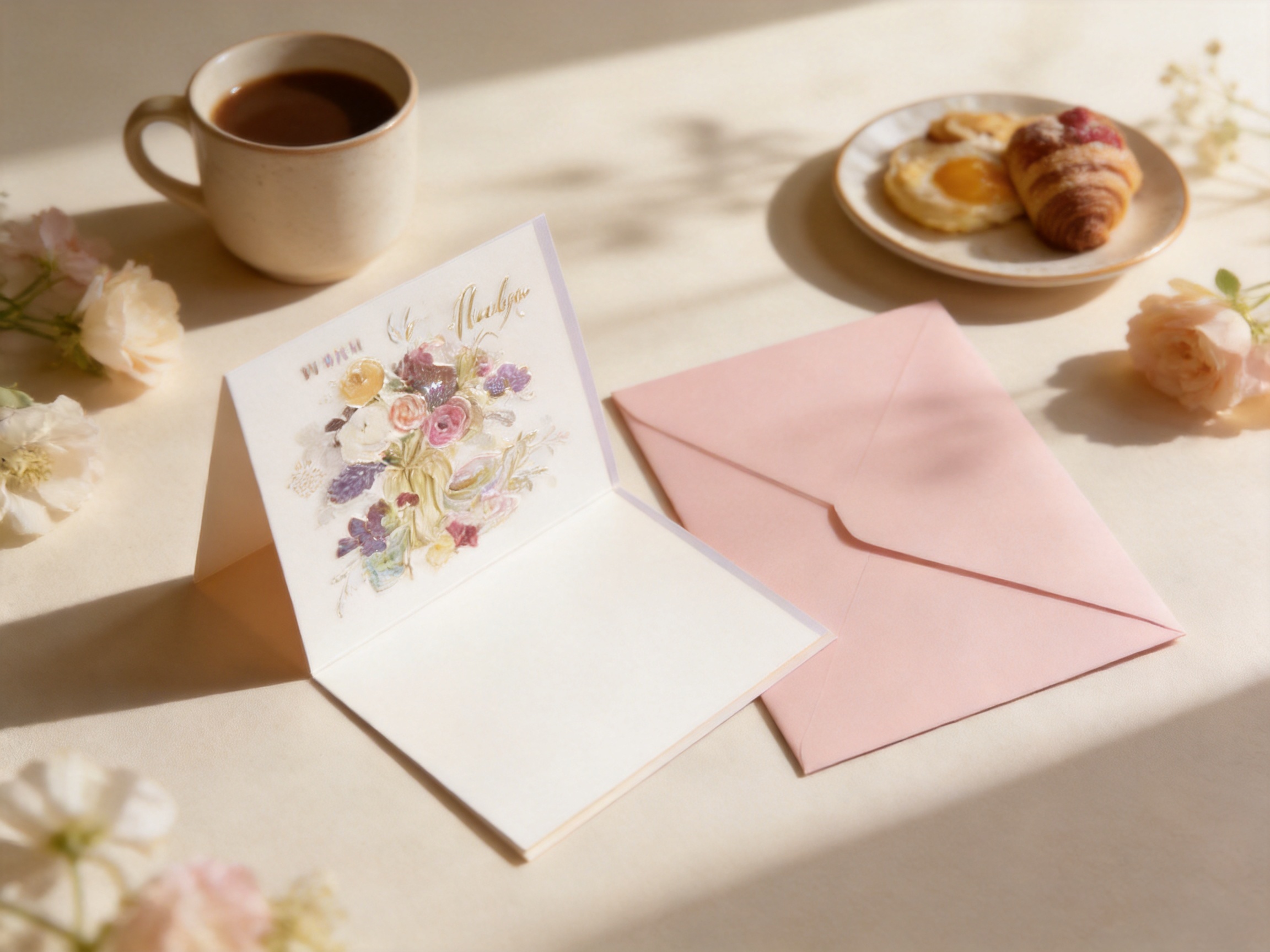
A greeting card is a small paper product, but its emotional value can be much greater than its physical size. The right card gives a personal message a memorable setting, making a simple greeting feel more considered and meaningful. The Delicate Flower Breakfast Coffee Style Greeting Card is designed for exactly this purpose. With a soft floral concept, a calm breakfast-and-coffee-inspired mood, and a refined 3D foil embossed front, it combines practical writing space with a tactile decorative finish.
Measuring approximately 12 by 17 centimeters, the card offers enough room for a short note, a friendly greeting, a thank-you message, or a longer personal message. Its matching envelope measures approximately 12.5 by 17.5 centimeters, giving the card a slightly larger protective sleeve that allows it to slide inside smoothly without bending or forcing. This careful size relationship supports both presentation and usability.
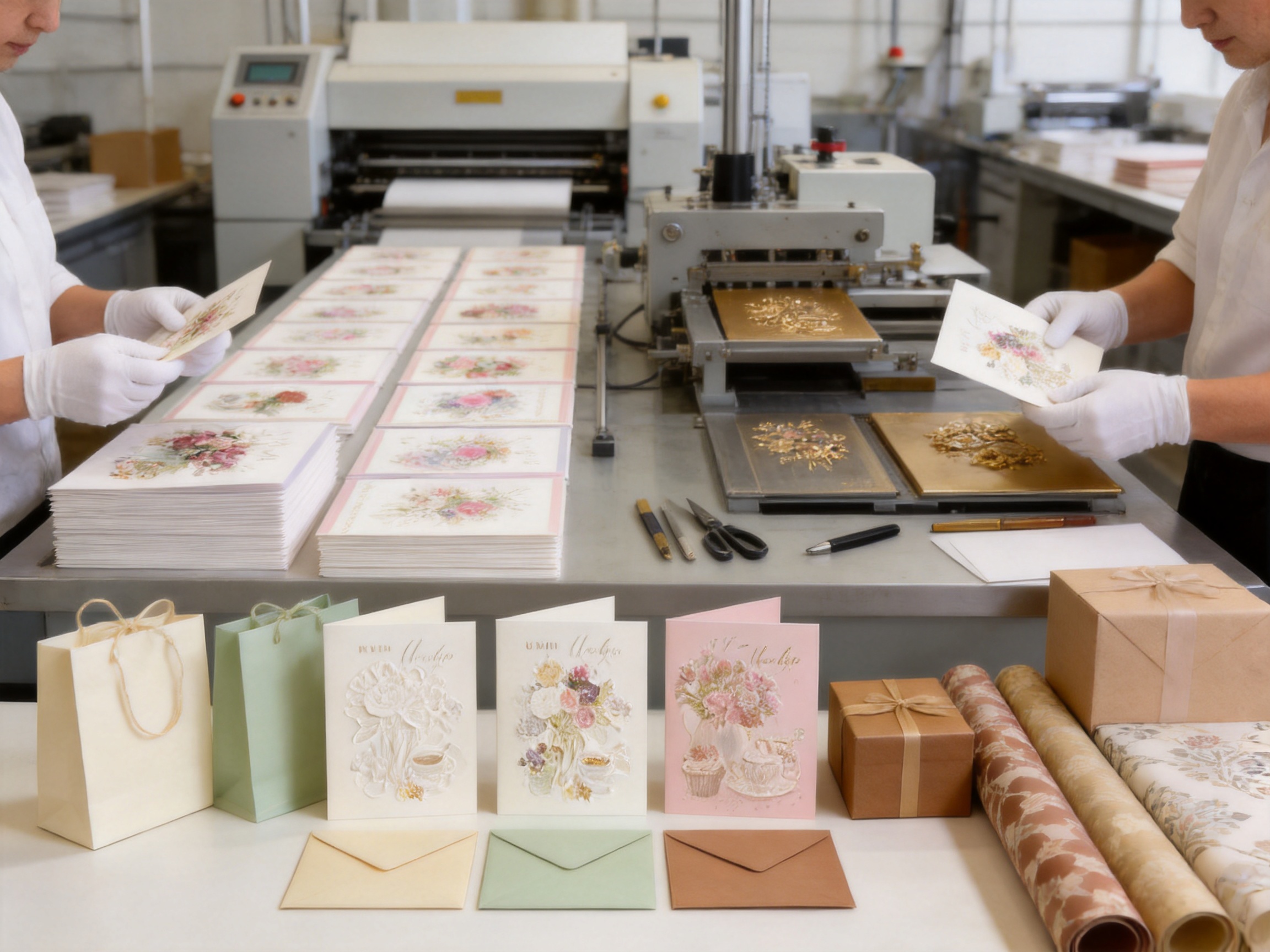
The card is produced by Yiwu Magic Tree Gift Bag Co., Ltd., a paper packaging manufacturer with extensive experience in greeting cards, gift bags, gift boxes, and patterned wrapping paper. The company combines design and prepress work with printing, laminating, hot stamping, creasing, bag making, and manual finishing. These capabilities create a strong manufacturing foundation for paper products that need attractive decoration, consistent dimensions, and reliable finishing quality.
For retailers, gift shops, stationery suppliers, coffee-themed stores, lifestyle brands, florists, and wholesale buyers, this greeting card offers a versatile product concept. It can be positioned as an everyday card, a seasonal paper gift accessory, a floral stationery item, or a complementary product for gift packaging collections. Its visual restraint also makes it suitable for customers who prefer elegant details over excessive brightness or complicated decoration.

Delicate Flower Breakfast Coffee Style Greeting Card
Product Overview
The Delicate Flower Breakfast Coffee Style Greeting Card brings together three important qualities: an approachable format, a decorative front surface, and a comfortable writing area. Rather than relying on a large graphic or an overly brilliant finish, the design uses delicate floral imagery and controlled foil embossing to create a more understated impression.
The product is approximately 12 by 17 centimeters. This format is compact enough to store, display, and package efficiently, while still providing useful space for written communication. Many small greeting cards leave very little room for handwriting, particularly when the inside design includes large illustrations or printed messages. This card takes a more practical approach by preserving an open area suitable for different types of notes.
The envelope is approximately 12.5 by 17.5 centimeters. The slight increase in width and height helps the card enter the envelope naturally. A well-matched envelope is important because a card that is too large can develop bent corners, while one that is too small can make the mailing or gifting process feel inconvenient. The measured difference between this card and its envelope supports easier handling.
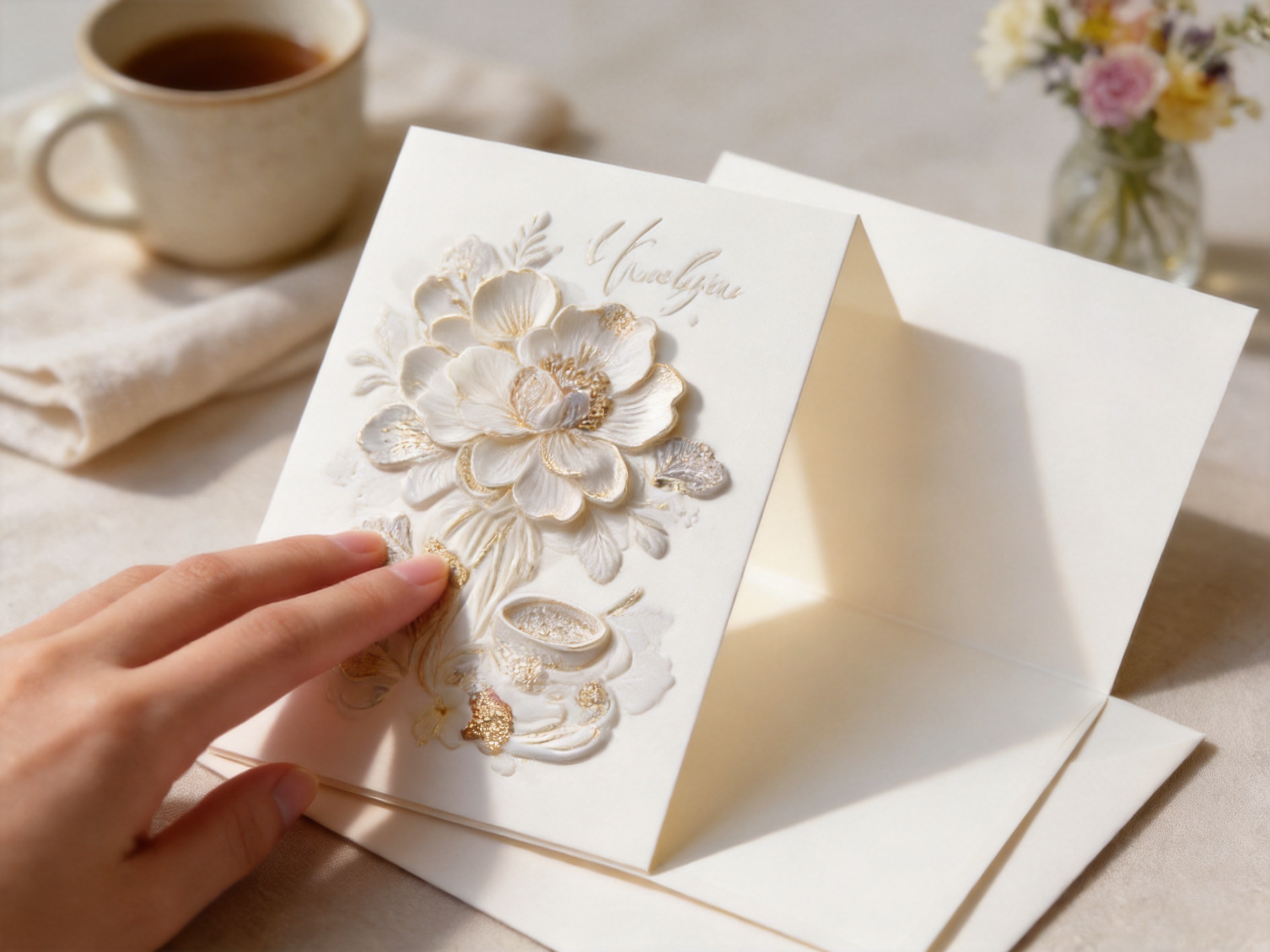
The front uses a 3D foil embossed treatment. This process combines a reflective foil element with raised surface detail. The foil is not intended to create an intense mirror effect across the entire front. Instead, it introduces small changes in reflection as the card moves under light. The floral areas become more noticeable from different viewing angles, giving the surface a subtle sense of movement.
The raised texture is intentionally gentle. When touched, the design can be felt, but it does not create a harsh, rough, or excessively heavy surface. This balance is useful for a greeting card because the product remains comfortable to hold, write on, display, and place inside an envelope. The finish adds tactile value without overwhelming the paper structure.
| Product Type | Greeting card |
| Design Theme | Delicate flower with breakfast and coffee-inspired styling |
| Card Size | Approximately 12 x 17 cm |
| Envelope Size | Approximately 12.5 x 17.5 cm |
| Front Treatment | 3D foil embossing |
| Writing Use | Short notes, greetings, thank-you messages, and longer personal messages |
| Recommended Sales Channels | Gift shops, stationery stores, florists, lifestyle retailers, coffee-themed stores, and wholesale distribution |
The Design Language of Flowers, Breakfast, and Coffee
Floral greeting cards are popular because flowers communicate warmth, care, celebration, gratitude, and encouragement without requiring a complicated explanation. The flower theme of this card is especially suitable for messages that should feel gentle and personal. It can support a range of occasions while remaining less formal than a highly ceremonial card.
The breakfast and coffee style adds a relaxed daily-life atmosphere. Instead of presenting flowers only as a formal botanical subject, the design places them within a familiar moment of comfort. Breakfast, coffee, and fresh flowers are associated with slow mornings, thoughtful routines, friendly conversations, and small acts of kindness. This makes the product suitable for customers who appreciate lifestyle-oriented stationery.
The design can be used for a simple hello, a thank-you note, a friendly encouragement, a birthday message, a message accompanying a gift, or an informal note between family members and friends. Its flexible theme does not restrict the purchaser to one narrow occasion. Retailers can therefore display it in general greeting-card sections as well as in floral, café, home décor, or gift-oriented collections.
A calm design can also help a product reach customers who do not prefer highly decorative stationery. Some competing greeting cards use large metallic areas, intense colors, glitter, oversized typography, or multiple layers of embellishment. Those styles may be effective for particular holidays, but they can feel too specific for everyday use. The delicate floral concept offers a quieter alternative with broader emotional appeal.
The front treatment supports this design language. Because the foil is not described as excessively shiny, the card can appear polished without feeling loud. The reflective changes become visible when the card is moved or viewed under different lighting conditions. This gives the buyer a discovery moment: the product looks refined at first glance, and the embossed details become more apparent through handling.
Why 3D Foil Embossing Adds Value
Paper decoration is most effective when it creates a clear connection between visual appeal and physical experience. A printed illustration can provide color and shape, but embossing adds dimension. Foil can provide a controlled reflective accent, but embossing gives the surface a more substantial presence. Combining the two treatments makes the front of the card more engaging than a standard flat print.
In a 3D foil embossed design, selected areas are raised so that the viewer can observe changes in height and surface contour. Foil is applied to create a refined highlight on or around the decorated areas. The result is not simply a metallic image. It is a layered surface treatment that interacts with light and touch.
This gives the card several advantages over products that depend only on ordinary printing. First, the design can catch attention on a retail display even when the colors remain restrained. Second, the customer can feel the raised details, creating a more memorable unboxing or gifting experience. Third, the card may appear more premium without requiring a complicated structure or heavy accessory package.
The treatment is also appropriate for a product intended to be written on and placed in an envelope. Because the decoration is focused on the front, the card can retain practical interior space. The surface is decorative where the customer sees it, while the usable message area remains central to the product’s purpose.
The gentle texture is an important point of differentiation. Some embossed products are designed to feel strongly sculpted, with deep impressions that may make the card less flexible or more difficult to stack. This greeting card uses a lighter tactile effect. The raised finish can be noticed with the fingertips, but it is not described as rough or heavy. That makes it more suitable for everyday stationery, retail handling, and efficient packing.
The controlled reflectivity also distinguishes the card from highly glossy alternatives. A strong metallic finish can sometimes dominate the design, making the product appear less versatile. Here, small changes in reflection help the flowers stand out while preserving a calm overall appearance. This balance supports a premium impression based on detail rather than excess.
Visual Appeal in Different Lighting
Retail lighting, home lighting, natural daylight, and gift-opening environments do not all affect paper products in the same way. A completely flat printed image tends to look similar under most conditions. A foil embossed design has more variation. As the card shifts position, the reflective areas can appear lighter, darker, warmer, or more distinct depending on the angle.
This variation can help the product perform well on a display rack. A shopper walking past may notice a small glint from the floral decoration. After picking up the card, the shopper can see the raised surface and observe how the foil changes with movement. The product therefore benefits from both distance appeal and close-up inspection.
Tactile Experience and Perceived Quality
Touch is particularly important in paper goods. Customers often pick up cards before purchasing them, checking the paper weight, smoothness, flexibility, and decorative finish. A gentle embossed texture provides an immediate physical signal that the product has received additional finishing work.
This tactile response can influence perceived value. A card that feels considered and well-finished may be selected for a more meaningful message or paired with a higher-value gift. For retailers, this creates an opportunity to position the product above basic mass-market cards while keeping the design accessible for everyday purchases.
Practical Writing Space for Real Messages
Greeting cards are decorative products, but they must also function as writing tools. A beautiful front cannot fully compensate for an interior that is difficult to use. The approximate 12 by 17 centimeter format provides a useful balance between portability and writing capacity.
The card can accommodate a short note for a casual greeting. It can also support a more complete message when the sender wants to explain appreciation, include a personal memory, or write a longer expression of care. This flexibility is valuable because buyers often choose greeting cards before deciding exactly how much they will write.
A card with sufficient writing space can serve several customer preferences. Some people prefer one or two sentences, while others enjoy writing a full paragraph. Some buyers want to add a date, a signature, or a small hand-drawn detail. A practical size gives the sender freedom instead of forcing the message into a very limited area.
The size is also manageable for storage and handling. Retailers can stack the cards, organize them in sectioned displays, or place them beside envelopes and gift accessories. Customers can carry the product easily and store it with other stationery. For wholesale buyers, a moderate format can simplify carton arrangement and reduce unnecessary volume compared with oversized cards.
The card’s envelope is slightly larger than the card, which supports smoother insertion. This is a small but important functional advantage. When the envelope fits properly, the finished product is less likely to suffer from bent corners, folded edges, or damaged embossed details during routine handling.
For a gift shop or stationery retailer, a card that is easy to use can reduce customer hesitation. The buyer can understand the format immediately, see that the envelope is included as part of the presentation, and feel confident that the card is suitable for a personal message.
Advantages Over Basic Printed Greeting Cards
Basic printed greeting cards remain useful, but they often rely almost entirely on color and illustration to create appeal. Their surfaces may be flat, and their visual effect may not change significantly when the customer handles the card. The Delicate Flower Breakfast Coffee Style Greeting Card offers a more layered experience through the combination of floral artwork, foil reflection, and raised texture.
The first advantage is perceived craftsmanship. A 3D foil embossed front suggests that the card has passed through additional finishing stages rather than receiving only a standard print application. This can make the item more appropriate for customers searching for a refined gift accessory or a premium personal note.
The second advantage is shelf presence. A restrained design may still attract attention because the foil can catch light in small areas. Unlike a fully matte card that may blend into a crowded display, the embossed details introduce a changing highlight. Unlike a card covered with bright metallic effects, the product remains visually calm.
The third advantage is tactile differentiation. Many paper products are evaluated only visually. The raised floral details encourage the shopper to touch the card, which can increase engagement and create a stronger memory of the product. This is particularly beneficial in physical retail, where the customer can directly experience the finish.
The fourth advantage is versatility. Some highly themed greeting cards are linked to a specific holiday, age group, relationship, or event. The flower and coffee-inspired concept is more open-ended. It can be sold as an everyday card, a thank-you card, a friendship card, or a small addition to a gift order.
The fifth advantage is the balance between decoration and usability. The card is not presented as a heavily layered construction that may be difficult to write on or mail. Its value comes from the front finish and the overall design quality, while the format remains practical for normal greeting-card use.
Advantages Over Excessively Decorative Alternatives
At the other end of the market, some cards use numerous embellishments such as glitter, large bows, thick attachments, multiple paper layers, or extensive metallic coverage. These products can create a dramatic first impression, but they may also be less convenient to store, write on, package, and mail.
The Delicate Flower Breakfast Coffee Style Greeting Card offers a more controlled approach. The 3D foil embossed treatment delivers dimension and reflection without requiring a bulky structure. This can support cleaner retail presentation and easier storage. The card can remain an elegant paper product rather than becoming a complex assembled object.
A lighter design can also make the card easier to match with other products. It can sit beside a gift bag, gift box, wrapping paper, floral arrangement, coffee gift set, or small lifestyle product without competing with the main item. Retailers can use it as part of a coordinated collection or sell it independently.
The restrained finish may also appeal to customers who value modern simplicity. Not every recipient wants a card that is highly glittered or visually intense. A delicate flower design with modest reflective detail can communicate care in a quieter, more sophisticated way.
Advantages Over Poorly Matched Card and Envelope Sets
A greeting card and envelope should be considered as one product experience. If the envelope is too tight, the card can be damaged. If it is too loose, the card may move around and appear untidy. If the two pieces differ substantially in proportion, the set may look unfinished.
The approximately 12.5 by 17.5 centimeter envelope is slightly larger than the approximately 12 by 17 centimeter card. This relationship allows the card to slide inside without bending or forcing. The customer can prepare the card efficiently, and the finished set can be closed with a clean appearance.
This practical compatibility is especially valuable for wholesale and retail environments. A card that fits its envelope consistently is easier for staff to handle, easier for customers to understand, and less likely to generate complaints related to packaging convenience.
The envelope also protects the decorated card during storage and transport. While normal care is still necessary for all paper products, a suitable envelope creates a basic barrier against rubbing, corner damage, and unnecessary exposure during everyday handling.
Manufacturing Experience Behind the Product
The card is manufactured by Yiwu Magic Tree Gift Bag Co., Ltd., a company with roots extending back to 1996, when it operated as Fushida Plastic Factory. The business was rebranded in 2019 as Magic Tree Paper Products Co., Ltd. This long operating history provides a substantial base of experience in packaging and paper product manufacturing.
The company specializes in white cardboard, coated paper, and kraft paper products. Its product range includes paper bags, gift bags, gift boxes, greeting cards, and patterned wrapping paper. This broad category knowledge is relevant to the greeting card because the product belongs to a larger packaging and gifting ecosystem rather than being produced as an isolated stationery item.
Experience across related paper products can support better understanding of folding, surface treatment, print coordination, material selection, and packaging presentation. A company that produces both cards and gift packaging can also recognize how the products may be used together by retailers and brands.
The manufacturer serves clients in the United States, Canada, Mexico, the United Kingdom, Japan, and China. Working with buyers in multiple markets requires attention to communication, product specifications, packaging expectations, and delivery coordination. International customer experience can help a manufacturer build more structured production and service processes.
The company reports an annual output value exceeding 50 million yuan. This figure reflects a substantial operating scale and indicates that the business is equipped to support more than small, isolated production tasks. For wholesale buyers, scale can be important because it may provide better production coordination, repeat-order support, and capacity planning.
Integrated Production Capabilities
One of the company’s strengths is its in-house production coverage. The listed capabilities include professional design and prepress, laminating, hot stamping, creasing, printing, bag making, and manual finishing. These processes are highly relevant to the manufacture of decorated paper products.
Design and Prepress
Professional design and prepress work establish the technical foundation for the finished card. Before printing and finishing begin, artwork must be prepared for the chosen material, dimensions, colors, and decorative processes. Foil and embossing require especially careful coordination because the printed or decorated areas must align with the intended design.
Prepress preparation can include checking artwork proportions, confirming dielines, arranging print files, reviewing color requirements, and preparing finishing positions. Proper preparation helps reduce production errors and supports repeatability when an order needs to be manufactured again.
For a floral design with delicate details, the prepress stage is particularly important. Fine lines and small decorative areas must be considered in relation to the foil and embossed treatment. The company’s design and prepress capability creates a direct link between the artistic concept and the physical result.
Printing
Printing establishes the base visual layer of a greeting card. It provides the background, artwork, typography, and color structure that support the decorative front. The quality of printing influences how clearly the floral theme is presented and how well the foil detail integrates into the overall composition.
In a restrained design, color control is important because there are fewer visual elements to distract from inconsistencies. A clean print foundation allows the flower imagery and coffee-inspired mood to remain balanced. It also provides a suitable background for the reflective and raised elements.
Hot Stamping and Foil Application
Hot stamping is associated with the reflective foil component of the product. The process applies foil to selected areas using controlled heat and pressure. When properly coordinated with the artwork and embossed structure, it can create highlights that appear refined rather than excessive.
The purpose of foil on this card is not merely to make the surface shiny. It helps reveal the flower details through changing reflections. The result depends on the relationship between the foil, paper surface, pressure, temperature, and design positioning. In-house capabilities in related finishing processes can help the manufacturer coordinate these elements more efficiently.
Embossing
Embossing creates raised areas on the paper surface. For this greeting card, the embossing supports the floral design and gives the front a tactile dimension. The desired effect is gentle rather than rough or heavy, which means that the finish must be controlled to preserve both visual elegance and practical flexibility.
Embossing can also improve the way light interacts with the foil. Raised contours may catch highlights differently from flat areas, making the design more noticeable as the card is moved. This interaction is central to the product’s premium character.
Laminating
Laminating is another listed company capability. Depending on the selected product structure and specification, lamination can support surface protection, appearance, and handling performance. Although the supplied product information identifies the front treatment specifically as 3D foil embossing, the company’s broader finishing capability provides additional options for developing related paper packaging products.
Creasing and Structural Preparation
Creasing supports clean folding and helps paper products maintain a defined shape. For a greeting card, accurate creasing is important because the card must open and close neatly while protecting the printed and embossed front. Consistent structural preparation also contributes to a better fit inside the envelope.
Manual Finishing
Manual finishing can be useful for products that require inspection, assembly, alignment, or detailed handling. Greeting cards may need careful checking of the decorative surface, folding, envelope matching, and final presentation. Human attention at the finishing stage can complement automated production steps, particularly when a product contains tactile or reflective details.
Quality Control Through Process Integration
When design, printing, finishing, and manual handling are managed within one production system, communication between stages can be more direct. This integration can help reduce misunderstandings about artwork, materials, finishing positions, and packaging requirements.
The company states that it manages the production process from raw materials to finished products. This end-to-end approach supports more consistent oversight. Instead of relying entirely on disconnected external suppliers, the manufacturer can coordinate key stages as part of a unified workflow.
For the greeting card, process integration may be especially valuable because the final appearance depends on several connected details. The card size, envelope size, printed design, foil area, embossed texture, fold, and final packing all need to work together. A problem in one stage can affect the customer’s experience of the complete set.
Consistent quality is important for buyers who plan to reorder. A retailer may need the same product to maintain a stable appearance across different purchase periods. A brand may also require reliable dimensions and finishing so that the card can be included in a larger gift packaging program.
Although every production order requires its own specification and quality checks, an integrated factory structure creates a strong foundation for repeatable manufacturing. It can support clearer communication, more efficient scheduling, and more controlled final inspection.
Material Knowledge and Paper Product Expertise
Magic Tree works with white cardboard, coated paper, and kraft paper products. Each paper type has different visual and handling characteristics. White cardboard can provide a clean base for detailed printing and decorative treatments. Coated paper can support smooth imagery and surface presentation. Kraft paper can contribute a natural, organic appearance for selected packaging styles.
The Delicate Flower Breakfast Coffee Style Greeting Card belongs to a category where surface quality matters. The front must present the floral design clearly, support foil application, accept embossing, and remain practical for writing and storage. Experience with several paper categories gives the manufacturer a broader basis for selecting and coordinating materials according to product requirements.
Paper expertise also supports related product development. A buyer interested in the greeting card may later require matching gift bags, gift boxes, or patterned wrapping paper. A manufacturer already working across these categories can help create a more coordinated product family.
For brands and retailers, coordination can improve the customer experience. A floral greeting card paired with complementary wrapping paper or a matching gift bag can create a complete presentation. Even when the products are not identical, shared colors, motifs, or finishing details can make the collection feel intentional.
Wholesale and Retail Applications
The greeting card is suitable for a variety of sales environments. In a traditional stationery store, it can be placed in a floral or everyday greeting section. In a gift shop, it can be displayed beside small presents, candles, ceramics, coffee accessories, or floral merchandise.
Florists may use the card as an add-on product for bouquets and plant gifts. The flower theme creates a natural connection, while the practical writing space allows customers to add a personal message to an arrangement. Coffee shops and lifestyle stores may also find the breakfast and coffee mood relevant to their merchandise selection.
Online sellers can present the product as a tactile and decorative stationery item. Product photography can show the floral front, the card-and-envelope size relationship, and the way the foil changes under light. Buyers who cannot touch the card in an online setting may benefit from clear information about the gentle raised texture and practical format.
Gift box suppliers can include the card as part of a coordinated packaging assortment. A card adds emotional communication to an otherwise functional package. When combined with a gift bag or wrapping paper, it helps transform a product purchase into a more complete gifting experience.
Wholesale buyers can also use the card for seasonal or thematic collections. The floral design is adaptable enough for spring displays, breakfast gift sets, friendship promotions, thank-you campaigns, or general lifestyle assortments. Its use does not have to be limited to one annual holiday.
Merchandising Recommendations
The card should be displayed where customers can see the front treatment clearly. Because the foil reflection changes with lighting and viewing angle, a display position with moderate illumination can help reveal the finish. Overly dark placement may hide the subtle reflective effect, while very strong glare may make the design difficult to inspect.
Displaying a sample outside its envelope can help customers understand the card size and surface texture. Additional units can remain packaged or organized behind the display sample. This approach combines visual presentation with practical inventory management.
The product may be merchandised beside complementary colors and materials. Soft floral products, neutral gift bags, kraft packaging, coffee-related accessories, and simple white or natural-toned boxes can reinforce the card’s relaxed design language.
Retail staff can describe the card in practical terms: it has a 12 by 17 centimeter format, a slightly larger envelope, a 3D foil embossed front, and enough room for a personal message. These points explain both the visual and functional value without making exaggerated claims.
For online listings, the product title and description should emphasize the floral concept, breakfast and coffee mood, card size, envelope size, and tactile finish. Images should show the front at more than one angle if possible, because the foil effect is best understood through changes in reflection.
Packaging and Presentation Benefits
As a paper product manufacturer, Magic Tree understands that presentation extends beyond the card itself. A greeting card may be purchased as part of a broader gift experience, and its packaging should protect the product while preserving its visual appeal.
The matching envelope supports a complete presentation. The customer does not need to search for a separate envelope with a suitable size. This convenience can be especially useful for quick gift purchases and retail displays.
The card’s moderate size also supports efficient storage. It can be arranged in standard stationery organizers, stacked in cartons, or included in product assortments without the space requirements of oversized or heavily dimensional cards.
The front treatment provides value without relying on bulky add-ons. This may simplify packing compared with cards that contain large attached decorations. A more streamlined product can be easier to handle in wholesale distribution and less likely to interfere with neighboring products.
For brands developing a paper packaging collection, the card can serve as an emotional complement to practical packaging products. Gift bags and gift boxes carry the physical item, wrapping paper creates the outer presentation, and the greeting card carries the personal message. The manufacturer’s ability to produce all these categories creates opportunities for coordinated sourcing.
Customization and Product Development Potential
The supplied product information identifies the card’s existing size and treatment, but the manufacturer’s design, prepress, printing, and finishing capabilities also support broader paper product development. Buyers seeking a related product line can discuss artwork, dimensions, paper selection, print coverage, foil placement, embossing style, envelope specifications, and packaging arrangements.
Customization may be valuable for retailers that want a distinctive assortment rather than a completely generic card. A business could develop a coordinated floral series, a coffee-themed stationery collection, or a group of cards using related motifs across several formats.
Design development should consider the intended use of the card. If the product is for everyday messages, a flexible design and open interior may be preferred. If it is for a particular campaign, the front could include more specific wording or visual cues. The manufacturing process can then be planned around the selected artwork and finishing requirements.
Custom production can also support brand consistency. A retailer may want its gift bags, gift boxes, wrapping paper, and greeting cards to share a color palette or decorative language. Since Magic Tree manufactures these categories, the buyer can explore a coordinated sourcing strategy rather than managing every item through a separate supplier.
For custom projects, it is important to confirm all technical details before production. These may include final dimensions, paper thickness, fold position, envelope construction, artwork files, color expectations, foil type, embossing depth, packing method, order quantity, and inspection requirements. Clear specifications help align design intention with production execution.
Eco-Conscious Paper Packaging Direction
Magic Tree describes its products as including eco-friendly paper packaging solutions. Paper-based products such as greeting cards, gift bags, gift boxes, and wrapping paper can support brands that want to present a more paper-centered packaging direction. The specific environmental performance of a product depends on its materials, coatings, inks, adhesives, finishing treatments, and end-of-life conditions, so buyers should confirm the requirements relevant to their market.
The greeting card’s paper format makes it compatible with a broader conversation about responsible packaging design. Its value comes from a useful size, a practical envelope, and a focused decorative treatment rather than an unnecessarily complex structure. A streamlined paper product may help brands consider how to balance presentation, usability, and material efficiency.
For buyers with environmental specifications, discussions should address the desired paper grade, recycled content where applicable, coating requirements, packaging materials, and relevant documentation. A professional supplier can help clarify which options are available for a particular order and market.
The company’s experience with white cardboard, coated paper, kraft paper, and related packaging categories gives buyers a useful starting point for evaluating material choices. The final selection should always match the product’s required appearance, tactile effect, strength, print quality, and regulatory expectations.
Why the Product Works for Modern Gift Culture
Modern gifting often combines a physical object with a personal message. Even when people communicate digitally every day, a handwritten card can feel more deliberate because it requires time, attention, and physical action. The card becomes a lasting reminder of the occasion and the relationship behind the gift.
This product is designed for that small but meaningful role. Its front offers a refined presentation, while its interior provides space for the sender’s own words. The floral and coffee-inspired theme connects with everyday moments of comfort, making the card suitable for both planned celebrations and spontaneous gestures.
The tactile finish also contributes to the idea of a thoughtful gift. The recipient can see the delicate design, notice the changing foil reflection, and feel the raised surface. These details create a multisensory experience that a purely digital message cannot provide in the same way.
Because the design is not restricted to one specific occasion, it can support a wider range of gifting habits. A customer may buy it for a friend, family member, colleague, customer, host, or recipient of a small personal gift. This broad use potential can help retailers maintain steady demand beyond major holidays.
Careful Balance Between Premium and Approachable
A successful greeting card often needs to appear special without becoming inaccessible. If the design is too plain, the customer may not feel that it adds enough value. If it is too elaborate, the card may seem suitable only for a narrow audience or a major event.
The Delicate Flower Breakfast Coffee Style Greeting Card occupies a balanced position. The 3D foil embossed front gives it a premium feature, while the delicate design keeps the mood approachable. The card feels more refined than a basic flat print but remains suitable for everyday messages.
The practical dimensions reinforce this balance. The card is large enough for meaningful writing but compact enough for easy storage and handling. The envelope is slightly larger and functional rather than unusually elaborate. The product therefore communicates quality through controlled design and finishing rather than unnecessary complexity.
This positioning can help retailers offer customers a mid-to-premium paper product with broad appeal. It may sit comfortably within a curated stationery collection, a gift accessory display, or a lifestyle assortment.
Quality Considerations for Buyers
Wholesale buyers evaluating this product should review the visible and functional elements together. The front should show clean alignment between the floral artwork, foil, and embossed details. The raised areas should feel intentional and consistent, with a gentle texture rather than rough or uneven impressions.
The card should open cleanly and maintain a practical writing surface. The envelope should be large enough to accept the card without forcing, while still presenting the card neatly inside. Corners and edges should be checked because they influence both retail appearance and customer satisfaction.
Buyers should also consider how the card will be packed for shipment. Protective packing can help reduce bending, surface rubbing, and corner damage during transport. The final packing method should reflect the order volume, shipping route, display requirements, and handling conditions.
For repeat orders, buyers may establish reference samples or approved production standards. A reference sample can help compare future batches for size, color, foil position, embossed appearance, folding, envelope fit, and overall presentation.
Q&A
What is the size of the greeting card?
The card is approximately 12 by 17 centimeters. This size provides a useful balance between portability and writing capacity, making it suitable for short notes as well as longer personal messages.
What size is the envelope?
The envelope is approximately 12.5 by 17.5 centimeters. It is slightly larger than the card so that the card can slide inside without bending or excessive force.
What decorative treatment is used on the front?
The front features a 3D foil embossed treatment. The foil creates controlled reflective highlights, while the embossing raises selected design areas to provide a gentle tactile effect.
Is the foil highly shiny?
The finish is designed to be refined rather than excessively brilliant. Small changes in reflection can be seen when the card is moved or viewed under different lighting, especially around the flower details.
Can the embossed design be felt?
Yes. The raised areas can be felt with the fingertips, but the texture is described as gentle rather than rough or heavy.
What types of messages can be written inside?
The card can be used for short notes, simple greetings, thank-you messages, friendly encouragement, gift messages, or longer personal notes.
What occasions is the card suitable for?
Its floral and breakfast coffee style is flexible enough for everyday greetings, friendship messages, thank-you notes, small gifts, floral arrangements, lifestyle products, and informal celebrations.
Who manufactures the product?
The product is manufactured by Yiwu Magic Tree Gift Bag Co., Ltd., a company specializing in paper bags, gift bags, gift boxes, greeting cards, and patterned wrapping paper.
What manufacturing capabilities does the company have?
The company’s listed capabilities include professional design and prepress, laminating, hot stamping, creasing, printing, bag making, and manual finishing. These capabilities support the development and production of decorated paper packaging products.
How long has the company been operating?
The company’s history dates back to 1996, when it operated as Fushida Plastic Factory. It was rebranded in 2019 as Magic Tree Paper Products Co., Ltd.
Does the company produce products besides greeting cards?
Yes. The company produces paper bags, gift bags, gift boxes, greeting cards, and patterned wrapping paper, using materials such as white cardboard, coated paper, and kraft paper.
Can buyers explore coordinated packaging products?
Yes. Since the manufacturer works across greeting cards and other paper packaging categories, buyers can discuss related gift bags, gift boxes, wrapping paper, and coordinated paper product collections.
Is the card suitable for wholesale retail programs?
Yes. Its practical size, matching envelope, versatile floral theme, and refined front treatment make it suitable for stationery stores, gift shops, florists, lifestyle retailers, coffee-themed stores, and wholesale assortments.
What should buyers confirm before placing a custom order?
Buyers should confirm dimensions, paper type, artwork, print colors, foil placement, embossing requirements, envelope specifications, order quantity, packing method, delivery expectations, and quality inspection standards.
Conclusion
The Delicate Flower Breakfast Coffee Style Greeting Card combines a calm floral concept with a useful writing format and a refined 3D foil embossed front. Its approximately 12 by 17 centimeter size gives the sender room for a personal message, while the approximately 12.5 by 17.5 centimeter envelope supports smooth insertion and complete presentation.
Its strongest product advantages come from balance. The foil offers changing reflection without overwhelming shine. The embossing adds dimension without creating a rough or heavy surface. The design feels special enough for gifting while remaining versatile enough for everyday notes. Compared with flat printed cards, it offers stronger tactile and visual engagement. Compared with heavily embellished alternatives, it is more streamlined and practical.
The manufacturing foundation adds further value. Yiwu Magic Tree Gift Bag Co., Ltd. brings long-term experience in paper packaging, an integrated production structure, and in-house capabilities covering design, prepress, printing, hot stamping, embossing-related finishing, laminating, creasing, and manual finishing. Its broader product range also supports coordinated sourcing across greeting cards, gift bags, gift boxes, and patterned wrapping paper.
For retailers, brands, and wholesale buyers seeking a floral greeting card with a premium but approachable character, this product offers a dependable combination of presentation, usability, and manufacturing expertise. It turns a simple paper format into a more thoughtful communication product while supporting the practical needs of modern gift and stationery distribution.
References
1. Product specification sheet for the Delicate Flower Breakfast Coffee Style Greeting Card, including card size, envelope size, and 3D foil emboss treatment.
2. Company information supplied for Yiwu Magic Tree Gift Bag Co., Ltd., including company history, product categories, manufacturing capabilities, and international service markets.
3. General paper packaging production principles relating to printing, embossing, foil application, creasing, laminating, and manual finishing.
4. General retail merchandising practices for greeting cards, stationery, gift accessories, and coordinated paper packaging collections.
5. General design considerations for tactile paper products, including writing space, card-and-envelope proportion, surface finishing, and customer handling experience.