中文简体
 русский
 Français
 Español
 Deutsch
 عربى

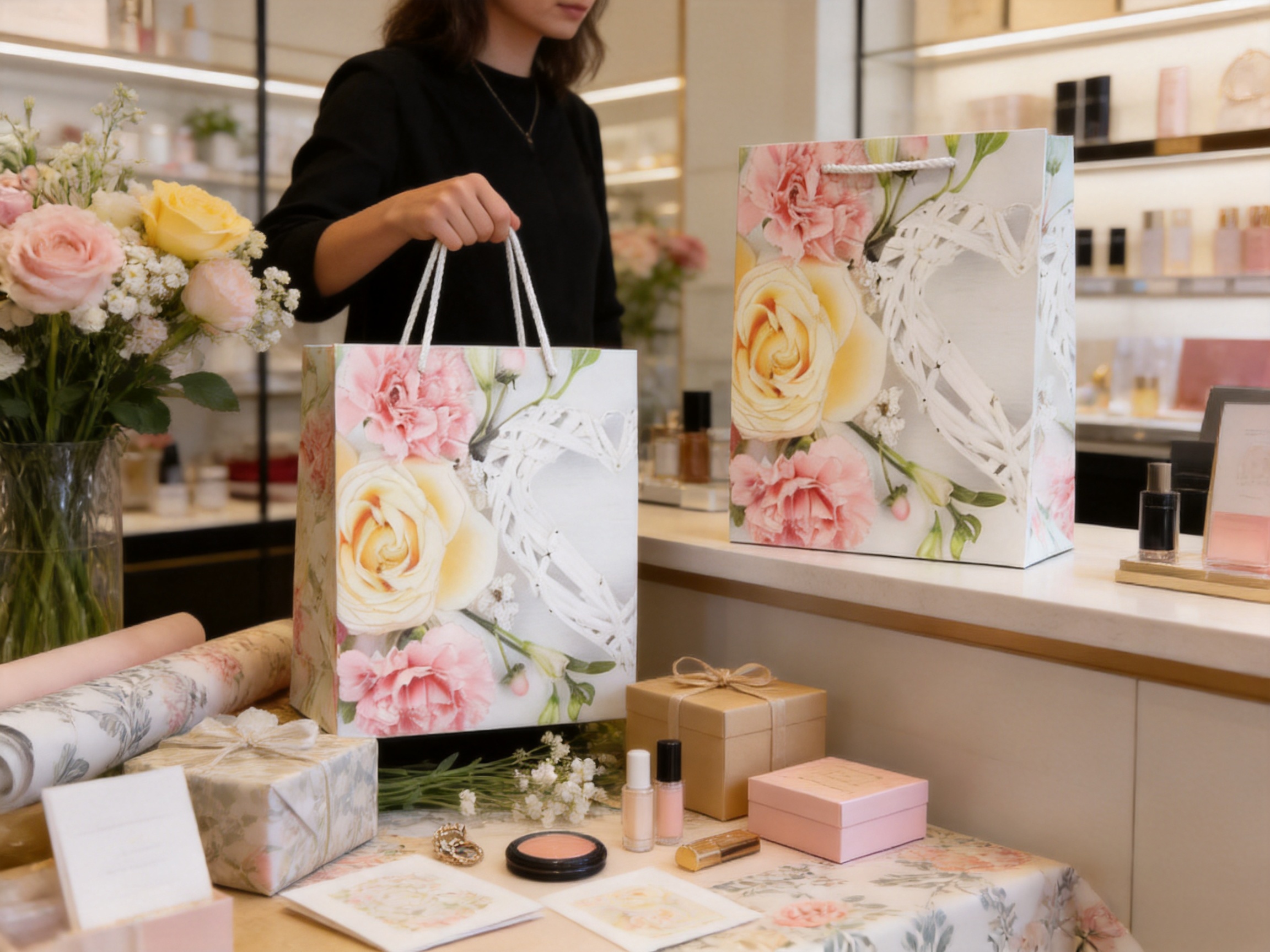
Custom paper gift bags combine practical carrying performance with the visual appeal expected from modern retail and gifting. A bag may protect a product, make a purchase easier to carry, and communicate a brand message before the recipient even sees what is inside. When floral patterns, carefully selected paper, and an exclusive logo are brought together, ordinary packaging becomes part of the customer experience.
This product category is especially useful for retailers, gift shops, florists, apparel stores, beauty brands, event organizers, promotional campaigns, and businesses that want packaging to look coordinated with their products. The bag can be adjusted according to the item it will hold, the distance it must travel, the required presentation standard, and the intended budget. Paper thickness, bag dimensions, handle construction, printing coverage, surface treatment, and finishing details can all influence the final result.
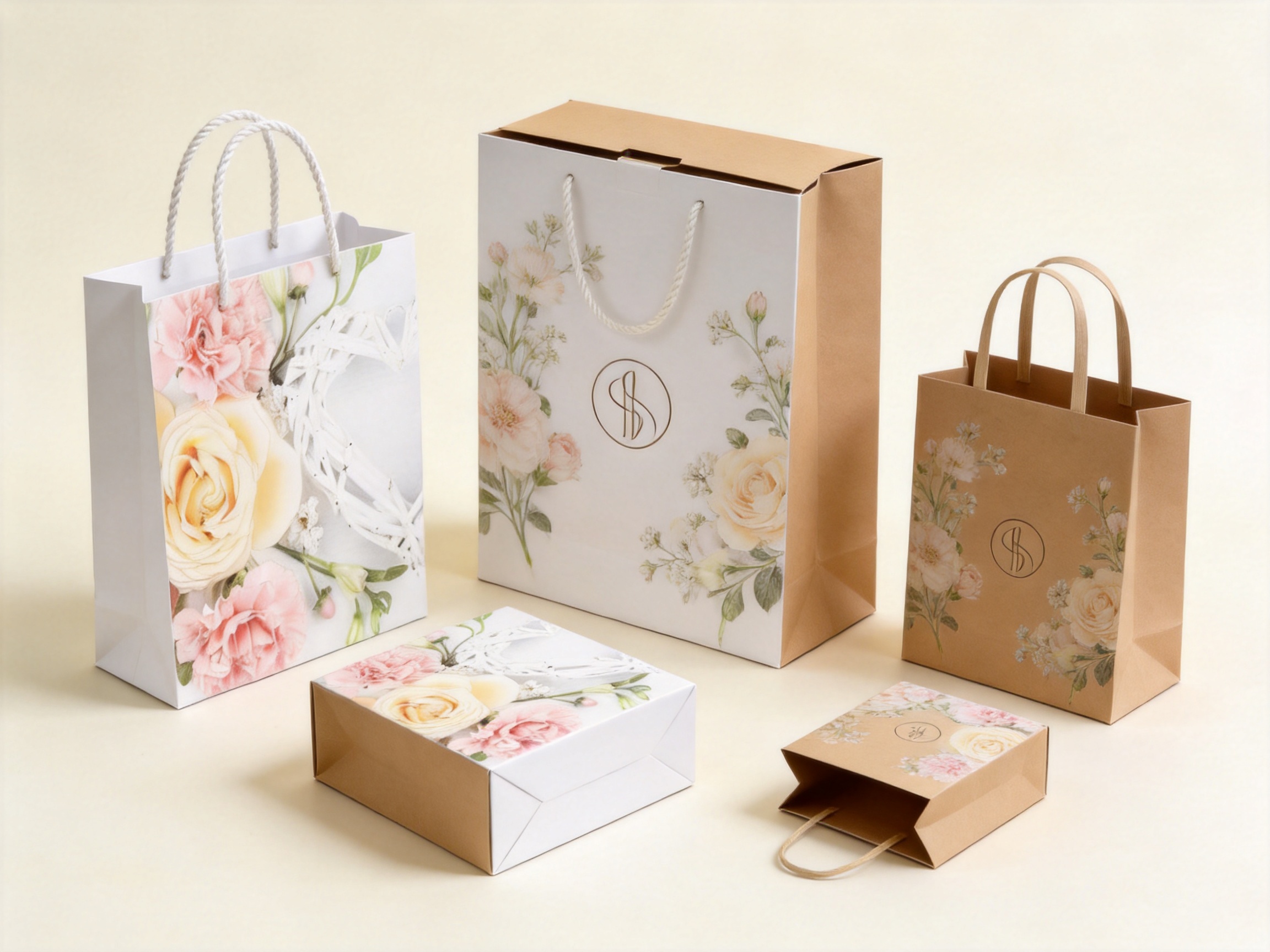
Custom floral paper gift bags offer an adaptable alternative to generic stock bags. A simple logo can create a clean and understated appearance, while a full floral layout can make the packaging more decorative and memorable. The same manufacturing approach can support different combinations of kraft paper, coated paper, and white cardboard, allowing buyers to balance appearance, strength, and environmental preferences.
What Makes a Custom Floral Paper Gift Bag Valuable?
A gift bag has two basic responsibilities: it must hold the intended product safely, and it must look appropriate for the occasion or brand. Successful packaging performs both tasks without allowing one requirement to weaken the other. A bag that looks attractive but tears under normal use creates a poor customer experience. A strong bag with no visual identity may protect the product but contribute little to recognition or emotional appeal.
Custom floral paper gift bags are designed to address both needs. The structure can be adjusted for the contents, while the printed surface can be developed around a specific visual theme. Floral designs are naturally versatile. They may be soft and elegant for wedding favors, colorful and energetic for seasonal promotions, refined and minimal for premium retail, or playful and bright for children’s gifts.
The logo can be placed in a prominent central position, repeated as a pattern, integrated into the floral artwork, or kept small for a more discreet presentation. This flexibility helps businesses create packaging that matches their identity instead of relying on a universal design used by unrelated sellers.
Unlike disposable packaging that disappears from the customer’s attention immediately, a well-made paper gift bag may be reused. The recipient can carry personal items, store small products, or use the bag for another gift. Reuse gives the printed design additional exposure and may extend the useful life of the packaging beyond the original purchase.
Product Structure and Material Selection
Choosing the Correct Paper Thickness
Paper thickness is one of the most important decisions in bag development. Heavier products generally require a stronger paper construction and a more stable bottom. Lighter products can use a thinner option when the bag is intended for short-distance carrying or temporary presentation. Selecting an appropriate grade helps avoid unnecessary material use while maintaining dependable performance.
For heavier items, thicker paper can improve resistance to tearing, creasing, and deformation. It may also create a more substantial hand feel, which is useful for premium retail packaging. However, stronger paper may increase material cost and shipping weight. For lightweight products such as greeting cards, small accessories, confectionery, or promotional materials, a lighter paper may provide a more efficient solution.
Paper selection should consider more than the weight of the item. The shape of the contents, the sharpness of edges, the length of time the bag will be carried, humidity exposure, stacking conditions, and whether the bag will be reused can all affect the required specification.
White Cardboard
White cardboard provides a clean and bright surface for detailed printing. It is suitable when floral colors, logo clarity, and high visual contrast are central to the design. A white base can help delicate flowers, fine lines, and subtle color transitions appear more clearly than they would on a darker or naturally brown substrate.
This material is often considered for retail packaging where the printed appearance must support a polished presentation. It can also be useful when the brand identity includes light colors, pastel tones, metallic accents, or a large amount of negative space.
Coated Paper
Coated paper is commonly selected for applications that require a smoother printing surface. Its finish can support crisp images, sharp typography, and more controlled color reproduction. A smooth surface is particularly useful for floral patterns containing fine petals, thin stems, gradients, or repeated decorative elements.
The coating and final surface treatment should be selected together with the artwork and intended use. A glossy appearance may create a bright and reflective effect, while a matte surface can provide a softer and more refined impression. Buyers should consider whether the bag should feel luxurious, natural, contemporary, festive, or understated.
Kraft Paper
Kraft paper offers a more natural and tactile appearance. Its warm tone can complement botanical artwork, earth-inspired color palettes, organic product lines, and brands that want a less formal visual identity. Kraft paper may also support an eco-conscious packaging message when it is paired with responsible material choices and appropriate communication.
Because the base color influences printed colors, floral artwork prepared for kraft paper may need a different color strategy from artwork prepared for white paper. Bright colors can appear more muted, while dark green, brown, black, cream, and selected warm tones may integrate naturally with the substrate.
Material selection is therefore both a structural and visual decision. A professional supplier should help match the paper grade to product weight, printing goals, bag dimensions, intended handling, and the desired presentation level.

Custom Paper Gift Bags with Floral Patterns and Your Exclusive Logo
Floral Printing and Exclusive Logo Customization
The main visual advantage of this product is the ability to combine a decorative floral pattern with an exclusive logo. The floral design can cover the complete bag or be used selectively on the front, back, side panels, or gusset. The logo can remain independent from the pattern or become part of the overall composition.
Full-Surface Floral Layouts
A full-surface floral layout creates a strong visual statement. It is suitable for businesses that want their packaging to feel expressive and immediately recognizable. Repeated flowers, leaves, vines, geometric botanical arrangements, or hand-drawn illustrations can establish a distinctive surface pattern.
Full coverage can also make the bag appear more finished when the design is carefully aligned across front and side panels. However, the artwork must account for folds, seams, handles, bottom construction, and areas where the print may be less visible. Proper prepress preparation is essential to prevent important parts of the logo or pattern from being placed too close to structural edges.
Logo-Focused Printing
Some buyers prefer a simpler format in which the logo is the main printed element. This approach is useful when the brand already has strong recognition or when the packaging should remain elegant and restrained. A logo-only bag can be produced in a single color or with a more detailed design, depending on the brand system.
Logo-focused printing is also practical for businesses that want packaging to support multiple product lines. A neutral floral background may be combined with a central logo, leaving space for different collections, seasonal stickers, or attached cards.
Coordinating Pattern and Brand Identity
Floral artwork should support the identity of the business rather than overpower it. A luxury retailer may prefer a limited palette, delicate linework, and generous empty space. A children’s product seller may select larger flowers, stronger contrast, and brighter colors. A natural cosmetics business may use leaves, herbs, and muted botanical shades.
The logo should remain legible at the final viewing distance. This requires attention to size, contrast, placement, and the relationship between the logo and surrounding flowers. A busy background can reduce readability, while a balanced design can make both the logo and pattern more effective.
Handle Options and Carrying Performance
Handle construction affects how the bag feels in the hand and how it performs during transport. Two common options are twisted paper handles and flat paper handles. Each option can be selected according to the intended visual style, product weight, and carrying experience.
Twisted Handles
Twisted handles provide a familiar paper-bag appearance and can complement casual, natural, or traditional packaging designs. Their rounded form may feel comfortable during ordinary carrying. They can be coordinated with the paper color or used as a contrasting detail.
Twisted handles are suitable for many everyday retail and gift applications, especially when the bag needs a practical appearance without excessive ornamentation. The connection between the handle and the bag must be properly reinforced so that repeated pulling does not damage the top edge.
Flat Handles
Flat handles offer a different visual and tactile experience. They can create a cleaner, more structured appearance and may work well with modern branding or high-coverage printed designs. Depending on the construction, flat handles may also provide a broad contact area in the hand.
The correct choice depends on more than appearance. The handle should correspond to the bag size, paper grade, product weight, and expected use. A small bag for light products may not need the same handle construction as a larger bag intended for multiple boxed items.
Reinforcement and Comfort
Handle attachment is a critical point in paper bag production. Reinforcement may be required at the upper edge or internal attachment area, particularly when the bag will carry heavier products. A careful manufacturing process helps ensure that the handle is aligned, securely fixed, and suitable for the selected paper structure.
Carrying comfort also affects how customers perceive the quality of the packaging. A handle that cuts into the hand, twists excessively, or separates from the bag can reduce confidence in the product. For this reason, handle selection and testing should be considered during product development rather than treated as a final decorative decision.
Advantages Over Generic and Competing Packaging Options
| Consideration | Generic Stock Bag | Custom Floral Paper Gift Bag |
|---|---|---|
| Visual identity | Usually limited to standard colors or designs | Can include an exclusive logo, floral layout, and coordinated artwork |
| Structural choice | Predefined dimensions and paper grades | Dimensions, paper thickness, handles, and construction can be adjusted |
| Retail presentation | May look similar to packaging used by other businesses | Can create a recognizable and differentiated customer experience |
| Product matching | One format may not suit every product | Designed around product size, weight, and carrying requirements |
| Brand communication | Limited space for messaging | Printed surface can support logo visibility and visual storytelling |
| Material planning | Buyers accept an existing specification | Paper options can be selected according to function and presentation |
| Reuse potential | Often lacks a memorable appearance | Attractive designs may encourage customers to reuse the bag |
The most direct advantage over generic packaging is control. A stock bag may be available quickly, but it usually forces the buyer to accept a predetermined size, color, handle, and print arrangement. Custom production allows the bag to reflect the product and the brand more accurately.
Custom packaging can also improve consistency across sales channels. A business may use the same floral theme on gift bags, gift boxes, greeting cards, and patterned wrapping paper. Coordinated packaging helps create a unified appearance in physical stores, online order shipments, events, and seasonal campaigns.
Another advantage is the opportunity to select a suitable material instead of over-specifying or under-specifying the bag. When the paper grade is matched to the actual use, the buyer can pursue a practical balance between durability, appearance, cost, and material efficiency.
Compared with plastic carrier bags, paper gift bags can offer a more tactile and presentation-oriented experience. They are particularly appropriate when the packaging itself is part of the gift or when the seller wants to communicate a paper-based, craft-inspired, or environmentally conscious identity. Environmental claims should always be based on the actual material specification, production practices, and applicable standards rather than on appearance alone.
Manufacturing Capabilities and Production Control
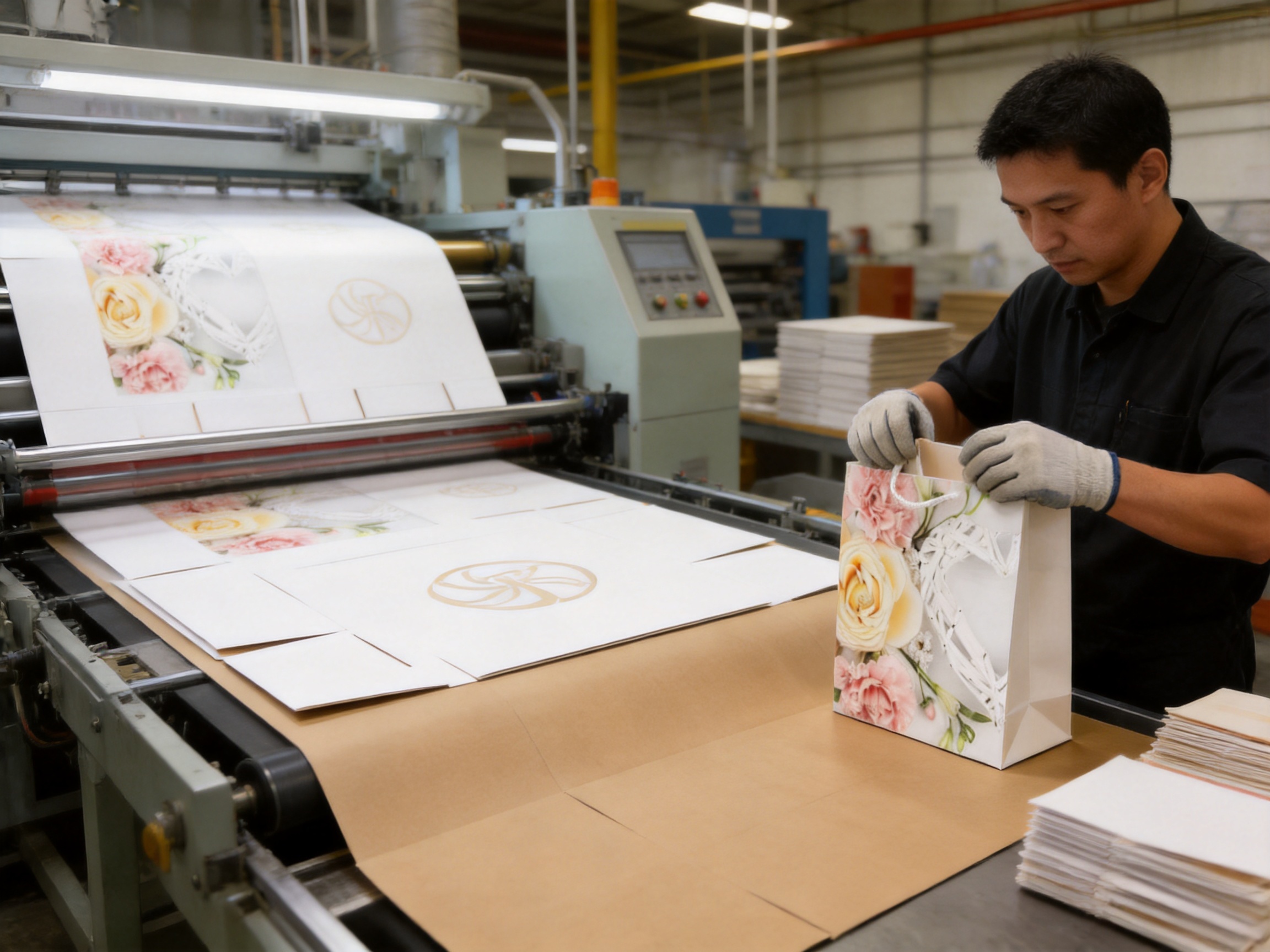
The manufacturing strength behind a custom paper gift bag is as important as the artwork. A successful result depends on the coordination of design, prepress, material preparation, printing, laminating or surface treatment, creasing, bag making, handle installation, and manual finishing.
The manufacturer described in the supplied company information has nearly three decades of experience in paper packaging production. The business began in 1996 as Fushida Plastic Factory and was rebranded in 2019 as Magic Tree Paper Products Co., Ltd. Its production focus includes white cardboard, coated paper, kraft paper, paper bags, gift bags, gift boxes, greeting cards, and patterned wrapping paper.
Professional Design and Prepress
Prepress is where the customer’s concept is translated into production-ready artwork. This stage includes checking dimensions, bleed, fold positions, seam allowances, handle locations, color arrangements, image quality, and logo placement. For floral designs, prepress must also consider pattern continuity and the way the artwork will appear after the sheet is folded and formed.
Good prepress work reduces avoidable production problems. It can prevent text from being placed too close to a crease, keep important artwork away from a handle hole, and improve the alignment of repeated patterns. It also helps clarify how the printed design will interact with different paper surfaces.
Printing
Printing is responsible for transferring the floral pattern and logo to the selected paper. Consistent printing is especially important when a buyer orders multiple sizes or repeats an order over time. Color control, registration, ink coverage, and drying conditions all affect the final appearance.
A reliable production system should maintain clear communication between the approved artwork and the printed output. Buyers may wish to review proofs or samples before mass production so they can confirm the logo size, floral colors, paper appearance, and overall balance.
Laminating and Surface Treatment
Laminating can add a specific surface feel and may contribute to the visual character of the bag. Depending on the chosen construction, the finish can appear glossy, matte, smooth, or more tactile. Surface treatment should be selected according to the desired appearance and the practical use of the bag.
Finishing can affect how colors are perceived. A matte treatment may soften reflections and create a refined appearance, while a glossy treatment may increase brightness and visual impact. The best choice depends on the brand, artwork, product category, and intended customer experience.
Creasing and Bag Making
Creasing prepares the paper for accurate folding. Proper creasing helps the panels form clean edges and supports the intended bag shape. It is particularly important for heavier paper, laminated surfaces, and designs that must align across multiple panels.
Bag making brings the printed and prepared components together. This stage may include folding, side bonding, bottom construction, handle installation, reinforcement, and shaping. Accuracy is necessary to keep the bag square, stable, and visually consistent.
Manual Finishing
Some gift bags require manual finishing after machine processing. Manual work may be used for handle attachment, special assembly, decorative details, inspection, or packaging into shipping quantities. Skilled finishing can be valuable when the bag includes multiple components or when the product requires close visual attention.
The combination of professional design, prepress, laminating, hot stamping, creasing, printing, bag making, and manual finishing gives the manufacturer the ability to manage a complete production cycle. In-house capabilities can reduce coordination problems that may occur when design, printing, assembly, and finishing are divided among unrelated suppliers.
Integrated Factory Production
Operating its own factory allows the manufacturer to manage more stages of production internally, from raw materials to finished products. This type of integration can support better coordination between departments and make it easier to address changes during development.
For a custom paper gift bag, many details are interconnected. A change in paper thickness may influence creasing. A change in coating may influence folding. A larger logo may require a different panel layout. A different handle may affect reinforcement. When these decisions are handled within a coordinated production system, the technical consequences can be reviewed more efficiently.
Factory control can also support production planning and delivery management. The company information states that the factory serves customers in the United States, Canada, Mexico, the United Kingdom, Japan, and China. Experience serving different markets can help the supplier understand that buyers may have different expectations for design, packaging, communication, and shipment preparation.
The reported annual output value exceeds 50 million yuan. This indicates an established production operation with the capacity to handle ongoing commercial demand in addition to individual custom projects. Buyers should still confirm available capacity, lead time, minimum order quantity, proofing arrangements, and shipping details for each specific order.
Quality Considerations for Wholesale Buyers
Wholesale buyers should evaluate a custom bag through both visual inspection and functional testing. A successful sample should represent the expected production specification rather than only showing an attractive concept.
Dimensions and Shape
The finished dimensions should be checked against the intended products. The bag must provide enough room for insertion and removal without excessive empty space. If the bag is too small, the product may be forced into the seams or distort the side panels. If it is too large, the product may move around and the packaging may appear inefficient.
The bag should stand reasonably well when placed on a surface, particularly if it will be used in retail displays or presented directly to a customer. The bottom construction and crease positions influence stability.
Print Quality
Print inspection should include logo sharpness, color consistency, registration, surface coverage, and alignment. Floral patterns should not show unexpected breaks in prominent viewing areas unless the design intentionally includes them. Small text should remain readable, and the logo should have sufficient contrast against the floral background.
When the design includes multiple colors, buyers should compare the approved proof with the production sample. Color can vary according to paper type, coating, ink behavior, and finishing. A design prepared for white cardboard may not appear identical on kraft paper.
Construction Quality
Seams should be properly bonded, folds should be clean, and the bottom should remain secure during normal handling. The handles should be straight, firmly attached, and appropriate for the bag size. Any reinforcement should be placed consistently.
Functional testing can involve carrying representative products for a reasonable period, lifting the bag repeatedly, and checking whether the shape changes or the handle attachments loosen. Testing should reflect real use rather than only a brief visual inspection.
Packaging and Delivery Preparation
Finished bags should be packed in a way that protects printed surfaces and prevents excessive crushing during shipment. Buyers should discuss carton quantities, internal protection, labeling, stacking, and shipping marks with the supplier before production is completed.
Clear specifications help reduce misunderstandings. A purchase order may include the paper type, thickness, dimensions, handle option, printing colors, finish, logo file, packing requirements, and approved sample reference.
How to Develop an Effective Custom Bag
Step One: Define the Product Use
Begin by identifying what the bag will hold. Record the product dimensions, approximate weight, shape, sharp edges, and whether it will be placed inside another package. Determine whether the bag will be used for immediate hand-carrying, retail display, event distribution, delivery, or gifting.
This information creates a practical foundation for selecting the size, paper grade, bottom structure, and handle style. It is better to define use before choosing decorative details because the visual design must ultimately fit the physical construction.
Step Two: Establish the Brand Direction
Decide whether the bag should feel natural, luxurious, festive, playful, modern, traditional, or minimalist. Gather the official logo, preferred colors, typography, and any existing packaging references. If the business already uses gift boxes, greeting cards, or wrapping paper, the bag can be developed as part of the same visual family.
Step Three: Select the Floral Concept
Choose between a full floral pattern, a partial floral arrangement, a border, a single botanical illustration, or a logo-centered composition. Consider how much of the bag should attract attention and where the logo must remain visible.
The pattern should be evaluated at the actual bag size. Artwork that looks balanced on a computer screen may appear too dense or too empty when printed on a large panel. The side panels and gussets should also be considered if the bag will be viewed from different angles.
Step Four: Select Paper and Handle Options
Compare white cardboard, coated paper, and kraft paper according to appearance, strength, printing needs, and the desired brand message. Select twisted or flat handles based on carrying comfort, product weight, and style.
At this stage, buyers should also discuss whether a surface finish, hot stamping, or additional detail is appropriate. Every extra process should support a clear purpose, such as improving visual impact, adding tactile interest, or strengthening brand recognition.
Step Five: Review Proofs and Samples
A proof allows the buyer to review the layout before production. A physical sample is even more useful because it shows the actual paper feel, print appearance, folding, handle position, and finished scale.
Feedback should be specific and consolidated. Instead of sending scattered changes, buyers can provide one organized list covering logo size, pattern density, color, dimensions, handle placement, and finishing. This helps the production team implement revisions accurately.
Step Six: Confirm the Production Specification
Once the sample is approved, the final specification should be recorded. It should include all details that affect the finished product, including artwork version, paper selection, dimensions, handle type, finish, packing, quantity, and delivery expectations.
Maintaining an approved sample or reference record is useful for repeat orders. It helps the manufacturer and buyer compare later production with the original standard.
Environmental and Material Responsibility
Paper packaging is often selected because it aligns with a preference for paper-based materials and a more natural presentation. However, responsible packaging decisions require precise information. Buyers should confirm the paper source, material composition, surface treatments, inks, adhesives, and disposal or recycling considerations relevant to their market.
An eco-friendly claim should not be based only on the word “paper.” Coatings, laminates, mixed materials, and attached components may influence how a bag is handled after use. Businesses should communicate environmental benefits carefully and accurately.
Material efficiency is another part of responsible design. Choosing a bag that is appropriately sized and strong enough for its use can reduce unnecessary waste. Overly large or excessively heavy packaging may consume more resources than needed, while underbuilt packaging may fail and require replacement.
Reuse can extend the functional value of the bag. A durable, attractive floral design may encourage customers to use the bag again. Clear branding can remain visible during reuse, allowing the package to continue communicating the business identity beyond the original transaction.
Magic Tree’s stated focus on high-quality, eco-friendly, and customized paper packaging reflects this wider demand for practical paper solutions. Buyers should request the exact material information needed to support any environmental statement used in marketing or product documentation.
Applications Across Different Industries
Gift Retail
Gift shops can use floral paper bags for birthdays, holidays, anniversaries, and general purchases. A versatile pattern can work throughout the year, while seasonal artwork can create limited-edition packaging for specific campaigns.
Florists and Plant Businesses
Floral patterns naturally fit flower shops, plant stores, and botanical product lines. The design can use blossoms, leaves, stems, or abstract botanical forms. The bag can support the visual language of bouquets, potted plants, fragrance products, and garden accessories.
Beauty and Personal Care
Cosmetics, skincare, fragrance, and personal care brands often use packaging to communicate softness, refinement, freshness, or natural ingredients. A carefully controlled floral design can reinforce these qualities while the logo keeps the brand visible.
Fashion and Accessories
Small fashion products, jewelry, scarves, accessories, and boutique purchases can benefit from a custom gift bag. The bag can be designed to match the style of the store and provide a polished hand-carrying experience.
Events and Celebrations
Weddings, parties, exhibitions, corporate events, and promotional activities may require branded bags for favors or participant gifts. A logo, date, floral theme, or event color palette can be included in the artwork.
Seasonal and Promotional Campaigns
Retailers can use custom bags to support spring collections, Mother’s Day promotions, Valentine’s Day campaigns, holiday gifting, or store anniversaries. Because the artwork can be changed, the bag becomes part of the campaign rather than a generic carrier used for every occasion.
Why Manufacturing Experience Matters
Manufacturing experience is valuable because paper packaging contains many small technical decisions. A supplier must understand how paper behaves during printing, coating, creasing, folding, bonding, and finishing. Experience can also improve communication because the production team is more likely to identify problems before they become expensive corrections.
The supplied company information describes nearly 30 years of experience, beginning in 1996. Over that period, the company has expanded its product scope from its original history as a plastic factory to a focus on paper packaging solutions. Its current product range includes gift bags, gift boxes, greeting cards, and patterned wrapping paper, allowing buyers to consider coordinated packaging programs.
Experience does not eliminate the need for samples or specifications, but it can strengthen the development process. A knowledgeable supplier can explain why a certain paper is suitable for a heavy item, why a pattern needs adjustment near a fold, or why a particular finish may alter the appearance of a logo.
In-house production capabilities also help connect creative goals with practical manufacturing. Design teams can plan artwork with bag-making requirements in mind, while production teams can provide feedback before the design is finalized. This connection is especially important for custom products that combine large floral patterns, multiple colors, special finishing, and specific structural requirements.
Ordering Considerations for International Buyers
International buyers should provide complete information at the beginning of the inquiry. Useful details include the intended product, estimated quantity, bag dimensions, paper preference, logo artwork, floral style, handle type, finish, destination country, target delivery schedule, and packaging requirements.
Buyers should ask about minimum order quantities, sampling fees, production lead time, printing method, available paper grades, quality control procedures, packing quantities, and shipping arrangements. These factors can vary according to the complexity of the design and the order size.
Artwork should be supplied in a suitable professional format whenever possible. Vector logo files are generally useful for maintaining sharp edges, while high-resolution images are important for detailed floral artwork. The buyer and manufacturer should confirm color references and determine how colors will be evaluated on the selected paper.
Communication is especially important when the buyer and factory operate in different countries. A written specification, approved proof, and sample reference can reduce ambiguity. Measurements should use clearly identified units, and any tolerance or acceptable variation should be discussed before mass production.
Q&A: Custom Floral Paper Gift Bags
Q: Can the bag size be adjusted for different products?
A: Yes. The structure can be developed according to the dimensions, shape, and approximate weight of the intended contents. Buyers should provide accurate product measurements so the bag can be designed with suitable room for insertion and removal.
Q: Which paper is best for a custom gift bag?
A: The best paper depends on the application. White cardboard is suitable for a bright, clean printing surface. Coated paper can support smooth detailed artwork. Kraft paper offers a natural appearance and can complement botanical or environmentally focused designs. Product weight and handling conditions should also be considered.
Q: Can the bag carry heavy products?
A: It can be designed for heavier products by selecting an appropriate paper thickness, bottom construction, reinforcement, and handle arrangement. The exact carrying capacity should be confirmed through product-specific testing rather than assumed from appearance alone.
Q: What is the difference between twisted and flat handles?
A: Twisted handles have a rounded, traditional paper-bag appearance, while flat handles provide a cleaner and more structured visual effect. The choice should reflect the bag size, product weight, carrying comfort, and desired style.
Q: Can the floral pattern cover the entire bag?
A: Yes. Full-surface floral printing is possible when the artwork is prepared for the bag’s panels, folds, seams, and handle locations. The design should be reviewed carefully to ensure that important elements remain visible after construction.
Q: Can I print only my logo instead of a floral pattern?
A: Yes. Printing can remain simple with a logo-only layout. This may be suitable for brands that prefer minimal packaging or want to use a neutral design across several product categories.
Q: Can the logo be combined with the floral design?
A: Yes. The logo can be positioned over the floral background, placed in a clear area, repeated as part of the pattern, or integrated into the artwork. The final arrangement should preserve logo readability and brand recognition.
Q: Are these bags suitable for different industries?
A: Yes. They can be used for gift retail, florists, fashion, beauty, accessories, events, promotions, and other businesses that need practical packaging with a decorative presentation.
Q: Does the manufacturer produce other paper packaging items?
A: The supplied company information lists paper bags, gift bags, gift boxes, greeting cards, and patterned wrapping paper. This allows buyers to explore coordinated packaging for a broader product or seasonal campaign.
Q: Can the bags be made with eco-friendly materials?
A: Paper-based options are available, including kraft paper and other paper grades. Buyers should confirm the exact material composition, coatings, inks, adhesives, and relevant documentation before making a specific environmental claim.
Q: Why is a physical sample recommended?
A: A sample allows the buyer to evaluate the real paper feel, print colors, logo scale, pattern alignment, handle position, folding, and overall construction. It provides more information than a digital image alone.
Q: What information should be included in a quotation request?
A: A quotation request should include the desired quantity, finished dimensions, paper type or preferred material, logo and artwork files, floral design direction, handle type, surface finish, delivery destination, and target schedule.
Conclusion
Custom floral paper gift bags provide a practical way to combine product protection, carrying convenience, and brand presentation. Their structure can be adapted for different products, while paper thickness and material selection can be matched to the expected use. White cardboard, coated paper, and kraft paper each offer different visual and functional qualities.
The ability to choose between twisted and flat handles adds further flexibility. Printing may remain simple with an exclusive logo, or it may use a complete floral composition across the visible surfaces. This makes the bag suitable for a wide range of businesses, from gift shops and florists to beauty brands, boutiques, events, and promotional campaigns.
Compared with generic stock packaging, custom production gives buyers greater control over dimensions, materials, artwork, handles, finishes, and brand consistency. It can also support coordinated programs involving gift boxes, greeting cards, and patterned wrapping paper.
The manufacturer’s stated capabilities include design, prepress, laminating, hot stamping, creasing, printing, bag making, and manual finishing. Its own factory, broad product range, international customer experience, and long manufacturing history provide a foundation for managing custom paper packaging projects from raw materials through finished goods.
For the best result, buyers should begin with the intended product and carrying conditions, then define the brand direction, select an appropriate paper and handle, review proofs, approve a physical sample, and confirm a complete production specification. When creative design and manufacturing control are treated as one process, a paper gift bag can become more than a carrier: it can become a useful, memorable, and recognizable part of the customer experience.
References
1. Supplier-provided product information for custom paper gift bags with floral patterns and exclusive logo printing.
2. Supplier-provided company profile covering manufacturing history, paper product categories, factory capabilities, and international markets served.
3. Supplier-provided material information covering white cardboard, coated paper, kraft paper, gift bags, gift boxes, greeting cards, and patterned wrapping paper.
4. General packaging development principles concerning paper selection, structural design, printing, creasing, handle attachment, finishing, and quality inspection.