中文简体
 русский
 Français
 Español
 Deutsch
 عربى

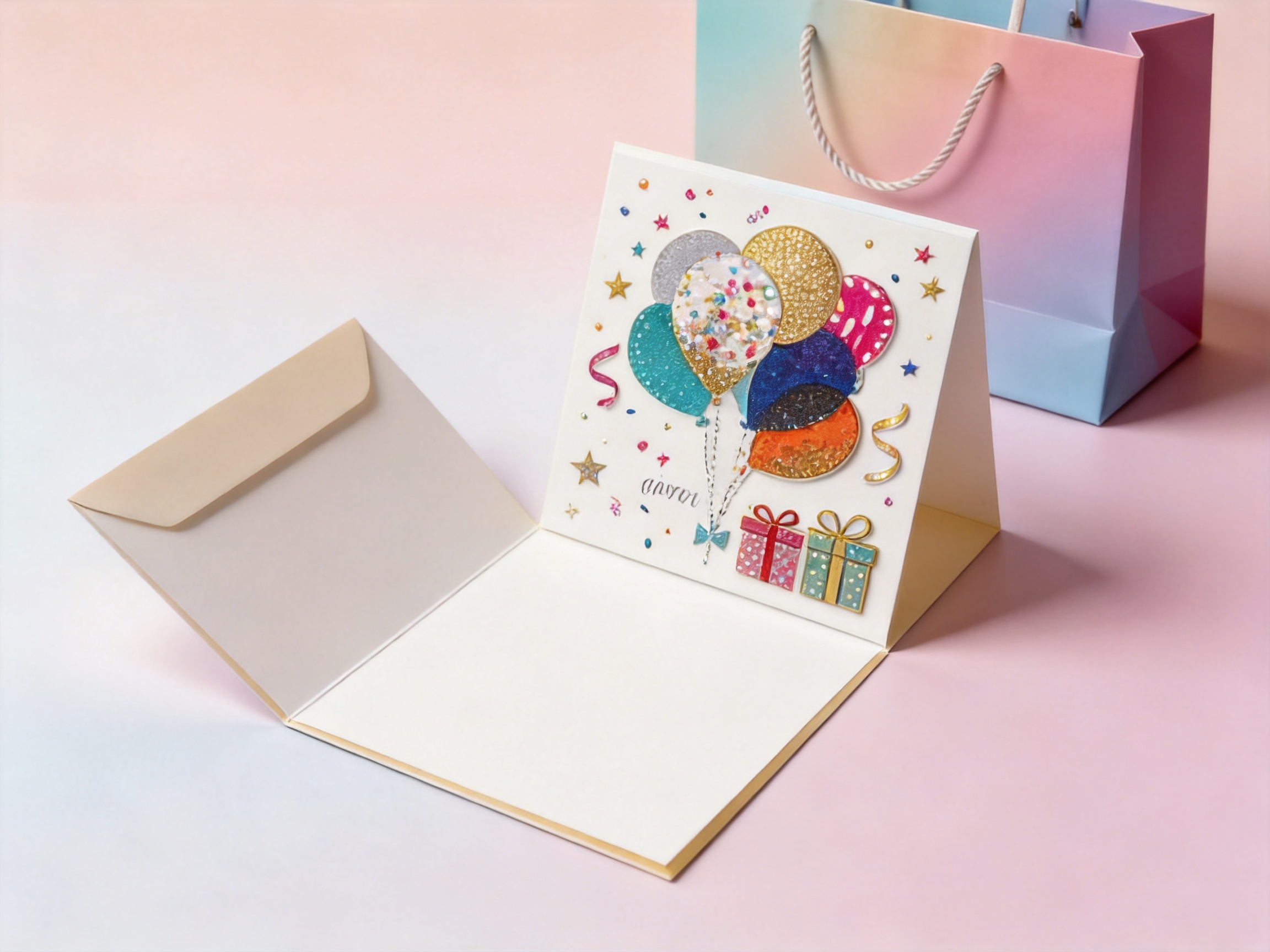
A birthday card may be small, but it often plays an important role in the way a gift is presented and remembered. The right card can turn a wrapped present into a more personal gesture, add visual interest to a retail display, and give the sender space to express a message that cannot be communicated through packaging alone. The Birthday Fun Gift Paper Greeting Card is designed around this idea. It combines a cheerful birthday theme, a practical card-and-envelope format, and a tactile 3D bead foil treatment that gives the front design greater depth and light-catching appeal.
With a card size of 12x17cm and an envelope size of 12.5x17.5cm, the product offers a balanced format that is large enough for a visible message while remaining easy to package, display, and include with a gift. The card is suitable for birthday gifting, party stationery, gift shop collections, department store displays, seasonal assortments, and custom paper packaging programs. Its blank interior allows the sender to write a short greeting, a personal note, or a longer message tailored to the recipient.
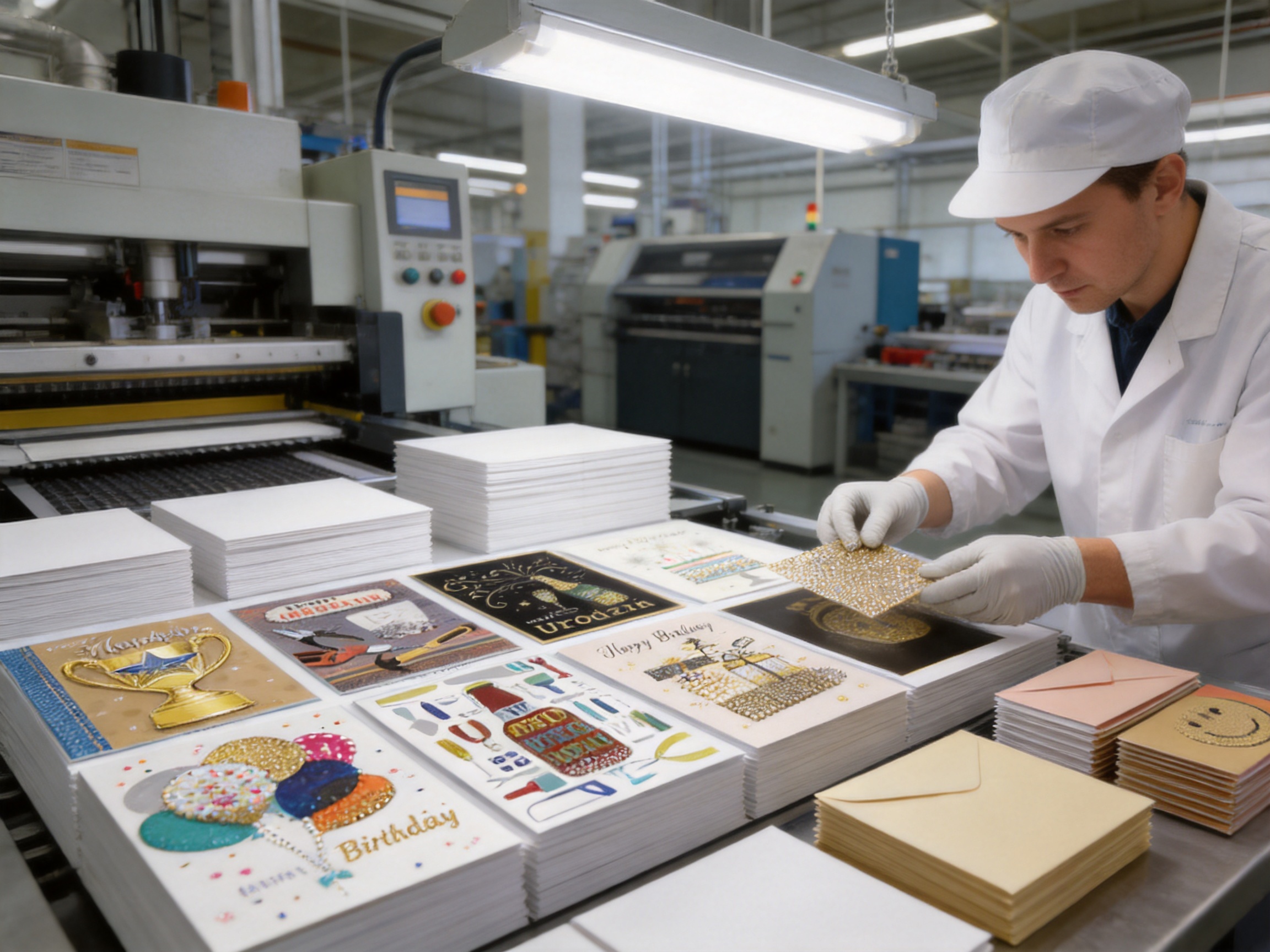
The card is manufactured by Yiwu Magic Tree Gift Bag Co., Ltd., a paper products manufacturer with nearly three decades of industry experience. The company produces paper bags, gift bags, gift boxes, greeting cards, and patterned wrapping paper using materials such as white cardboard, coated paper, and kraft paper. Its integrated capabilities include design and prepress, printing, laminating, hot stamping, creasing, bag making, and manual finishing. These processes are relevant to greeting card production because they support consistent print quality, accurate finishing, and coordinated development across multiple paper packaging products.
This article examines the Birthday Fun Gift Paper Greeting Card from the perspective of product design, user experience, manufacturing quality, wholesale purchasing, and competitive value. It also explains why tactile finishing, practical sizing, production integration, and flexible paper packaging capabilities matter when buyers compare greeting card suppliers.
1. Product Overview
The Birthday Fun Gift Paper Greeting Card is a paper greeting card intended for birthday occasions. It is supplied with a matching envelope, creating a complete presentation set rather than a loose card that requires separate packaging. The coordinated size of the card and envelope helps the product look organized when it is placed in a gift, displayed on a shelf, or arranged as part of a retail stationery collection.
The card measures 12x17cm. This size provides a generous writing area while remaining convenient to hold, store, and ship. It is more substantial than a very small note card, yet it does not take up excessive space inside a gift bag or gift box. The accompanying envelope measures 12.5x17.5cm, allowing the card to slide inside with a small amount of clearance while maintaining a tidy appearance.
The most distinctive design feature is the 3D bead foil treatment. This finish adds a raised, textured effect to selected areas of the front design. The foil can reflect light softly as the card is moved, while the bead-like texture creates a more layered tactile experience than a standard flat printed surface. The result is a card that can attract attention both visually and through touch.
The interior of the card is left blank. This gives the sender flexibility and avoids limiting the product to a fixed message. A buyer may add a simple “Happy Birthday” wish, write a longer personal note, include a humorous message, or adapt the card to a particular relationship. The blank interior also makes the product useful for retailers who want a general birthday design that can appeal to different customer groups.
| Product Type | Birthday greeting card with envelope |
| Card Size | 12x17cm |
| Envelope Size | 12.5x17.5cm |
| Front Treatment | 3D bead foil |
| Interior | Blank writing area |
| Primary Use | Birthday gifts, party stationery, retail card displays, and gift packaging add-ons |
The product can be positioned as an accessory that completes a gift rather than as a separate stationery item. This distinction is important for retailers and brands. When the card is purchased alongside a gift bag, gift box, or wrapping paper, it helps create a coordinated packaging experience. When sold independently, its tactile finish and cheerful design can give it enough shelf appeal to compete with more elaborate specialty cards.

Birthday Fun Gift Paper Greeting Card
2. Why the Card Becomes Part of the Gift
Many greeting cards are treated as an afterthought. They may be selected quickly at the checkout counter and added to a present at the last moment. However, a well-designed card can contribute directly to the emotional value of the gift. It introduces anticipation before the package is opened, provides a space for personal communication, and often remains with the recipient after the main gift has been used.
The Birthday Fun Gift Paper Greeting Card supports this role in several ways. First, its 12x17cm format provides enough visual presence to be noticed when attached to a gift bag or placed on top of a gift box. A card that is too small may disappear into the packaging, while one that is excessively large can become difficult to handle. The selected dimensions create a practical middle ground.
Second, the 3D bead foil treatment gives the card a more premium sensory quality. A flat printed card may look attractive from a distance, but the raised foil creates an additional point of interaction. When a recipient picks up the card, the surface can feel more distinctive. This moment of touch may reinforce the impression that the card was chosen thoughtfully rather than added without consideration.
Third, the blank interior leaves room for the sender’s own voice. Ready-printed messages can be convenient, but they may not suit every relationship. A blank interior works for parents, friends, children, colleagues, customers, and relatives because the message can be adapted to the occasion and recipient.
Fourth, the design is described as light and cheerful rather than narrowly tied to a specific age group. This makes it suitable for a broader range of birthday occasions. Retailers can place it in general birthday assortments instead of restricting it to a highly specific customer segment. That wider usability can help reduce the risk of slow-moving inventory.
2.1 A practical accessory for gift packaging
Gift packaging is often purchased as a combination of products. A customer may select a gift bag, tissue paper, wrapping paper, ribbon, and greeting card during the same shopping trip. A card that fits naturally into this purchasing pattern can increase the value of the overall assortment. It can be displayed beside gift bags, grouped with birthday wrapping paper, or bundled with gift boxes for seasonal campaigns.
For brands and retailers, this product may function as a complementary item in several ways. It can be included in a birthday gift set, offered as an optional add-on, or sold at the checkout area where customers look for last-minute accessories. It can also be packed with online orders when a brand wants to provide a space for the buyer to write a message to the recipient.
2.2 A more interactive surface than standard printing
The value of 3D bead foil lies in the combination of visual reflection and raised texture. Traditional printing can reproduce colors, illustrations, and text effectively, but it generally produces a flat surface. Foil stamping can introduce shine, while embossed or textured finishing can introduce relief. A 3D bead foil treatment combines the appeal of a decorative highlight with a surface that can be felt by hand.
This does not mean that every part of the card must be heavily embellished. Selective treatment can be more effective than covering the entire design. Raised details can guide attention toward birthday elements, decorative patterns, lettering, or focal points. The contrast between treated and untreated areas helps the design remain readable and prevents the surface from becoming visually overwhelming.
For product buyers, tactile finishing can be a useful differentiator in a crowded greeting card market. Many competing cards rely primarily on printed graphics. A card with a dimensional finish may create stronger shelf impact, especially when displayed under retail lighting. It may also encourage shoppers to pick up the product, which gives the card an additional opportunity to communicate quality.
3. Product Advantages Compared with Basic Greeting Cards
The Birthday Fun Gift Paper Greeting Card has several advantages over basic flat-printed greeting cards. These advantages do not depend only on decoration. They also relate to format, flexibility, presentation, and suitability for different sales channels.
3.1 Tactile differentiation
The 3D bead foil finish is the clearest product-level difference. A basic greeting card may have a high-quality illustration, but its surface can remain visually and physically uniform. The raised foil treatment adds a sensory feature that the customer can see and feel. This can make the card appear more premium without requiring an unusually complex format.
Tactile differentiation is particularly relevant in physical retail. Online shoppers can view images, but customers in a store can handle the card directly. The raised texture gives sales staff and shoppers a concrete feature to notice. It may help the product stand out among cards that use only standard ink printing.
3.2 Coordinated envelope sizing
The card is supplied with an envelope that measures 12.5x17.5cm. The envelope is slightly larger than the 12x17cm card, creating a coordinated fit. This may seem like a simple specification, but envelope compatibility affects the overall user experience. A card that is difficult to insert, too loose inside the envelope, or poorly matched in proportion can look less polished.
A properly sized envelope also supports retail presentation. It keeps the card protected during handling and transportation, reduces the likelihood of surface damage, and provides a complete product unit for display. Retailers do not need to source a separate envelope or explain that one is not included.
3.3 Flexible message space
The blank interior is an advantage over cards with fixed wording when the product needs to serve multiple customer groups. It can be used for formal, informal, humorous, affectionate, or business-related birthday messages. Customers can also add names, dates, drawings, or short personal memories.
For wholesale buyers, blank interiors simplify assortment planning. One general design can serve multiple markets and recipient categories. Retailers may not need to stock separate versions for every age group or relationship. The card can be sold as a versatile birthday option, particularly when the cover design is cheerful and broadly accessible.
3.4 Suitable size for gifts and displays
The 12x17cm card size provides a useful balance between writing space and packaging efficiency. It can be placed inside many standard gift bags and gift boxes without becoming cumbersome. It is also large enough to be visible when positioned next to wrapping paper or other birthday accessories.
For e-commerce sellers, the moderate size can simplify storage and fulfillment. Products can be packed in cartons with other paper goods, while the coordinated envelope helps protect the card from unnecessary handling. For physical retailers, the card can be organized in countertop displays, wall-mounted card racks, gift accessory sections, or seasonal feature tables.
3.5 Wider occasion appeal
The product is centered on birthdays, but the cheerful design can be appropriate for many types of birthday recipients. It is not restricted to a formal corporate aesthetic, a child-only theme, or a highly specialized relationship. This broad positioning may help retailers serve customers who want something festive without selecting an overly specific design.
Compared with cards created for a narrow demographic, a general birthday card can remain relevant across a wider portion of the year. Birthdays occur continuously, so the product does not depend entirely on one short holiday period. Retailers can maintain it as part of a core stationery collection while also placing it in seasonal displays.
4. Manufacturing Expertise Behind the Product
A greeting card’s appearance depends on more than its artwork. Paper selection, printing accuracy, surface treatment, folding, finishing, quality control, and packing all influence the final result. The manufacturer’s production background is therefore an important part of the product evaluation.
Yiwu Magic Tree Gift Bag Co., Ltd. was founded in 1996 as Fushida Plastic Factory and rebranded in 2019 as Magic Tree Paper Products Co., Ltd. The company has nearly 30 years of experience in manufacturing paper packaging and related paper products. Its product range includes paper bags, gift bags, gift boxes, greeting cards, and patterned wrapping paper.
The company works with white cardboard, coated paper, and kraft paper. These materials support different product requirements. White cardboard can provide a clean, bright base for detailed printing. Coated paper can support smooth image reproduction and decorative finishing. Kraft paper can provide a more natural appearance for packaging programs that emphasize an earthy or craft-inspired visual direction.
Although the Birthday Fun Gift Paper Greeting Card is a specific finished product, the manufacturer’s broader paper packaging experience is relevant. Greeting cards, gift bags, gift boxes, and wrapping paper often share related production challenges, including color control, die-cutting or creasing accuracy, surface treatment, folding, and manual assembly. A supplier that works across these categories may be better positioned to coordinate complementary products.
4.1 Professional design and prepress
Design and prepress are essential stages in the production of a decorative greeting card. Before printing begins, artwork must be checked for dimensions, bleed, color separation, treatment placement, text clarity, and compatibility with the selected paper. For a card with 3D bead foil, the treatment artwork must also be aligned accurately with the printed design.
Prepress preparation helps reduce problems such as misplaced decorative effects, inconsistent margins, unreadable text, or poor registration between ink and foil. It also allows the production team to identify potential issues before materials enter the main manufacturing process. This can improve efficiency and reduce waste, especially when a design includes multiple finishing steps.
Professional prepress is particularly valuable for wholesale and custom orders. Buyers may provide brand artwork, seasonal graphics, or packaging systems that need to match existing products. A capable prepress team can help translate digital artwork into a physical paper product while preserving the intended proportions, color relationships, and finishing details.
4.2 Printing capabilities
Printing gives the card its base visual identity. Accurate printing is important for cheerful birthday designs because the product depends on clear color contrast and a positive overall impression. Uneven density, blurred details, or inconsistent color can make a card look less refined even when the design itself is attractive.
The manufacturer’s in-house printing capability supports greater process coordination. When printing and finishing are managed within an integrated production structure, the team can review how the printed surface will interact with laminating, foil, creasing, and manual assembly. This reduces reliance on disconnected suppliers and can make it easier to manage production schedules.
For wholesale customers, in-house printing may also improve communication. Artwork adjustments, production questions, and sample feedback can move through a more direct process. This is useful when a buyer needs to confirm a color, modify a layout, or coordinate the card with matching gift bags and wrapping paper.
4.3 Foil and decorative finishing
Decorative finishing is central to the product’s identity. The 3D bead foil treatment requires careful control of pressure, placement, material compatibility, and visual balance. The purpose is not simply to add shine. The treatment should create a consistent raised effect that supports the design and withstands normal handling.
Finishing quality can affect how premium the card feels. If the foil is poorly registered, incomplete, excessively rough, or unevenly applied, the result may look less professional. When the treatment is applied with appropriate control, it can enhance the design without reducing legibility or making the card difficult to use.
The company’s capabilities include hot stamping and other finishing processes. These skills are relevant to buyers who want to develop related paper products with coordinated decorative effects. A greeting card, gift box, and paper bag can potentially share similar colors, foil accents, or surface treatments, helping a retail collection look more unified.
4.4 Laminating and surface protection
Laminating can be used to improve the surface characteristics of paper packaging products, depending on the material and design requirements. It may help protect printed areas from scuffing, improve the visual effect of a surface, or provide a selected matte or glossy appearance. The appropriate treatment depends on the desired look, paper type, budget, and environmental objectives.
For greeting cards, the finishing plan must balance protection with tactility. A surface that is too heavily coated may reduce the natural feel of the paper or interfere with the intended raised effect. A well-planned process considers how printing, lamination, foil, folding, and handling will work together as one production system.
4.5 Creasing and folding accuracy
Greeting cards must fold cleanly. Poor creasing can result in cracked printed surfaces, uneven alignment, or a card that does not close neatly. Accurate creasing is therefore important to both appearance and usability.
The company includes creasing among its in-house capabilities. This supports the production of folded paper products and helps the manufacturer control an important stage of card assembly. Proper creasing can be especially important when heavier paper stocks or multiple finishing treatments are used.
A clean fold also contributes to the way the card fits inside its envelope. If the card is not folded consistently, the dimensions may vary slightly or the edges may appear uneven. Consistent folding helps create a tidy finished set when the card is placed into the 12.5x17.5cm envelope.
4.6 Manual finishing and inspection
Not every stage of paper product manufacturing can be fully automated. Manual finishing may be needed for sorting, checking, folding, inserting cards into envelopes, removing defects, or preparing retail-ready units. Skilled manual work can help identify issues that automated equipment may not detect easily.
For a product with a decorative surface, manual inspection can be useful because small defects may affect the customer’s first impression. Workers can check whether foil details are present, whether the card is folded correctly, whether the envelope is included, and whether the finished unit is clean and presentable.
Manual finishing also supports flexibility. Different customers may require different packing arrangements, assortments, labels, or combinations with gift bags and boxes. A supplier with manual finishing capabilities may be able to accommodate these requirements more effectively than a production line designed only for one standard format.
5. Integrated Production and Supply Chain Strengths
The company operates its own factory and manages the production process from raw materials to finished products. This integrated model can provide several advantages for wholesale buyers. It offers greater visibility into production, reduces dependence on multiple external vendors, and can make quality and delivery management more consistent.
When a supplier controls multiple stages, it may be easier to coordinate material selection, printing, finishing, assembly, and packing. If a problem appears during production, the relevant teams can communicate within the same organization. This can help reduce delays caused by transferring work between unrelated facilities.
Integrated manufacturing is also useful for product families. A buyer may need greeting cards, gift bags, gift boxes, and wrapping paper for the same seasonal collection. Coordinating those products through one paper packaging supplier can simplify artwork management, color matching, production planning, and shipment preparation.
The company reports an annual output value exceeding 50 million yuan. This indicates an established production operation with experience handling substantial order volumes. Production scale alone does not guarantee quality, but it can support more stable procurement of materials, broader equipment capabilities, and structured order management when combined with appropriate quality controls.
For wholesale customers, supply chain strength is not limited to the ability to produce large quantities. It also includes the ability to communicate clearly, maintain consistent specifications, organize cartons, manage deadlines, and respond to changes. These operational factors can influence the total cost of ownership just as much as the unit price of the card.
5.1 Support for coordinated packaging programs
Because the manufacturer produces several categories of paper packaging, buyers can consider coordinated collections rather than isolated products. A birthday card can be paired with a matching gift bag, a gift box can be printed with related artwork, and patterned wrapping paper can extend the same visual theme.
Such coordination can create a stronger retail presentation. Customers may be more likely to purchase multiple items when the colors and motifs work together. For brands, coordinated packaging can support campaign recognition and make gift presentation more consistent across stores, online orders, and promotional events.
5.2 Customization potential
The company specializes in customized paper packaging solutions. While the listed card has its own established specifications, the manufacturing capabilities can support discussions about custom artwork, paper selection, printed messages, decorative finishing, and related packaging products.
Customization may be relevant to retailers that want an exclusive card design, brands that need packaging aligned with a visual identity, event organizers preparing birthday or celebration stationery, and distributors building a private-label paper goods collection. The final options depend on artwork, quantity, material selection, finishing requirements, and production planning.
A custom program should be evaluated through samples and confirmed specifications. Important points may include finished size, paper weight, color references, treatment location, envelope details, folding direction, packing method, carton quantity, and inspection standards. Clear approval procedures help protect both the buyer and the manufacturer.
6. Paper Materials and Product Quality Considerations
Paper is one of the most important components of a greeting card. It affects stiffness, writing performance, print appearance, fold quality, tactile feel, and shipping weight. The right paper depends on the product’s intended position and finishing requirements.
White cardboard is commonly associated with a clean, bright appearance and can provide a stable base for colorful birthday graphics. Coated paper can support a smooth surface and sharp image reproduction. Kraft paper can communicate a more natural or rustic character. The manufacturer’s experience with these material categories allows buyers to discuss the most suitable direction for a particular collection.
For the Birthday Fun Gift Paper Greeting Card, the material must work with the 3D bead foil treatment. The surface needs to support clear printing while allowing the decorative finish to appear distinct. It must also fold cleanly and remain comfortable to handle. Material selection should therefore be made as part of the complete production plan rather than as an isolated decision.
6.1 Visual quality
Visual quality includes color consistency, image sharpness, edge cleanliness, foil alignment, and the overall relationship between printed and finished areas. Customers often judge a card within seconds, so small inconsistencies can influence perceived value.
Retail buyers may request pre-production samples or production samples to compare the final result with approved artwork. This is especially important for custom versions, where colors and decorative details may need to match other products in a collection.
6.2 Structural quality
Structural quality includes the card’s stiffness, fold accuracy, edge condition, and envelope fit. A card should be easy to open and close while remaining stable when displayed. The envelope should protect the card and provide a neat presentation.
Quality checks should consider whether the card remains flat when closed, whether the fold is centered, whether the foil surface is secure, and whether the card can be inserted into the envelope without excessive force. These details contribute to customer satisfaction even though they may not appear in a product photograph.
6.3 Handling and storage
Greeting cards are often handled repeatedly in retail environments. Customers may remove them from displays, compare designs, and return them to racks. The product should therefore be packed in a way that reduces bending, scuffing, moisture exposure, and contamination during transportation and storage.
Proper carton organization is also important for wholesale distribution. Cards should be arranged to support counting, inspection, and replenishment. The exact packing method can be agreed with the supplier based on order quantity, destination, display requirements, and shipping conditions.
7. Retail and Commercial Applications
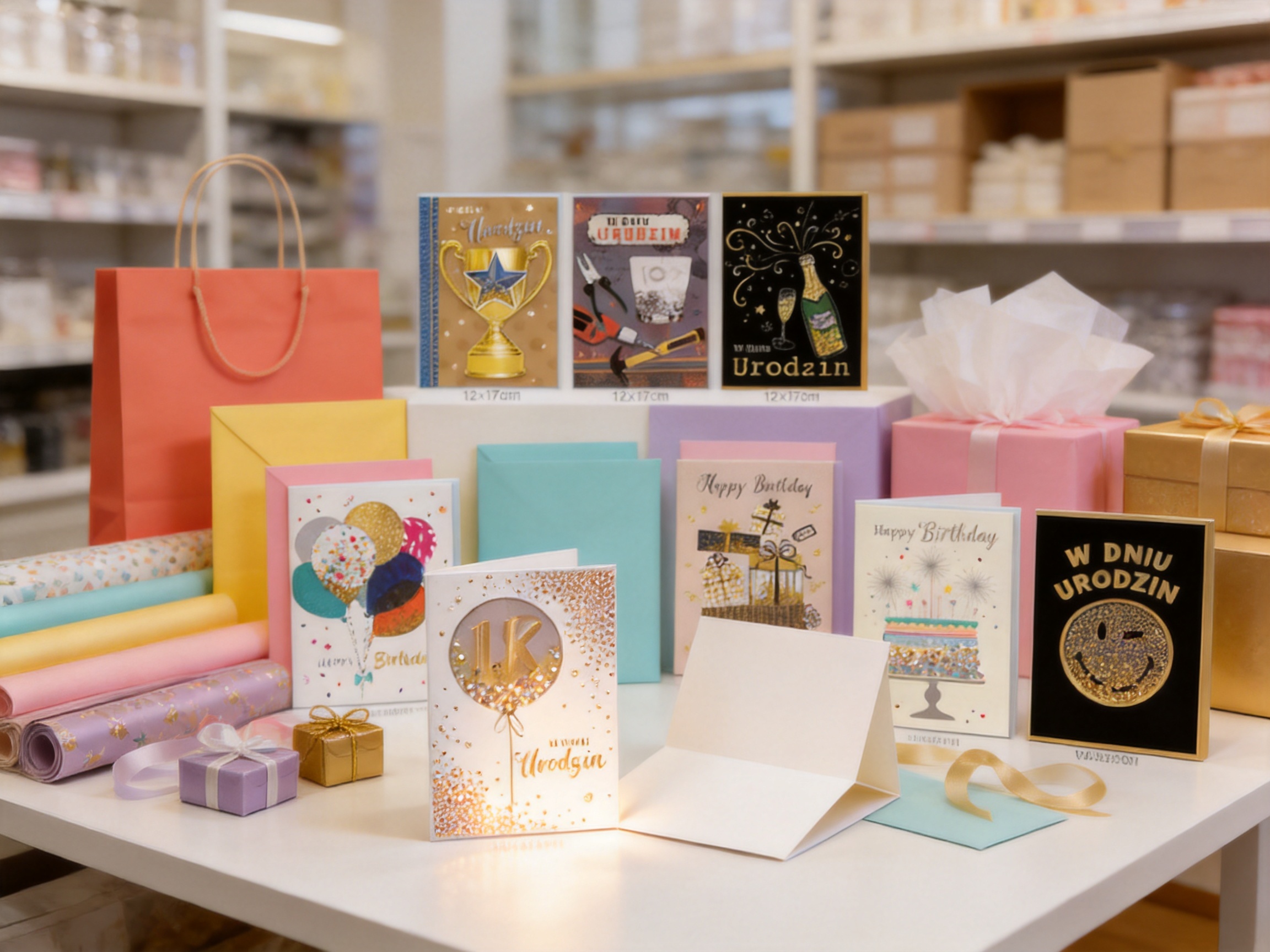
The Birthday Fun Gift Paper Greeting Card can serve several commercial channels. Its usefulness is not limited to traditional greeting card stores. It can be included in gift-oriented, stationery, lifestyle, party, and e-commerce programs.
7.1 Gift shops
Gift shops can place the card near birthday gift bags, wrapping paper, ribbons, candles, and small presents. The cheerful design and tactile foil provide a visual point of difference, while the blank interior gives customers the freedom to create their own message.
7.2 Stationery retailers
Stationery stores can include the card in a birthday section or arrange it by finish, size, or price range. The 3D bead foil treatment can help create a premium subsection alongside standard printed cards. Because the card is supplied with an envelope, it can be merchandised as a complete stationery product.
7.3 Supermarkets and department stores
Supermarkets and department stores often need products that are easy to understand and suitable for quick purchasing decisions. A general birthday card with a cheerful appearance can fit into seasonal or year-round accessory displays. Its moderate size supports countertop racks, hanging displays, and boxed assortments.
7.4 Online gift retailers
Online gift retailers can offer the card as an add-on during the checkout process. Customers purchasing a birthday gift may appreciate the option to include a physical card with a blank interior. The seller may also offer a message-writing service, depending on its fulfillment model.
7.5 Event and party suppliers
Party suppliers can use the card as part of birthday stationery collections. It can be grouped with invitations, thank-you notes, wrapping paper, favor bags, and table decorations. The cheerful positioning makes it suitable for a broad birthday assortment rather than one restricted party theme.
7.6 Corporate and promotional gifting
Companies that send birthday gifts to customers, employees, partners, or members may use a blank greeting card as part of a personalized gifting process. A custom version could potentially include coordinated artwork or a brand message, subject to design and production requirements. The tactile finish can make the package feel more considered than a generic printed insert.
8. Why Wholesale Buyers May Choose This Product
Wholesale purchasing decisions usually involve more than appearance. Buyers consider unit cost, minimum order requirements, delivery timing, packaging, consistency, customization, and supplier reliability. The Birthday Fun Gift Paper Greeting Card offers a combination of features that can support a practical wholesale program.
The first benefit is product completeness. The card and envelope are supplied as a coordinated set, reducing the need for separate sourcing. The second is design versatility. A cheerful birthday theme can serve a broad customer base. The third is tactile differentiation. The 3D bead foil treatment may support a higher perceived value than a basic flat card.
The fourth benefit is manufacturing integration. The supplier can produce several related categories of paper packaging, which may simplify purchasing for buyers who want coordinated products. The fifth is experience. Nearly 30 years in the industry provides a substantial background in paper product manufacturing, although buyers should still confirm specifications and quality expectations for each order.
| Buyer Consideration | Product or Supplier Response |
| Retail appeal | Cheerful birthday design with raised 3D bead foil detail |
| Message flexibility | Blank interior for short or extended personal notes |
| Presentation | Coordinated card and 12.5x17.5cm envelope |
| Gift compatibility | 12x17cm format suitable for many gift bags and boxes |
| Product coordination | Manufacturer also produces gift bags, gift boxes, and patterned wrapping paper |
| Production support | Design, prepress, printing, finishing, creasing, and manual assembly capabilities |
| Supplier background | Nearly three decades of paper product manufacturing experience |
A buyer comparing suppliers should evaluate the product as part of a total procurement solution. A slightly lower unit price may not be advantageous if it comes with inconsistent finishing, weak packaging, limited communication, or unreliable delivery. Conversely, a supplier with integrated capabilities may offer better value when the buyer needs multiple related paper products or custom finishing.
9. Quality Control Points for Buyers
Before placing a larger order, buyers should establish clear quality standards. This is especially important for products with decorative finishes, because the appearance of foil and raised details can vary if specifications are not defined carefully.
9.1 Artwork approval
The buyer and supplier should approve the final artwork before production. The approval file should identify card dimensions, fold position, print areas, foil areas, envelope dimensions, and any required text. If the product is part of a collection, the relationship between the card and other packaging items should also be reviewed.
9.2 Material confirmation
The paper type and weight should be confirmed in writing. Buyers may also request a physical sample to evaluate stiffness, surface feel, color reproduction, and writing performance. The selected material should be suitable for folding and compatible with the planned decorative treatment.
9.3 Finishing inspection
Inspection should examine the presence, position, continuity, and texture of the 3D bead foil. The buyer may define an acceptable tolerance for minor variation while identifying defects that are not acceptable, such as missing treatment, severe misalignment, peeling, visible contamination, or damage to printed areas.
9.4 Size and envelope fit
The card and envelope dimensions should be checked against the approved specifications. The card should fit inside the envelope without excessive compression or unnecessary movement. Consistent sizing helps maintain a professional presentation across the whole order.
9.5 Packing and carton protection
Buyers should confirm how the cards will be bundled, protected, counted, and packed into cartons. The packing method should reduce bending and surface damage during transport. Labels and carton markings can be discussed if the order is destined for multiple warehouses or retail locations.
10. Environmental and Custom Paper Packaging Considerations
Paper products are often selected by brands and retailers that want packaging with a paper-based appearance and potential recycling advantages. However, environmental performance depends on material composition, coatings, inks, adhesives, finishing processes, local recycling systems, and disposal conditions. Buyers should request specific material information rather than relying only on general environmental language.
Magic Tree describes its business as focused on high-quality, eco-friendly, and customized paper packaging solutions. Its product range includes paper bags, gift boxes, greeting cards, and wrapping paper. For buyers with environmental requirements, discussions may include paper grades, recycled content, coating choices, packaging reduction, and the compatibility of decorative treatments with local recycling expectations.
Decorative finishing should be evaluated as part of the full product design. A buyer may want a premium appearance while also limiting unnecessary material use. Selective foil placement, efficient card sizing, appropriate packaging, and coordinated shipments may help balance visual impact with resource considerations.
Environmental claims should be supported by clear documentation where required. Depending on the market, buyers may need information about paper sourcing, certification, recycled content, ink systems, or packaging composition. The exact documentation available should be confirmed directly during the procurement process.
11. Product Positioning Against Competitors
The greeting card market includes a wide range of products, from inexpensive flat-printed cards to elaborate handmade or specialty designs. The Birthday Fun Gift Paper Greeting Card can be positioned between these categories. It offers more tactile detail than a basic printed card while remaining practical for wholesale distribution and everyday gift use.
Compared with low-cost flat cards, the 3D bead foil treatment can provide stronger shelf appeal and a more noticeable physical experience. Compared with highly specialized premium cards, the product may offer broader usability because its design is cheerful and adaptable rather than tied to a narrow audience or one specific style.
Compared with cards that include fixed interior messages, the blank interior offers greater personalization. Compared with cards sold without envelopes, the coordinated envelope creates a more complete and convenient product. Compared with suppliers that focus only on greeting cards, a manufacturer producing multiple paper packaging categories may provide better support for coordinated collections.
These advantages should be presented accurately. The product is not intended to replace every type of greeting card. Buyers seeking handmade construction, complex pop-up mechanisms, musical components, or highly specialized luxury materials may require a different product category. Its strength lies in combining attractive finishing, practical dimensions, message flexibility, and scalable paper manufacturing.
12. Ordering and Customization Discussion
Buyers interested in the Birthday Fun Gift Paper Greeting Card should begin by confirming whether they need the listed design as supplied or want a customized version. A standard product may be suitable for faster assortment planning, while a custom version may better support a private-label program or coordinated seasonal collection.
Key specifications to discuss include card size, envelope size, paper type, paper weight, printing method, foil treatment, interior message area, folding method, quantity, packing arrangement, and delivery schedule. If the card will be sold alongside other products, buyers should provide the relevant packaging specifications so that color and design relationships can be reviewed together.
Sampling is recommended before mass production. A sample allows the buyer to evaluate how the design appears on the selected paper and how the 3D bead foil feels in the hand. It also provides an opportunity to check the fold, envelope fit, message area, and overall retail presentation.
For larger programs, buyers may request production controls such as approved reference samples, color standards, inspection procedures, carton counts, and shipment documentation. Clear communication at the beginning can help prevent misunderstandings later in the order cycle.
12.1 Recommended buyer checklist
Before confirming an order, a buyer may wish to review the following points:
1. Is the final card size confirmed as 12x17cm, or is a custom size required?
2. Is the envelope size confirmed as 12.5x17.5cm, and does it fit the finished folded card correctly?
3. Is the 3D bead foil treatment located and sized according to the approved artwork?
4. Is the card interior blank, or should a printed message be added?
5. Which paper type and weight best support the desired appearance and folding performance?
6. Will the product be sold independently or bundled with gift bags, gift boxes, or wrapping paper?
7. What packing method will protect the card and envelope during storage and shipping?
8. What quantity, schedule, labeling, and inspection requirements apply to the order?
9. Are environmental material requirements or documentation needed for the destination market?
10. Has a physical sample been approved before mass production?
13. Frequently Asked Questions
What is the Birthday Fun Gift Paper Greeting Card?
It is a birthday greeting card supplied with an envelope. The card features a cheerful design, a blank interior for personal writing, and a 3D bead foil treatment on the front that adds raised texture and soft light reflection.
What are the card and envelope dimensions?
The card measures 12x17cm. The envelope measures 12.5x17.5cm, providing a coordinated format for storage, presentation, and gifting.
What does 3D bead foil mean?
3D bead foil refers to a decorative treatment that creates raised, bead-like texture and reflective highlights on selected areas of the card. It provides a more tactile surface than standard flat printing.
Is the inside of the card printed?
The product information specifies a blank interior. This allows the sender to write a short birthday wish, a longer personal note, or a message tailored to the recipient.
Who can use this card?
The card is suitable for friends, relatives, children, colleagues, customers, and other birthday recipients. Its cheerful and generally adaptable design is not restricted to one narrow age group or relationship.
Can the card be used with gift bags and gift boxes?
Yes. Its 12x17cm format is suitable as a gift packaging accessory and can be placed with many gift bags and gift boxes. It can also be displayed alongside wrapping paper and other birthday packaging products.
What makes this card different from a basic printed card?
The main difference is the 3D bead foil finish, which adds raised texture and reflective detail. The coordinated envelope, practical size, and blank interior also support a more complete and flexible gifting experience.
Can the product be customized?
The manufacturer specializes in customized paper packaging solutions. Custom options should be discussed based on artwork, quantity, paper selection, printing, finishing, envelope requirements, and production planning.
What other products does the manufacturer produce?
The company produces paper bags, gift bags, gift boxes, greeting cards, and patterned wrapping paper. Its capabilities can support coordinated paper packaging collections for retailers and brands.
What manufacturing processes are available?
The company’s in-house capabilities include professional design and prepress, printing, laminating, hot stamping, creasing, bag making, and manual finishing. These processes support the production of finished paper packaging products and decorative stationery.
Does the company operate its own factory?
Yes. The company states that it operates its own factory and manages production from raw materials to finished products. This integrated approach supports coordination across manufacturing, quality management, and delivery preparation.
Is the product suitable for wholesale purchase?
Yes. The product is suitable for gift shops, stationery retailers, department stores, online gift businesses, party suppliers, distributors, and brands seeking birthday packaging accessories. Wholesale buyers should confirm order quantity, specifications, packing, and delivery requirements directly with the supplier.
Should buyers request a sample?
A sample is recommended, especially for customized orders or programs that depend on precise foil placement, color matching, paper feel, and envelope fit. Sampling helps the buyer approve the physical result before larger-scale production.
14. Conclusion
The Birthday Fun Gift Paper Greeting Card combines practical dimensions, a coordinated envelope, a blank writing area, and a tactile 3D bead foil finish. These features give it a useful position in the gift and stationery market. It can function as a simple birthday card, a premium gift accessory, a retail display item, or part of a coordinated paper packaging collection.
Its main advantage over basic greeting cards is the combination of visual and tactile detail. The raised foil treatment can attract attention on a shelf and create a more memorable experience when the recipient handles the card. The blank interior keeps the product flexible, while the 12x17cm format offers enough space for a personal message without becoming difficult to package.
The manufacturer adds value through its long experience in paper product production and its integrated capabilities. Design and prepress, printing, laminating, hot stamping, creasing, and manual finishing provide a broad foundation for producing both standard and customized paper goods. Its factory structure and product range also make it a potential partner for buyers seeking matching greeting cards, gift bags, gift boxes, and patterned wrapping paper.
For wholesale customers, the strongest opportunity lies in using the card as part of a broader gift presentation strategy. It can be sold independently, bundled with other packaging, included in online gift orders, or customized for brand and event programs. Buyers should confirm material, finishing, packing, quality, and delivery specifications through samples and written approvals. With these details managed carefully, the product can provide an attractive balance of presentation value, user flexibility, and manufacturing practicality.
References
1. Product specification sheet for the Birthday Fun Gift Paper Greeting Card, including card dimensions, envelope dimensions, and 3D bead foil treatment.
2. Company profile information for Yiwu Magic Tree Gift Bag Co., Ltd., including company history, product categories, manufacturing capabilities, and factory operations.
3. General principles of paper packaging design, including material selection, printing, folding, finishing, inspection, and retail presentation.
4. General guidance on greeting card merchandising, gift accessory assortments, personalization, and wholesale packaging procurement.
5. General considerations for paper-based packaging sustainability, including material composition, coatings, decorative treatments, and end-of-life handling.