中文简体
 русский
 Français
 Español
 Deutsch
 عربى

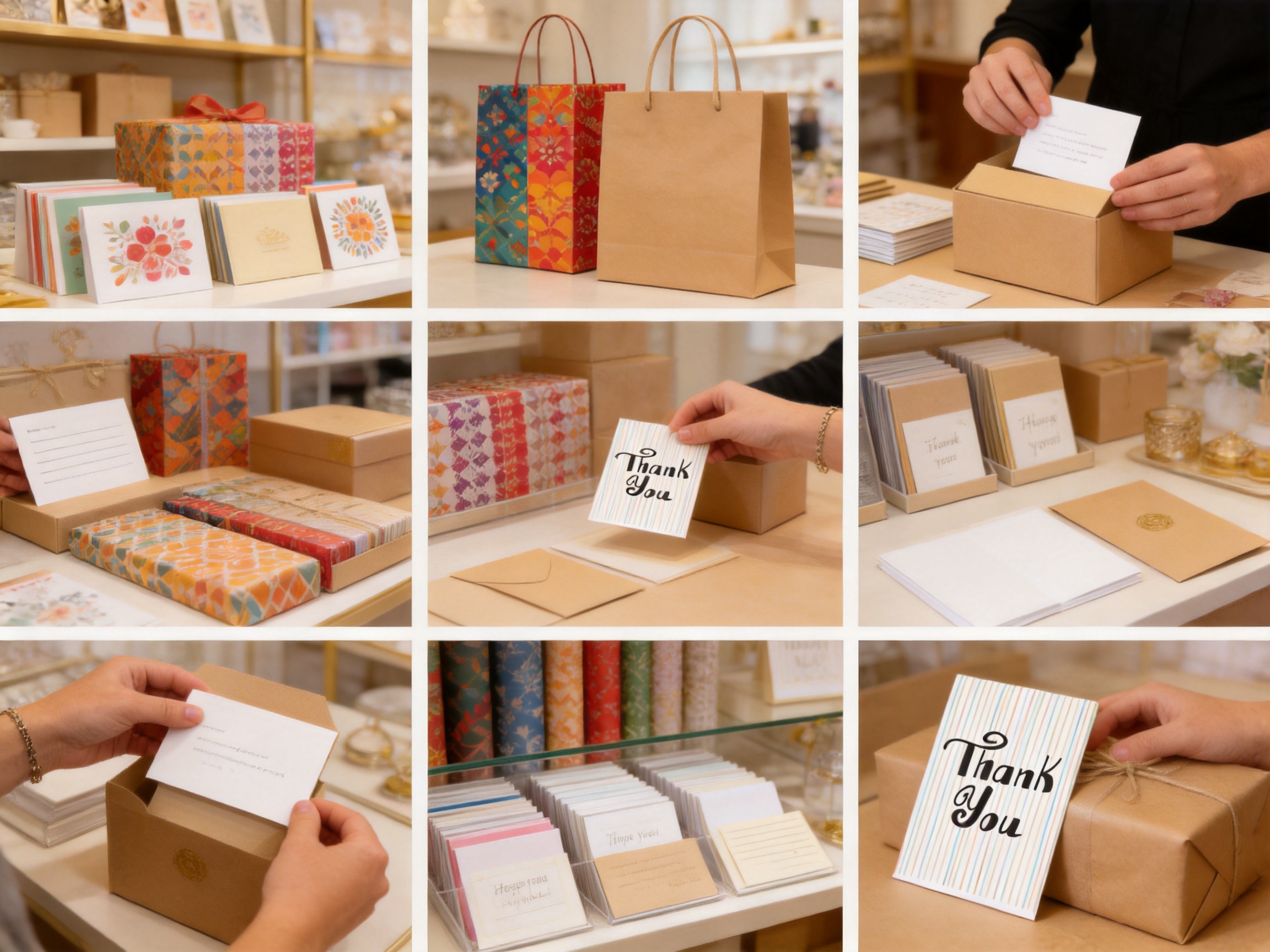
Custom postcards and colorful printed greeting cards combine personal communication with carefully designed visual presentation. They can carry a handwritten note, introduce a seasonal campaign, support an invitation, thank a customer, or reinforce a brand message in a compact paper format. Although greeting cards may appear simple, a successful card depends on much more than attractive artwork. Paper selection, color management, print clarity, finishing precision, folding accuracy, packaging, and production consistency all influence the final experience.
For retailers, stationery brands, event organizers, hospitality businesses, gift companies, and marketing teams, the right greeting card supplier must provide more than basic printing. A reliable production partner should understand how the card will be used, how the design should be adapted to the chosen paper, how color should remain consistent across repeat orders, and how the finished cards should be packed for wholesale distribution. These considerations are especially important for custom postcard and greeting card programs that include multiple designs, seasonal collections, different sizes, or coordinated paper packaging.
Custom Postcard Colorful Printed Greeting Card products are designed to meet these needs through a balance of visual flexibility, practical usability, and controlled manufacturing. The product can support detailed illustrations, patterns, typography, logos, seasonal graphics, and personalized messages. Its format is suitable for direct mailing, retail display, inclusion in gift packaging, event distribution, and customer relationship campaigns.
Manufactured by Yiwu Magic Tree Gift Bag Co., Ltd., the product benefits from a company background rooted in paper packaging and printed paper products. The manufacturer produces greeting cards alongside gift bags, gift boxes, and patterned wrapping paper, allowing customers to develop coordinated paper collections from one source. Its capabilities include design and prepress preparation, printing, laminating, hot stamping, creasing, bag making, and manual finishing. This broader production experience is valuable because a greeting card is often not an isolated item; it may need to match shopping bags, wrapping paper, gift boxes, tags, or promotional inserts.

Custom Postcard Colorful Printed Greeting Card
Why Custom Postcards and Greeting Cards Remain Effective
Digital communication is fast, but physical paper still creates a different type of interaction. A printed card requires the recipient to hold, read, display, store, or pass it to another person. This physical quality gives the message a longer life than many temporary digital notifications. A colorful greeting card can become part of a home, office, gift package, retail display, or event table, allowing the design to continue communicating after the first reading.
Postcards are particularly useful because they are compact and direct. They can deliver a short message without the material and mailing requirements associated with a larger folded package. Businesses may use them for promotional announcements, thank-you messages, appointment reminders, seasonal greetings, loyalty programs, or product introductions. Individuals may use them for travel notes, celebrations, invitations, and personal correspondence.
Folded greeting cards provide additional writing space and create a reveal when opened. This makes them suitable for messages that require more room or for designs that benefit from an interior and exterior layout. The front cover can establish a visual mood, while the inside can contain a longer message, a printed quote, event details, a brand statement, or a blank area for handwriting.
Both formats can be adapted to different audiences. A restrained color palette and clean typography may suit premium stationery or corporate communication. Bright colors, playful illustrations, and energetic patterns may be more suitable for birthdays, children’s products, lifestyle brands, or festive campaigns. Soft tones may suggest calmness, care, and refinement, while vivid combinations can create excitement and visibility in a retail environment.
The effectiveness of the card is therefore connected to the relationship between message and design. A crowded layout can make important information difficult to read. Poor color contrast can reduce legibility. Inconsistent printing can weaken a coordinated campaign. A professional manufacturing process helps protect the communication value of the card by ensuring that visual choices are reproduced accurately and consistently.
Product Overview
The Custom Postcard Colorful Printed Greeting Card is a customizable paper communication product intended for personal, commercial, promotional, and seasonal applications. It can be produced with artwork supplied by the customer or developed through a professional design and prepress workflow. The format supports colorful graphics, detailed printing, text, patterns, logos, illustrations, and personalized information.
The product is positioned within the greeting card category, but its potential applications extend beyond traditional holiday cards. It can function as a postcard, promotional insert, event card, thank-you card, invitation, product information card, or customer appreciation piece. Its flexible role makes it suitable for companies that need a single printed format to serve several communication purposes throughout the year.
Printed postcards and greeting cards also work well as part of a complete packaging system. A retailer may place a thank-you card inside a gift bag. A cosmetics company may include a product-care card with an order. A wedding supplier may coordinate invitations with envelopes, favor tags, and wrapping materials. A gift brand may create a collection that uses the same artwork across greeting cards, gift boxes, bags, and wrapping paper. The ability to source related products from an experienced paper packaging manufacturer can simplify color coordination and production management.
The card surface is suitable for detailed printed content, allowing images, patterns, and text to appear organized rather than visually cluttered. Final results still depend on artwork quality, file preparation, paper choice, ink coverage, and finishing requirements. For this reason, close communication between the buyer and manufacturer is important before production begins.
Key Product Advantages
High Visual Adaptability
A major advantage of custom printed greeting cards is the ability to create a design that matches a specific occasion, audience, or business identity. Instead of selecting a generic card from a fixed catalog, buyers can define the visual direction. This may include a particular color system, illustration style, logo treatment, message structure, seasonal theme, or typography standard.
Colorful printing gives designers broad room to work. A card may use a single accent color, a soft tonal range, a full-color illustration, a photographic image, geometric patterns, or layered decorative elements. This flexibility helps brands maintain a recognizable appearance across campaigns. It also allows retailers to create collections with coordinated variations rather than repeating one design.
Different color combinations can influence how the recipient interprets the message. Pale blues, muted greens, warm neutrals, and gentle pinks may communicate calmness or elegance. Saturated reds, yellows, oranges, and blues may create energy and celebration. Dark backgrounds with metallic finishing can offer a more premium impression, while natural kraft-inspired tones may support an earthy or environmentally conscious presentation.
Support for Detailed Printing
Cards often contain small type, fine lines, gradients, illustrations, or complex patterns. A capable production process must preserve these details without allowing them to merge or lose definition. Proper prepress preparation is essential. Files need to be checked for resolution, color mode, bleed, trim marks, font handling, and image placement before printing.
When the printing surface is selected appropriately and the artwork is prepared correctly, the card can present detailed content with a clean visual hierarchy. Images can remain recognizable, text can be legible, and decorative features can support rather than overpower the message. This is especially important for business cards used in promotions, where a logo, product name, contact detail, or call to action must remain clear.
Personalization for Multiple Uses
Custom printing enables a greeting card to carry information that is relevant to a specific event, customer group, product launch, or sales period. Businesses can create different versions for holidays, geographic markets, membership tiers, or promotional activities. Event organizers can add dates, venue information, response details, and individualized messages.
Personalization can also be handled at the design level. A business may request its logo and brand colors, while a private customer may prefer a family photograph or personal illustration. A wholesale stationery buyer may order a complete collection with several themes and messages. This range of use makes the product more commercially flexible than a standardized greeting card with limited variation.
Compact and Practical Format
Postcards and greeting cards are relatively easy to store, display, pack, and distribute. Retailers can arrange them in racks, countertop displays, seasonal sections, or gift sets. Businesses can include them in shipping cartons without requiring excessive space. Event organizers can distribute them at registration desks, tables, or welcome areas.
The compact format also supports efficient use of printed content. A postcard can communicate a short message on one side or both sides, while a folded card can separate the cover, interior message, and back-panel information. This makes it possible to create a complete communication piece without producing a large brochure or package insert.
Compatibility with Coordinated Paper Products
A greeting card often performs best when it belongs to a wider visual system. Matching wrapping paper, gift bags, boxes, tags, and tissue paper can make a gift presentation feel deliberate and professional. When different items are produced by unrelated suppliers, color differences, paper variations, and inconsistent finishing may become visible.
A manufacturer with experience in several paper product categories can help buyers coordinate these elements. Yiwu Magic Tree Gift Bag Co., Ltd. specializes in white cardboard, coated paper, and kraft paper products, including gift bags, gift boxes, greeting cards, and patterned wrapping paper. This product range allows a customer to consider a complete paper presentation rather than ordering each item in isolation.
Paper Materials and Surface Considerations
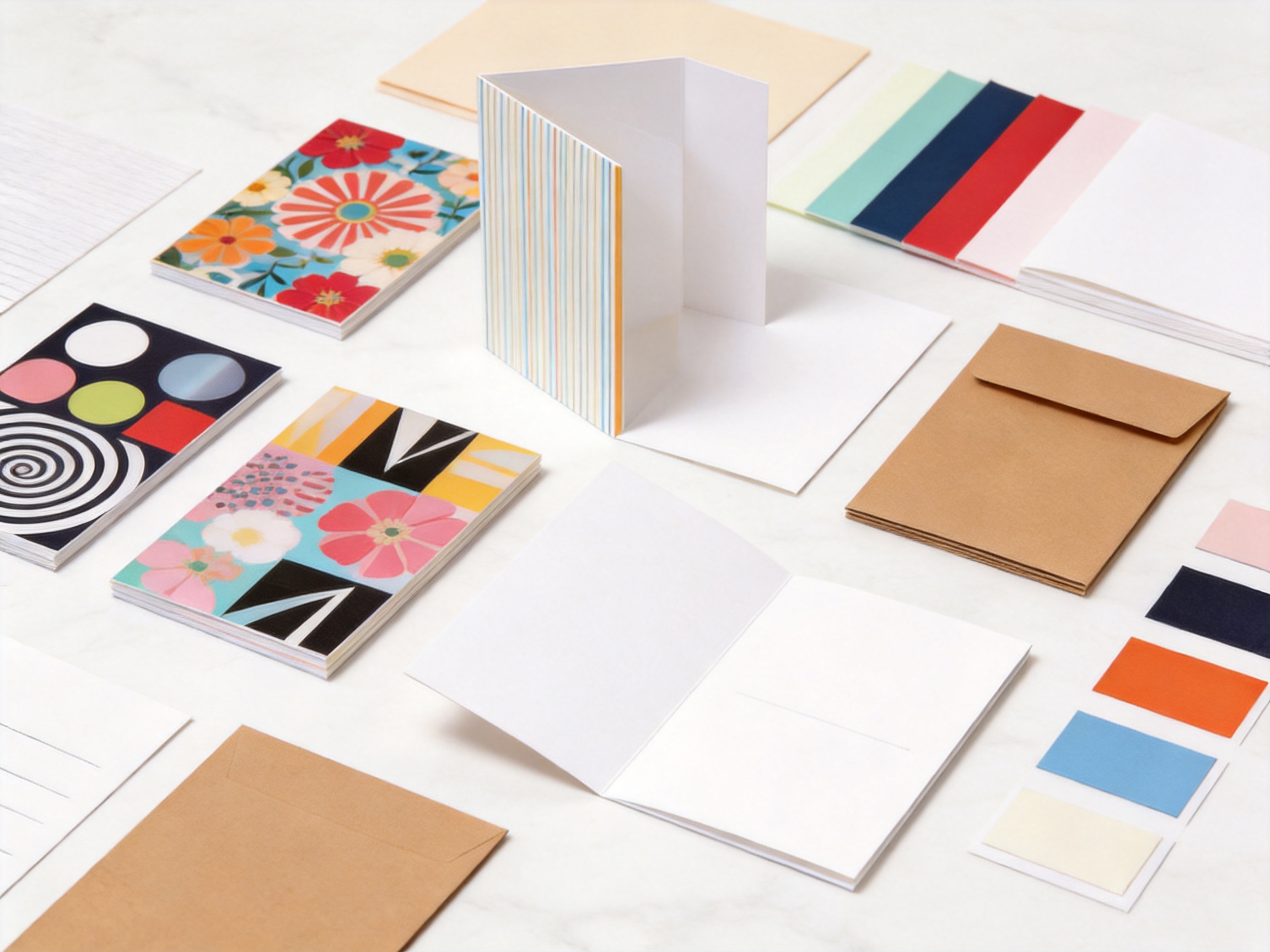
Material selection influences the appearance, feel, durability, and printing performance of a greeting card. White cardboard can provide a clean and bright base for colorful designs. Coated paper may support smooth image reproduction and a polished surface. Kraft paper can create a more natural or rustic impression and may be suitable for designs that emphasize simplicity, handmade character, or environmental awareness.
The best paper depends on the artwork and intended use. A design with large areas of saturated color may require a surface that supports even ink coverage. A card with fine typography may benefit from a smooth surface that preserves letter edges. A minimalist design may rely more heavily on paper tone and tactile quality, making material choice part of the visual concept rather than simply a technical decision.
Paper weight also affects the card’s perceived quality and behavior during handling. A lighter stock may be appropriate for postcards or high-volume promotional distribution. A heavier board can offer a more substantial feel for premium stationery, invitations, or keepsake cards. Folding requirements must be considered when using heavier material because the crease needs to be clean and visually controlled.
Surface finish can alter color appearance and tactile impression. A smooth finish may create a crisp, contemporary look, while a more natural surface can support an artisanal or environmentally oriented design. Laminating may add protection and influence gloss, softness, or resistance to handling. The finish should be chosen according to the product’s purpose, not applied automatically to every design.
For buyers interested in eco-friendly paper packaging, material communication should be specific and responsible. Paper type, recycled content, coatings, inks, and finishing treatments all contribute to a product’s environmental profile. A supplier should help clarify available grades and production options so that the final product aligns with the buyer’s sustainability objectives without making unsupported environmental claims.
Color and Artwork Development
Color is one of the most important characteristics of a colorful printed greeting card. It attracts attention, establishes mood, separates information, and supports brand recognition. However, colors displayed on a computer monitor are created through light, while printed colors are produced through ink or toner on paper. As a result, a digital preview may not exactly match the finished piece.
Professional prepress preparation helps reduce unexpected differences. Designers and buyers should review color specifications, image resolution, transparent elements, overprinting, and bleed requirements before approval. If a brand relies on specific colors, the production team should discuss how those colors will be reproduced on the selected paper and finish.
Large areas of solid color require particular care because small variations may be easier to notice. Patterns with repeated elements must also be aligned accurately. Fine lines and small text need sufficient contrast against the background. When a design combines several visual features, the prepress stage should check whether the elements remain distinct after printing and finishing.
A proofing process can help buyers evaluate the design before full production. Depending on the project, this may involve a digital proof, a physical sample, or a production sample using the intended paper and finishing. Proof approval gives the buyer an opportunity to check dimensions, text, color relationships, image placement, and fold orientation.
Color consistency is especially important for repeat orders. A retailer may order a successful card design several times during the year, or a brand may expand its collection with matching packaging. Maintaining production records, approved artwork, material specifications, and finishing details helps reduce variation between runs.
Manufacturing Process
1. Design Consultation and Specification Review
Production begins with a clear understanding of the customer’s requirements. The manufacturer reviews the intended use, card format, dimensions, paper preference, quantity, artwork, color expectations, finishing options, packaging needs, and delivery schedule. This stage helps identify potential technical issues before materials are ordered or plates are prepared.
A professional specification review can also determine whether the item should be produced as a postcard, folded greeting card, or another paper format. The team may discuss whether the design requires a blank writing area, an interior print, a writable surface, a particular fold, rounded corners, or a protective finish.
2. Professional Design and Prepress
Prepress transforms the customer’s artwork into production-ready files. The process may include checking dimensions, setting bleed, confirming resolution, converting color information, outlining or embedding fonts, adjusting image placement, and verifying that important content remains within the safe area.
For buyers without finalized artwork, professional design support can help organize the composition. The design team may work with the customer’s message, logo, images, preferred colors, and target audience to create a layout that is visually balanced and technically suitable for printing. This capability is useful for small businesses, new brands, event organizers, and retailers developing seasonal collections.
Prepress is also where potential production conflicts can be identified. Very fine lines, low-contrast text, overly small type, or design elements too close to the trim edge may not reproduce as intended. Finding these issues before printing protects both quality and production efficiency.
3. Material Preparation
After the paper and finish are confirmed, materials are prepared according to the approved specifications. White cardboard, coated paper, and kraft paper can support different visual directions and product requirements. The production team must ensure that the selected stock is compatible with the intended printing and finishing processes.
Material preparation also involves checking the paper for consistency, storage conditions, and suitability for cutting or folding. Paper can respond to humidity and handling, so controlled production practices are important when accurate dimensions and clean creases are required.
4. Printing
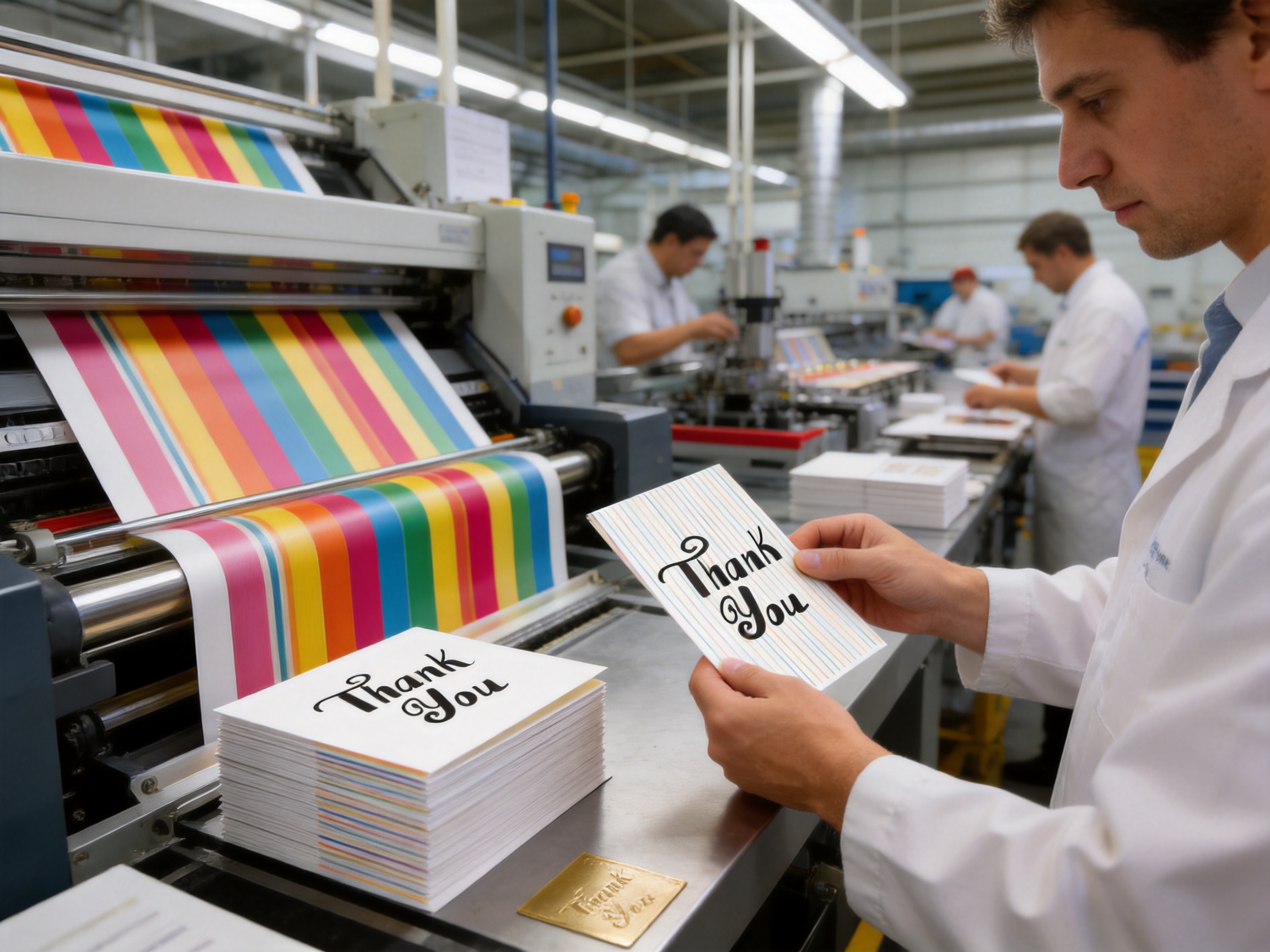
The printing stage transfers the approved artwork to the card material. Depending on the project, the production method may be selected according to the number of designs, quantity, color requirements, image detail, and desired finish. The objective is to achieve clear text, even color coverage, sharp graphics, and reliable repeatability.
Printing quality is not determined only by the machine. It also depends on file preparation, ink management, paper compatibility, press setup, and inspection. A capable factory combines equipment with experienced operators who understand how the artwork and material interact.
For colorful greeting cards, registration accuracy is important. When several colors or layers overlap, misalignment can create blurred edges or uneven borders. Careful setup and inspection help preserve the intended appearance of illustrations, patterns, and typography.
5. Laminating and Surface Finishing
Laminating may be used when the project requires additional surface protection or a specific tactile appearance. It can influence gloss, softness, and resistance to scuffing during handling. The choice should be based on the card’s purpose and the desired balance between appearance, writing ability, and durability.
Some greeting cards need a surface that remains easy to write on. Others are primarily visual products where a protected, polished exterior is preferred. The finishing decision should therefore be discussed during specification review rather than treated as a standard step for every order.
6. Hot Stamping and Decorative Enhancement
Hot stamping can add a distinctive accent to selected areas of a card. Metallic details, special colors, or decorative marks may be used for logos, borders, lettering, seasonal motifs, or premium collections. When applied thoughtfully, this technique can create contrast between the main printed design and a refined highlight.
Decorative finishing should support the message rather than make the card difficult to read. The position, scale, and color of the stamped element should be coordinated with the printed artwork. Proper registration is important when stamping must align with existing text or graphics.
7. Creasing, Folding, and Cutting
Folded greeting cards require accurate creasing and folding. A clean crease helps the card open smoothly and keeps the cover aligned with the interior. It also reduces the risk of cracking or uneven edges, particularly when using heavier stocks or heavily printed surfaces.
Cutting accuracy affects the overall appearance of postcards and folded cards. Uneven dimensions, rough edges, or inconsistent corner placement can reduce the professional impression. Controlled cutting and finishing help ensure that the cards are ready for retail presentation or direct distribution.
8. Manual Finishing and Inspection
Some paper products require manual finishing after automated processing. Manual work may include assembling components, checking folds, removing imperfections, grouping designs, inserting cards into packaging, or preparing retail sets. Experienced workers can identify details that may be difficult to catch during a purely automated process.
Quality inspection should consider print clarity, color consistency, trimming, folding, surface finish, stamping, cleanliness, and quantity. Samples may be checked during production and again before packing. A systematic inspection process helps separate acceptable products from items that do not meet the agreed standard.
9. Packing and Delivery Preparation
Greeting cards need protection during storage and transportation. Packing requirements vary depending on whether the cards are shipped in bulk, arranged in retail sets, paired with envelopes, or included with other paper products. Proper grouping can help prevent bending, scuffing, moisture exposure, and confusion between multiple designs.
For wholesale customers, packing should also support efficient receiving and inventory management. Designs may be separated by quantity, labeled by item code, or arranged according to the buyer’s distribution plan. Clear packing coordination can reduce handling time after the shipment arrives.
Production Strengths of an Experienced Paper Packaging Manufacturer
The manufacturer’s history is an important factor when evaluating a custom printed paper product. The company was founded in 1996 as Fushida Plastic Factory and was rebranded in 2019 as Magic Tree Paper Products Co., Ltd. This background represents nearly three decades of manufacturing experience and a long-term understanding of production management, customer requirements, and product development.
Yiwu Magic Tree Gift Bag Co., Ltd. operates its own factory and manages production from raw materials to finished products. This integrated approach can provide stronger control than a fragmented supply chain in which design, printing, finishing, and packing are handled by unrelated parties. Direct factory management allows specifications to be communicated through a more centralized process and can make it easier to coordinate changes.
The company’s capabilities include professional design and prepress, laminating, hot stamping, creasing, printing, bag making, and manual finishing. For greeting card buyers, this combination is significant because it covers both preparation and final production. A customer can discuss artwork, surface effects, folding, and coordinated packaging with a team that understands how these stages affect one another.
The broader product range is another strength. The company produces white cardboard, coated paper, and kraft paper products, including paper bags, gift bags, gift boxes, greeting cards, and patterned wrapping paper. This makes it possible to develop complete packaging programs that share colors, patterns, materials, and finishing details.
The manufacturer serves customers in the United States, Canada, Mexico, the United Kingdom, Japan, and China. Experience with international customers can support clearer communication regarding specifications, product expectations, packaging, and shipment preparation. Buyers should still confirm all project details directly, but an established export-oriented production background can be useful for wholesale programs.
The company reports an annual output value exceeding 50 million yuan. This indicates a substantial operating scale and supports the ability to manage different product categories and production schedules. Capacity alone does not replace quality control, but a structured factory with multiple production capabilities may offer stronger continuity for customers seeking repeat orders or several related paper products.
How the Product Compares with Generic Alternatives
Generic greeting cards can be convenient when a buyer needs a small quantity quickly and does not require a specific design. However, they offer limited control over artwork, dimensions, paper, message, and brand presentation. Custom postcards and greeting cards provide a more direct connection between the printed item and the buyer’s communication objective.
Compared with basic single-color printing, colorful printing allows more expressive layouts and stronger visual differentiation. It can reproduce illustrations, photographs, gradients, patterns, and brand elements that would be difficult to communicate through a restricted palette. The result can be more distinctive in a retail display or more aligned with a campaign’s visual identity.
Compared with suppliers that only print flat cards, a manufacturer with folding, laminating, hot stamping, and manual finishing capabilities can offer a wider range of product treatments. This does not mean every project needs complex finishing. Rather, buyers can select the level of enhancement that best fits the message, audience, budget, and intended use.
Compared with sourcing cards and packaging from separate vendors, a coordinated paper packaging manufacturer may simplify visual matching and project communication. The same customer can explore a greeting card collection together with gift bags, boxes, and patterned wrapping paper. This can reduce the risk that similar colors or patterns will appear noticeably different across products.
Compared with purely trading-based procurement, direct factory involvement can provide better visibility into the production process. Buyers may be able to discuss artwork, materials, finishing, inspection, and packing with teams closer to the actual manufacturing stages. This is particularly valuable when the card is part of a larger wholesale order or a recurring product line.
Applications Across Different Markets
Retail Stationery Collections
Stationery retailers can use custom greeting cards to build collections around seasons, occasions, artistic styles, or customer demographics. A collection may include birthday cards, thank-you cards, congratulations cards, holiday cards, and blank cards. Consistent use of color, typography, and packaging can make the collection easier to recognize on the shelf.
Gift and Lifestyle Brands
Gift brands can include a printed card with each purchase or sell cards as complementary products. A coordinated card can reinforce the brand’s personality and improve the presentation of a gift. When combined with matching wrapping paper and gift bags, the card becomes part of a complete customer experience.
Corporate Communication
Companies can use postcards and greeting cards for customer appreciation, holiday messages, product announcements, employee recognition, or partner communication. A well-designed card may feel warmer and more personal than a standard digital message while still presenting the organization professionally.
Events and Invitations
Cards can support weddings, birthdays, exhibitions, product launches, conferences, and community events. A custom design can include dates, locations, schedules, response information, or a visual theme. Folded formats provide more room for event details, while postcards offer a simple and economical invitation option.
Hospitality and Food Businesses
Hotels, restaurants, cafés, and specialty food brands can use cards to thank guests, explain product stories, promote seasonal events, or encourage repeat visits. A small card included with an order can create a personal point of contact and may be retained by the customer if the design is attractive.
Direct Mail and Promotional Campaigns
Postcards are suitable for direct mail because they present the message immediately without requiring an envelope to be opened. Retailers and service businesses can use them for new-store announcements, promotional offers, loyalty communication, and seasonal campaigns. Clear hierarchy is important so the recipient can understand the main message quickly.
Packaging Inserts
A greeting card format can serve as a thank-you insert, care instruction card, brand story, or referral message. Its printed surface can be customized for different products while remaining compact enough for shipping cartons and gift packaging. This application connects the physical product with the customer relationship after purchase.
Design Recommendations for Better Results
Begin with the purpose of the card rather than the decoration. Decide whether the recipient should feel appreciated, informed, invited, entertained, or encouraged to take an action. Once the communication goal is clear, the color palette, image style, typography, and finishing choices can support that objective.
Keep the most important information easy to find. A greeting card can be colorful without being crowded. Use contrast to separate the main message from supporting details. Allow enough open space around logos, names, dates, and calls to action. If the design is intended for handwriting, reserve an area with a suitable surface and sufficient room.
Consider how the card will be viewed. A retail card may be seen from a short distance on a display rack, while a package insert may be read in the hand. A postcard sent through the mail may need a clear address area and sufficient space for postal information. A folded card creates a sequence: the cover attracts attention, the inside delivers the main message, and the back can contain secondary information.
Use images at an appropriate resolution and avoid enlarging low-quality files beyond their practical limits. Check that small type remains readable at the final size. For designs using very dark backgrounds, confirm that text contrast is strong enough. If metallic stamping or laminating is planned, ensure that the decorative effect does not interfere with writing or critical information.
Design collections as systems rather than isolated items. Repeating a color family, illustration technique, border style, or logo position can create unity across several designs. At the same time, small variations can keep the collection interesting. Coordinating the card with gift bags, boxes, and wrapping paper may further strengthen the customer’s visual experience.
Quality Control Priorities
Quality control begins before printing. Artwork files, materials, finishing methods, dimensions, and quantities should be approved in writing. A shared specification reduces misunderstandings and gives the production team a clear reference throughout the order.
During printing, inspection should focus on color consistency, registration, image clarity, text sharpness, and coverage. If the order includes multiple designs, each design should be checked rather than relying on a single sample. Variations between colors or layouts may require different adjustments.
After printing, the cards should be checked for trimming, folding, creasing, laminating, stamping, and cleanliness. Folded cards should open and close smoothly. Edges should be even. Decorative effects should be positioned correctly. If the cards are packed in sets, the correct number and design combination should be confirmed.
For repeat orders, the approved sample or production record should be retained as a reference. Buyers should notify the manufacturer if artwork, paper, color, or finishing changes between orders. Even a small change can alter the final appearance, so documentation supports more consistent outcomes.
| Production Area | What Buyers Should Confirm | Why It Matters |
|---|---|---|
| Artwork and prepress | File size, bleed, resolution, fonts, color information, and safe areas | Reduces layout errors and protects print clarity |
| Paper selection | Paper type, weight, surface, writing suitability, and color | Influences appearance, durability, and handling |
| Printing | Color expectations, image detail, registration, and proof approval | Supports accurate and consistent reproduction |
| Finishing | Laminating, hot stamping, creasing, folding, and cutting requirements | Determines tactile quality and final presentation |
| Inspection | Defect tolerance, sample approval, quantity checks, and packaging standards | Helps ensure the shipment meets the agreed specification |
| Packaging | Grouping, labeling, protection, and retail or distribution format | Simplifies receiving and reduces transit damage |
Ordering Considerations for Wholesale Buyers
Wholesale buyers should prepare a complete brief before requesting production. The brief should include the card type, dimensions, quantity, number of designs, paper preference, artwork status, print sides, finishing requirements, packaging format, and desired delivery schedule. Clear information allows the manufacturer to recommend suitable production methods and identify issues early.
Buyers should also explain how the cards will be used. A card designed for retail sale may require a different paper weight and packing arrangement from a card inserted into an e-commerce shipment. A direct-mail postcard may require specific address and postal areas. A premium invitation may need additional finishing and a carefully selected board.
When ordering multiple designs, clarify whether the quantity is calculated per design or across the complete order. Confirm how designs will be grouped and labeled. If the collection includes matching gift bags, boxes, or wrapping paper, share the visual standards for all items so that color and pattern relationships can be considered during production.
Sampling is valuable for projects where the color, paper feel, fold, or finishing is especially important. A sample provides a physical reference and can reveal issues that are difficult to detect on a screen. Buyers should review both appearance and function, including whether the card folds correctly, whether the surface can be written on, and whether the packaging protects the product.
Repeat orders should be planned with enough time for artwork confirmation, material preparation, printing, finishing, inspection, and shipping. Seasonal products benefit from early planning because production schedules may become more demanding before major holidays and retail events.
Sustainability and Responsible Paper Choices
Paper products can support responsible packaging strategies when material selection and production decisions are made carefully. Buyers may ask about available paper grades, recycled content, coatings, inks, waste handling, and packaging methods. The appropriate choice depends on the product’s performance requirements and the customer’s environmental priorities.
A responsible approach avoids treating the word “eco-friendly” as a substitute for specific information. The buyer should understand what sustainability feature is being offered and whether it applies to the paper, finish, packaging, or entire product. For example, a paper card may still include a coating or decorative treatment that affects recyclability. Clear communication helps buyers make accurate claims in their own marketing.
Kraft paper can support a natural visual direction, while white cardboard and coated paper can support bright, detailed designs. The material should be selected according to function rather than appearance alone. Durability, print quality, writing ability, finishing, and end-of-life considerations all deserve attention.
Efficient production can also contribute to responsible resource use by reducing avoidable errors, reprints, and material waste. Accurate prepress, controlled cutting, appropriate sheet planning, and careful inspection help protect both product quality and production efficiency.
Why Factory Integration Matters
Greeting cards are often part of a broader commercial program. A retailer may need cards for several seasons. A gift company may require the same artwork across packaging formats. A brand may launch a campaign that includes postcards, bags, boxes, and wrapping paper. Factory integration can make these programs easier to coordinate.
When design, prepress, printing, finishing, and packing are managed within one production organization, information can move more directly between stages. A finishing requirement identified during design can be considered before printing. A paper choice can be evaluated alongside folding and packaging needs. A color standard can be applied across several product categories.
Yiwu Magic Tree Gift Bag Co., Ltd. combines these capabilities with its own factory and a product range that extends beyond greeting cards. Its experience with white cardboard, coated paper, kraft paper, gift bags, gift boxes, and patterned wrapping paper gives buyers an opportunity to plan complete paper packaging solutions through one manufacturing partner.
This integrated model may be especially valuable for wholesale customers that need dependable repeat production. Instead of treating every order as a separate transaction, the buyer and manufacturer can maintain a continuing product specification, approved samples, artwork records, and packaging standards.
Frequently Asked Questions
What is a custom postcard greeting card?
A custom postcard greeting card is a printed paper card designed according to a customer’s artwork, message, colors, dimensions, and finishing requirements. It may be used as a postcard, greeting card, invitation, promotional mailer, thank-you insert, or event communication piece.
Can the card include photographs and detailed illustrations?
Yes. The product is suitable for colorful printed graphics, photographs, patterns, illustrations, logos, and typography. The final result depends on the resolution of the supplied artwork, the paper surface, the color specifications, and the selected printing process.
What is the difference between a postcard and a folded greeting card?
A postcard is generally a flat format with printed content on one or both sides. A folded greeting card provides an exterior cover and an interior area for a longer message or additional information. The best format depends on the amount of content, mailing method, presentation requirements, and desired user experience.
Can businesses add their logos and brand colors?
Yes. Businesses can customize the design with logos, brand colors, typography, illustrations, photography, and campaign information. Buyers should provide accurate brand references and confirm how colors will be reproduced on the selected paper.
Can the cards be coordinated with gift bags and boxes?
Yes. The manufacturer also produces gift bags, gift boxes, and patterned wrapping paper. Buyers can discuss coordinated colors, patterns, paper materials, and finishing so that the card forms part of a consistent packaging collection.
What paper types are available?
Available paper product experience includes white cardboard, coated paper, and kraft paper. The most suitable option depends on the design, desired surface, color requirements, writing needs, durability, and finishing process.
Can the card include laminating or hot stamping?
Laminating and hot stamping are among the company’s production capabilities. These finishes can be considered when the project requires additional surface treatment or a decorative accent. Their suitability should be evaluated according to the card’s use, design, writing requirements, and budget.
Is design assistance available?
The company provides professional design and prepress capabilities. Buyers with finished artwork can request file preparation and production checks, while customers with an initial concept can discuss layout, color, imagery, and technical requirements.
How can buyers maintain color consistency on repeat orders?
Buyers should retain approved artwork, samples, paper specifications, finishing details, and color references. Any changes to the paper, design, or finishing should be communicated before production. Proof approval and documented production standards can help improve consistency across repeat runs.
Are custom cards suitable for wholesale orders?
Yes. The product is suitable for retailers, stationery brands, gift companies, event organizers, hospitality businesses, and marketing campaigns. Wholesale buyers should confirm quantities, design variations, packaging arrangements, production schedules, and inspection requirements in advance.
What should be included in a quotation request?
A quotation request should include the card format, dimensions, quantity, number of designs, paper type if known, printing requirements, finishing, artwork status, packaging needs, destination, and expected schedule. More complete information allows the manufacturer to prepare a more accurate proposal.
What makes an experienced manufacturer valuable for this product?
An experienced manufacturer can coordinate design, prepress, material selection, printing, finishing, inspection, and packing. Yiwu Magic Tree Gift Bag Co., Ltd. has nearly 30 years of manufacturing experience, operates its own factory, and produces several related paper packaging categories. These capabilities can support both individual greeting card orders and larger coordinated packaging programs.
Conclusion
Custom postcards and colorful printed greeting cards provide a practical way to make communication more personal, visible, and memorable. They can carry a short handwritten note, present a detailed brand message, invite guests to an event, thank a customer, or complete the presentation of a gift. Their flexibility comes from the combination of customizable artwork, adaptable color, practical paper formats, and optional finishing.
The product’s advantages are strengthened when printing is supported by professional prepress, suitable paper selection, accurate cutting and folding, controlled color reproduction, and careful inspection. Buyers can choose a simple postcard or develop a more refined greeting card with laminating, hot stamping, and coordinated packaging. This range allows the product to serve both everyday communication and premium commercial applications.
Yiwu Magic Tree Gift Bag Co., Ltd. brings nearly three decades of manufacturing experience to this product category. Its own factory, design and prepress capabilities, printing and finishing processes, manual production skills, and broad paper packaging range provide a strong foundation for custom projects. The ability to produce greeting cards alongside gift bags, gift boxes, and patterned wrapping paper is particularly useful for customers seeking a consistent visual system.
For the best outcome, buyers should prepare clear specifications, select materials according to the intended use, approve artwork and proofs carefully, and discuss packaging requirements before production. With the right design and manufacturing partner, a colorful printed greeting card can become more than a small paper item. It can serve as a lasting expression of appreciation, a recognizable brand touchpoint, and an effective part of a complete paper packaging experience.
References
1. Yiwu Magic Tree Gift Bag Co., Ltd. Company information and manufacturing capability summary supplied for product content development.
2. Yiwu Magic Tree Gift Bag Co., Ltd. Product information for Custom Postcard Colorful Printed Greeting Card, including product category, application description, and supplied product imagery reference.
3. Internal manufacturing capability information covering design and prepress, printing, laminating, hot stamping, creasing, bag making, manual finishing, and factory production management.
4. General packaging production principles concerning paper selection, prepress preparation, color reproduction, folding, finishing, quality inspection, and wholesale packing.
5. General stationery and printed communication practices concerning postcards, greeting cards, promotional inserts, event materials, and coordinated paper packaging.