中文简体
 русский
 Français
 Español
 Deutsch
 عربى

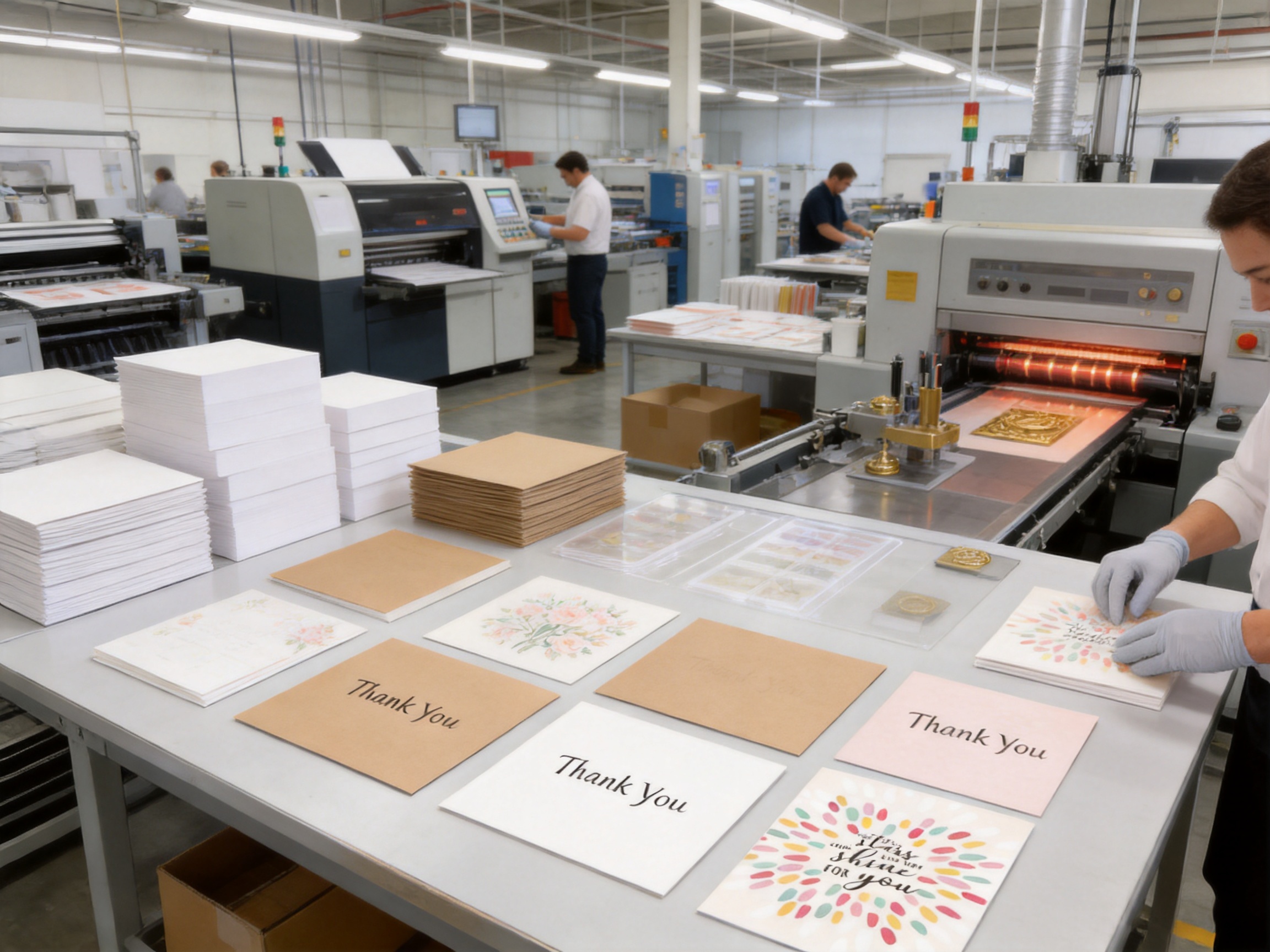
A thank you message can be brief without feeling ordinary. A custom postcard thank you greeting card gives brands, retailers, event planners, and individuals a practical way to communicate appreciation while presenting a polished visual identity. Unlike a routine digital message, a printed postcard can be held, displayed, included in an order, or mailed directly to the recipient. Its physical format helps transform a simple expression of thanks into a memorable experience.
Custom postcard creative greeting cards are especially useful for businesses that want to maintain a personal connection with customers. They can be placed inside product packaging, handed out after an event, mailed with a purchase, or used as part of a seasonal campaign. Because the card can be printed with custom artwork, a company logo, brand colors, illustrations, typography, or a handwritten-style message, it can support both communication and brand recognition.
The product is also flexible enough for personal use. Individuals can create cards for weddings, birthdays, holidays, customer appreciation, thank-you notes, invitations, or everyday acts of kindness. The compact postcard format offers a clean surface for a message while avoiding the bulk and expense associated with a more elaborate folded card and envelope combination.
What Is a Custom Postcard Thank You Greeting Card?
A custom postcard thank you greeting card is a printed paper card designed to communicate appreciation in a compact postcard format. It may include a front side featuring artwork, a logo, decorative typography, or an illustration, while the reverse side can provide space for a personal message, address, branding information, or mailing instructions.
The design can be adapted to different purposes. A small shop may use a card to thank customers for an online order. An event planner may add one to a guest gift bag. A fashion, beauty, food, or lifestyle brand may insert one into a shipment to create a stronger unboxing experience. A private customer may select a floral, seasonal, artistic, or minimalist design for a personal note.
The postcard structure is simple, but simplicity is one of its main advantages. There is enough room to communicate clearly, yet the format does not require excessive material, complicated assembly, or a large envelope. This makes the product suitable for efficient production, straightforward storage, and economical distribution.
Custom printing also allows the card to match a larger packaging system. A business can coordinate its greeting cards with paper bags, gift boxes, patterned wrapping paper, tissue paper, stickers, and other stationery. When all printed materials use a consistent color palette and visual language, customers are more likely to recognize the brand across different touchpoints.
Why Printed Thank You Cards Still Matter
Many customer interactions now take place through email, messaging platforms, automated notifications, and social media. These channels are fast, but they are also easy to ignore. A printed card provides a different type of communication. It takes physical form, can be placed on a desk or shelf, and often feels more intentional than a short digital notification.
A thank you card can create a moment of pause. When a customer opens a package and discovers a carefully designed postcard, the printed message becomes part of the product experience. It can communicate care, reinforce quality, and encourage the customer to remember the business after the order is complete.
For service providers, a postcard can follow a consultation, event, appointment, workshop, or collaboration. For retailers, it can reinforce customer loyalty. For creative professionals, it can demonstrate attention to visual detail. For individuals, it can offer a warmer alternative to a short text message.
The effectiveness of the card does not depend only on the words printed on it. Paper choice, color, finish, image quality, typography, and layout all affect how the recipient experiences the message. A professional manufacturer can help coordinate these details so that the final product feels balanced and consistent.
Key Product Advantages
Compact and Efficient Format
The postcard format is smaller and simpler than many traditional greeting card styles. It can be stored in drawers, packaging stations, retail displays, or mailing areas without requiring much space. Businesses that send large numbers of cards can benefit from this efficient format because it is easy to count, organize, and distribute.
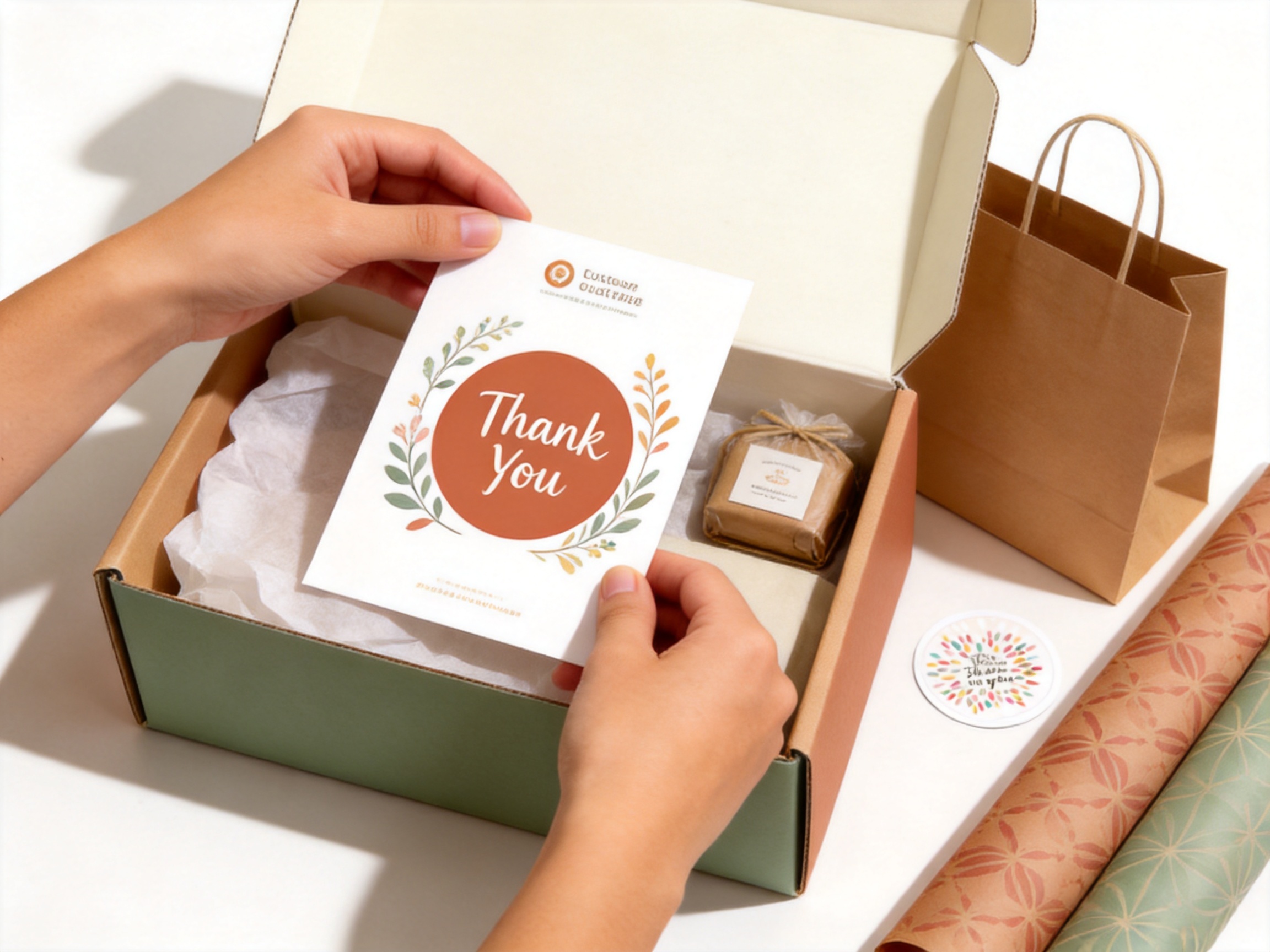
The compact structure also makes the card suitable for package inserts. It can fit inside gift bags, shipping cartons, subscription boxes, cosmetic packaging, apparel parcels, and many other product packages. This creates an additional communication opportunity without significantly increasing package volume.
Strong Personalization Potential
Custom postcard greeting cards can be adapted to a wide range of visual directions. A business may request a logo-centered design, a hand-drawn illustration, an elegant floral pattern, bold modern typography, a seasonal theme, or a minimalist message. The card can be designed around the desired customer experience rather than being limited to a standard template.
Personalization may include the front artwork, back-side layout, colors, text, images, dimensions, paper stock, and surface finish. The result can be aligned with existing packaging and stationery. This is particularly valuable for brands that want every printed item to feel like part of one coordinated identity.
Suitable for Business and Personal Communication
The product is not restricted to one industry. Retail stores, online sellers, restaurants, florists, wedding planners, hotels, beauty businesses, artists, subscription services, and corporate teams can all use custom thank you postcards. The same production capabilities can also support personal celebrations and family occasions.
This wide range of applications allows manufacturers to serve both wholesale buyers and smaller custom orders. A buyer may need a high-volume run for a national campaign or a smaller batch for an event. Flexible production planning can help accommodate different requirements while preserving print quality and design consistency.
Professional Appearance Without Excessive Complexity
Some greeting card formats require folding, gluing, envelope matching, or manual assembly. A postcard can deliver a polished appearance with fewer structural components. This can simplify production and reduce the number of steps required before the cards are ready for shipping.
The streamlined format does not mean the product has to look basic. Finishes such as matte lamination, gloss lamination, or hot stamping can add visual and tactile interest. High-quality printing can reproduce detailed illustrations, subtle color transitions, sharp text, and branded graphic elements.
Useful for Customer Retention and Brand Recall
A thank you card is a small item, but it can contribute to a larger customer relationship strategy. A thoughtful message may encourage a customer to reorder, leave a review, recommend a business, or remember the brand when making a future purchase. When the design is distinctive, the card can remain visible in the recipient’s home or workspace.
Compared with a disposable digital notification, a physical card has a longer potential life. It may be saved because of its artwork, reused as a small note card, or displayed as part of a seasonal decoration. This extended visibility can support brand recall without making the message feel like an advertisement.
Design Options for Creative Thank You Postcards
Handwritten-Style Designs
Handwritten-style typography can make a printed message feel more personal. It is useful when a brand wants to communicate warmth, friendliness, or a handcrafted character. The design should remain legible, especially when the card includes contact information, social media details, or instructions on the reverse side.
A handwritten-style message can also be combined with a clean sans-serif font. The handwritten element may be used for the main thank-you phrase, while supporting information uses a more readable typeface. This contrast helps the card feel personal without appearing disorganized.
Minimalist Typography
Minimalist designs rely on spacing, restrained color, and carefully selected type. They can be highly effective for luxury brands, professional services, modern retailers, and businesses that want an uncluttered identity. A short phrase such as “Thank You” can become the main visual feature when supported by a balanced layout and high-quality paper.
Minimalism also provides practical benefits. A design with fewer colors and fewer visual elements can be easier to coordinate with different packaging styles. It may also reproduce consistently across multiple print runs when color requirements are clearly defined.
Floral and Botanical Artwork
Floral and botanical illustrations are popular for personal stationery, weddings, beauty products, lifestyle brands, and seasonal campaigns. They can range from delicate line drawings to colorful painted compositions. A manufacturer with professional prepress and printing capabilities can help preserve the fine details of these designs.
Botanical artwork can be adjusted to match different moods. Soft neutral colors may create an elegant appearance, while saturated greens, pinks, or yellows can give the card a cheerful and energetic character. The design may cover the entire front or appear as a small decorative element around the message.
Seasonal and Event-Based Graphics
Custom postcards can be created for holidays, product launches, anniversaries, wedding events, customer appreciation weeks, and annual campaigns. Seasonal designs give businesses an opportunity to refresh their packaging while maintaining recognizable brand elements.
For event planners, the cards can be coordinated with invitations, gift boxes, paper bags, wrapping paper, and table stationery. Matching materials help create a complete visual environment and reduce the risk of disconnected designs across event items.
Illustrated Brand Messages
Brands that use mascots, characters, product illustrations, or recognizable symbols can place these elements on a thank you postcard. A small illustration may communicate the personality of a brand more effectively than a long paragraph. It can also make the card more appealing to customers who enjoy collecting or displaying printed artwork.
The artwork should be prepared with appropriate resolution and color settings before production. Professional design and prepress support can help identify issues related to image quality, bleed, margins, color conversion, and small text before the order enters full production.

Custom Postcard Creative Greeting Card Thank You, Greeting Card
Material and Finish Choices
Paper selection affects the appearance, durability, print result, and perceived value of a greeting card. Different paper types can support different brand positions and practical requirements. White cardboard can provide a smooth, clean surface for detailed printing. Coated paper can support vivid colors and crisp images. Kraft paper can create a more natural, rustic, or eco-conscious appearance.
White Cardboard
White cardboard is suitable for designs that require clear color reproduction and a bright background. It can make pastel tones appear clean and help dark typography remain sharp. This material is often appropriate for professional stationery, elegant thank you cards, and designs with detailed illustrations.
The rigidity of cardboard can also give the postcard a more substantial feel. When a customer takes the card out of a package, the material communicates that the insert was intentionally designed rather than added as an afterthought.
Coated Paper
Coated paper has a treated surface that can help printed graphics appear smooth and vivid. It is suitable for colorful artwork, photographs, brand illustrations, and designs that depend on fine image detail. Depending on the desired result, the card may use a matte or glossy finish.
A glossy finish can create a bright, reflective appearance and make colors appear energetic. A matte finish reduces glare and often produces a softer, more refined presentation. The best choice depends on the artwork, handling conditions, and intended brand image.
Kraft Paper
Kraft paper is often chosen for natural-looking packaging and stationery. Its brown or earthy base can support handcrafted, organic, vintage, or environmentally conscious design themes. It works especially well with simple black printing, muted colors, line illustrations, and informal messages.
Because kraft paper has a different base color from white paper, the same artwork may appear differently when printed on each material. Buyers should review proofs and consider how the paper tone will affect the final color balance.
Matte Lamination
Matte lamination provides a low-reflective surface with a smooth, understated appearance. It is useful for cards that should feel elegant, calm, or premium. The finish can also make the card more comfortable to handle because it reduces the slick sensation associated with some glossy surfaces.
Gloss Lamination
Gloss lamination creates a brighter surface and can emphasize colorful artwork. It is appropriate for cheerful designs, photographic images, product illustrations, and cards intended to attract attention in retail or package-opening environments.
Hot Stamping
Hot stamping can add a metallic or contrasting decorative element to selected parts of the design. Gold, silver, and other foil effects may be used for logos, borders, short phrases, or small graphic accents. Because hot stamping is most effective when used selectively, professional production planning is important.
Comparison with Standard and Digital Alternatives
Pre-printed generic thank you cards are convenient, but they often provide limited opportunities for brand differentiation. A standard card may not match a company’s colors, packaging, or tone of voice. Custom postcards allow the buyer to create a more unified customer experience.
Digital thank-you messages are fast and inexpensive to distribute, but they lack physical presence. They can be overlooked among other notifications and do not contribute as strongly to the tactile experience of opening a parcel. A printed card can complement digital communication by adding a memorable physical touchpoint.
Traditional folded greeting cards offer more writing space and may be appropriate for formal personal occasions. However, they often require envelopes and additional handling. Postcards are more compact and can be inserted into packages or mailed with fewer components.
Low-quality printed inserts may reduce a brand’s perceived value if the paper feels weak, the image is blurred, or the colors are inconsistent. A professional supplier with controlled production processes can provide stronger quality assurance through design review, prepress preparation, printing control, finishing inspection, and organized packing.
| Option | Main Strength | Potential Limitation | Best Use |
|---|---|---|---|
| Custom postcard thank you card | Personalized, compact, and brand-coordinated | Limited writing space compared with a folded card | Package inserts, customer follow-ups, events, and retail communication |
| Generic printed card | Quick availability and simple ordering | Limited differentiation and personalization | Short-term or general-purpose use |
| Digital thank-you message | Fast delivery and low physical material use | Easy to overlook and lacks tactile presence | Immediate notifications and automated communication |
| Folded greeting card | More interior space and formal presentation | Requires more material and may need an envelope | Personal celebrations and detailed messages |
| Premium custom postcard with finishing | Strong visual impact and elevated tactile quality | May require a higher budget than basic printing | Luxury packaging, campaigns, and special events |
Applications Across Different Industries
Online Retail and E-Commerce
Online retailers do not have the same face-to-face contact as physical stores, so packaging becomes an important communication channel. A custom postcard can thank the customer for an order, explain the brand story, encourage a repeat purchase, or invite the customer to share feedback.
The card can be designed to fit the dimensions and appearance of the shipping package. A consistent combination of paper bags, gift boxes, wrapping paper, stickers, and greeting cards can create a more professional unboxing experience.
Small Shops and Independent Brands
Independent businesses often compete through personality and customer relationships. A custom postcard allows a shop owner to express the character of the business in a small but visible way. Hand-drawn artwork, friendly language, and a carefully selected paper finish can help the card feel authentic.
Because the design can be updated over time, a business may create different versions for new collections, holidays, milestones, or customer loyalty campaigns. The postcard can remain recognizable while giving regular customers something new to discover.
Events and Weddings
Event planners can use thank you postcards as part of welcome bags, guest gifts, table settings, or post-event follow-up mailings. The card can match invitations, menus, gift boxes, and wrapping materials. Coordinated stationery can make the event feel more intentional and visually complete.
For weddings, the postcard may include a couple’s names, date, venue style, or a short personal message. For corporate events, it may carry the event theme, sponsor identity, or a post-event appreciation message.
Hospitality and Restaurants
Hotels, cafés, restaurants, and catering businesses can include cards with reservations, takeaway orders, room gifts, or loyalty packages. A well-designed card may reinforce the atmosphere of the business. A refined restaurant might choose an understated matte design, while a casual café may prefer warm illustrations and friendly typography.
Beauty, Fashion, and Lifestyle Products
Visual identity is particularly important for beauty, fashion, home décor, and lifestyle brands. A card with coordinated colors, typography, and illustrations can strengthen the impression created by the product itself. It may also be used in influencer packages, press kits, product launches, and seasonal orders.
Corporate and Professional Services
Consultants, agencies, real estate professionals, designers, and other service providers can use custom cards after completing a project or meeting. A physical thank you note can make a professional relationship feel more considered while still maintaining a clean corporate appearance.
Manufacturing Capabilities Behind the Product
The quality of a custom postcard depends on more than the design file. It also depends on material preparation, printing accuracy, surface treatment, cutting, finishing, inspection, and packing. An experienced paper products manufacturer can coordinate these stages under one production system.
Magic Tree Gift Bag Co., Ltd. has nearly 30 years of experience in paper packaging and printed paper products. The company began in 1996 as Fushida Plastic Factory and was rebranded in 2019 as Magic Tree Paper Products Co., Ltd. Its experience includes the production of paper bags, gift bags, gift boxes, greeting cards, and patterned wrapping paper.
The company works with white cardboard, coated paper, kraft paper, and other paper-based materials suitable for customized packaging and stationery. This material range allows buyers to select a base that fits the visual identity, functional needs, and positioning of a project.
Professional Design and Prepress
Design and prepress preparation are important because printing problems often begin before the press is switched on. Artwork must be checked for dimensions, bleed, safe margins, resolution, color settings, fonts, and finishing locations. A professional prepress process can identify potential problems and reduce avoidable rework.
For a postcard, prepress review may include checking whether text is positioned far enough from the cut line, whether small details will remain visible after printing, and whether the chosen finish is compatible with the artwork. These checks help protect the appearance of the finished card.
Printing
Printing converts the approved artwork into a physical product. Consistent ink coverage, accurate registration, and controlled color reproduction are important for cards that include logos, brand colors, fine lines, or detailed illustrations. A coordinated manufacturing system can support repeat orders with greater consistency.
Printing requirements vary according to the material and design. A colorful illustration may require a different approach from a one-color kraft paper design. A supplier with experience across multiple paper products can advise buyers on how to balance appearance, material choice, and production requirements.
Laminating
Laminating can protect the printed surface and provide a selected visual effect. Matte and gloss laminations can change the way light interacts with the card while also contributing to surface durability. The finish should be selected during the design stage rather than treated as an afterthought.
Hot Stamping
Hot stamping adds a decorative foil element to selected parts of the card. It can highlight a logo, phrase, border, or illustration detail. Proper alignment is essential, particularly when the stamped area must match printed elements. Controlled production and inspection help maintain a clean result.
Creasing and Cutting
Although postcards generally do not require complex folding, accurate cutting is still necessary. Clean edges help the card look professional, especially when the design includes borders or full-bleed artwork. If a project includes related folded cards or boxes, creasing capabilities can support a broader packaging program.
Bag Making and Manual Finishing
The company’s wider production capabilities include bag making and manual finishing. These services are valuable for buyers who want to order coordinated paper bags, gift bags, cards, boxes, and wrapping paper from one manufacturing partner. Manual finishing can support special assembly requirements, decorative details, or final preparation that cannot be completed by automated equipment alone.
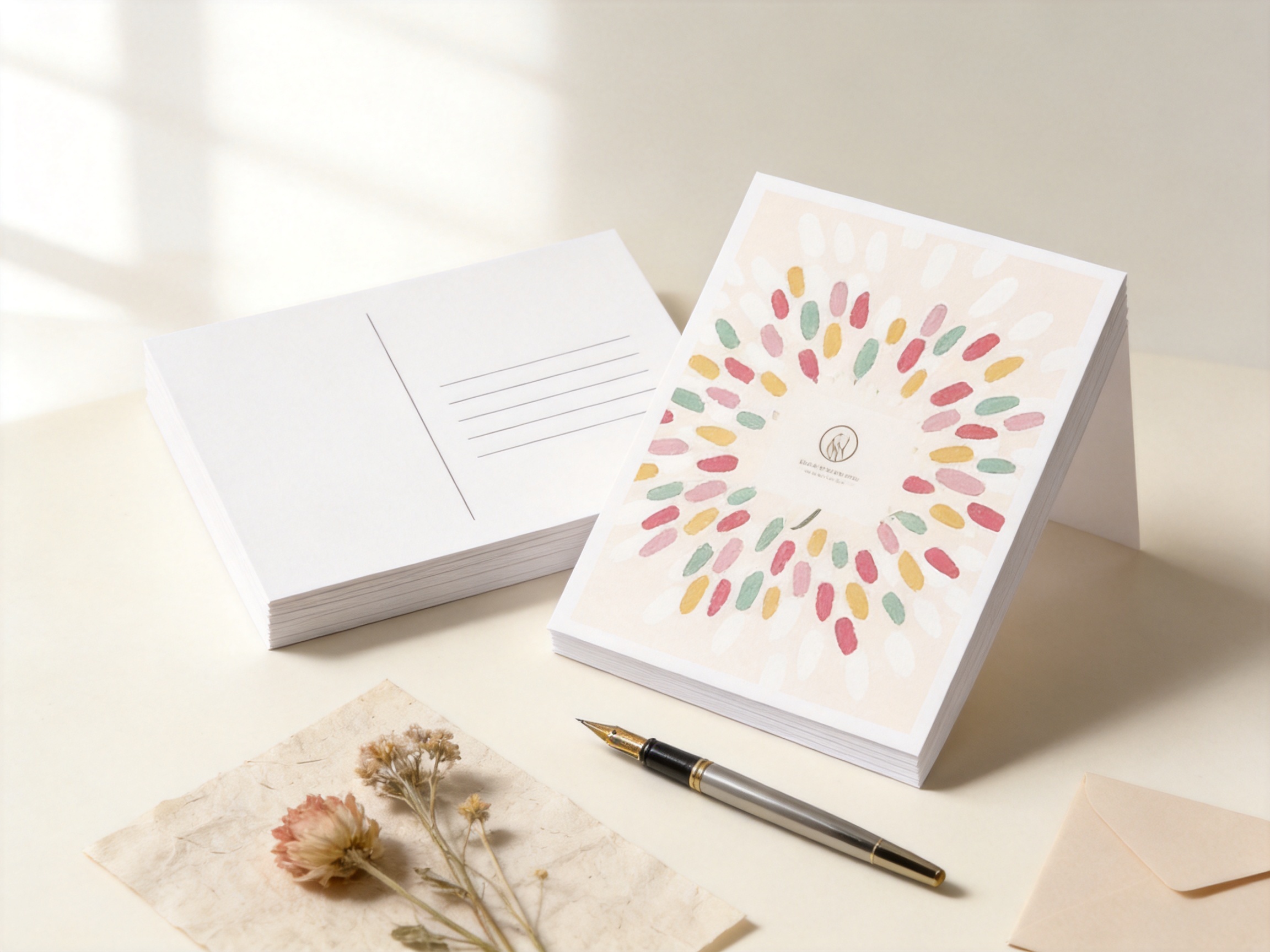
Integrated Factory Production
One of the strongest advantages of working with an integrated factory is the ability to manage multiple production stages within one organization. The company operates its own factory and manages the process from raw materials to finished products. This structure can improve communication between departments and make it easier to coordinate material, printing, finishing, and packing requirements.
When different suppliers are responsible for separate stages, the buyer may need to coordinate specifications, deadlines, quality standards, and shipping arrangements across several companies. A factory that provides design support, printing, laminating, hot stamping, cutting, and manual finishing can simplify the workflow.
Integrated production is particularly useful for a product line rather than a single item. A brand may need postcard thank you cards in the same visual language as gift boxes and paper bags. Centralized production can help maintain color, material, and finish consistency across these items.
Quality Control Considerations
Quality control should begin with the approved artwork and continue through delivery. A strong process may include incoming material checks, prepress review, sample approval, printing inspection, finishing inspection, quantity verification, and final packing checks.
Material Inspection
Paper should be checked for thickness, surface condition, color, and suitability for the planned printing and finishing process. Material consistency is important because differences in paper tone or surface treatment can affect the final appearance.
Artwork and Proof Review
A proof gives the buyer an opportunity to review the layout, colors, text, images, and finishing effects before full production. Proofing is especially valuable for designs with brand-specific colors, small typography, or complex illustrations.
Print Inspection
Printed sheets should be reviewed for color variation, smudging, registration issues, missing areas, uneven coverage, and image clarity. A consistent inspection process helps identify problems before the product proceeds to finishing.
Finishing Inspection
Lamination, hot stamping, cutting, and other treatments should be checked for alignment, adhesion, edge quality, and surface appearance. A card that is well printed but poorly cut or unevenly finished may still fail to create the desired impression.
Packing and Quantity Control
Finished cards should be counted, organized, protected from moisture and damage, and packed according to the buyer’s requirements. Clear packing methods support efficient receiving and reduce the risk of confusion when several designs or sizes are included in one order.
Eco-Friendly Paper Packaging Considerations
Paper-based products can support packaging programs that seek to reduce reliance on plastic materials, particularly when buyers select appropriate paper grades and responsible production practices. White cardboard, coated paper, and kraft paper each offer different visual and functional characteristics.
An eco-conscious approach should consider the entire product system rather than focusing only on one material claim. Buyers may review the paper source, coating type, inks, decorative finishes, packaging method, and expected product life. A simpler postcard design with limited finishing may be easier to integrate into a sustainability-focused packaging program.
Kraft paper is often selected for its natural appearance, while white cardboard and coated paper may be preferred for detailed printing. The right option depends on the desired balance between visual quality, durability, branding, and environmental objectives.
Businesses should communicate environmental information accurately and avoid making unsupported claims. If a project requires recycled content, certified material, compostability, or a particular coating specification, these requirements should be discussed and confirmed before production.
How to Prepare Artwork for Production
Good artwork preparation can improve the efficiency and reliability of a custom postcard project. Buyers should begin by confirming the final card dimensions, orientation, printing sides, paper type, finish, and quantity. These decisions influence the design file and production plan.
The artwork should include the correct bleed area when the background or image extends to the edge. Important text and logos should be kept within the safe area so they are not too close to the cutting line. Images should have sufficient resolution for the final size, and fonts should be embedded or converted according to the manufacturer’s requirements.
Brand colors should be specified clearly. If exact color matching is important, the buyer should discuss the preferred color standard and review a proof. Colors can appear different on coated, uncoated, white, and kraft materials, so the paper surface must be considered.
Finishing elements should be marked separately when necessary. For example, a hot-stamping layer may need to be supplied as a distinct file or clearly identified in the production artwork. Clear communication reduces the possibility of errors during prepress.
The message itself should also be reviewed carefully. Spelling, punctuation, phone numbers, addresses, website names, promotional codes, and social media information should be checked before approval. A beautiful card can lose credibility if it contains an avoidable text error.
Choosing the Right Postcard Style
The ideal style depends on the recipient, communication goal, brand personality, and distribution method. A card inserted into a luxury gift box may require a refined finish and heavier stock. A card placed inside a high-volume e-commerce package may prioritize efficient dimensions and durable printing.
A personal wedding thank you card may use floral artwork and soft colors. A modern clothing brand may prefer bold typography and a minimal layout. A natural skincare company may choose kraft paper, botanical drawings, and restrained colors. A corporate service provider may use white cardboard, a simple logo, and a concise professional message.
Buyers should also think about whether the recipient is expected to write on the card. Some glossy or heavily laminated surfaces may be less suitable for handwriting. If the reverse side will be completed by hand, an appropriate uncoated or writable area may be necessary.
Ordering and Customization Process
Step One: Define the Purpose
Start by deciding how the card will be used. Determine whether it will be mailed, inserted into packaging, placed in a gift bag, handed out at an event, or used as personal stationery. The application will influence size, paper, finish, layout, and quantity.
Step Two: Prepare the Brand or Personal Design
Collect logos, illustrations, photographs, color references, text, and layout preferences. If a complete design is not available, communicate the desired mood and visual direction. Professional design and prepress support can help turn a general idea into production-ready artwork.
Step Three: Select Materials and Finishes
Choose between white cardboard, coated paper, kraft paper, or another suitable grade. Decide whether the surface should be matte, glossy, uncoated, or enhanced with hot stamping. The selection should reflect the intended appearance and practical handling requirements.
Step Four: Review the Proof
Examine the proof carefully for text accuracy, image quality, color balance, dimensions, and finish placement. This is the best stage to request corrections. Once production is approved, changes may be more difficult or costly.
Step Five: Confirm Production and Packing Requirements
Confirm the quantity, delivery destination, packing method, design variations, and required completion schedule. If several card designs are being produced, each version should be identified clearly to reduce confusion during packing and receiving.
Step Six: Inspect the Finished Product
When the cards arrive, inspect a representative selection for printing, cutting, lamination, stamping, quantity, and damage. Early inspection helps identify issues while production records and order details are still available.
Advantages of a Long-Term Manufacturing Partner
A supplier with long-term paper product experience can provide more than basic printing. Experience across greeting cards, gift bags, gift boxes, and wrapping paper helps the manufacturer understand how different products work together as a packaging system.
Long-term manufacturing experience can also improve communication. Buyers may receive more practical guidance about paper selection, artwork preparation, finish compatibility, production timing, and packaging. This is valuable for companies that are developing their first custom stationery project or expanding an existing packaging range.
Magic Tree serves customers in the United States, Canada, Mexico, the United Kingdom, Japan, and China. Its international customer experience supports communication with buyers who have different packaging standards, visual preferences, and delivery requirements.
The company reports an annual output value exceeding 50 million yuan and maintains in-house capabilities for design, prepress, laminating, hot stamping, creasing, printing, bag making, and manual finishing. These resources support both individual product orders and coordinated paper packaging programs.
Q&A
What is a custom postcard thank you greeting card?
It is a printed postcard designed to communicate appreciation through a personalized message, artwork, logo, typography, or illustration. It can be mailed, included in a package, placed in a gift bag, or used at an event.
Can the card include a company logo?
Yes. A logo can be included on the front or reverse side, depending on the desired layout. It can also be combined with brand colors, product information, social media details, or a short customer message.
Which paper is best for a thank you postcard?
There is no single best paper for every application. White cardboard is suitable for clean, bright designs. Coated paper is useful for vivid colors and detailed images. Kraft paper supports a natural or handcrafted appearance. The final choice should consider artwork, durability, writing requirements, and brand positioning.
What is the difference between matte and glossy finishes?
Matte finishes have a softer, low-reflective surface and often create a refined appearance. Glossy finishes are brighter and more reflective, which can emphasize colorful artwork and photographs. The finish should be selected according to the design and the way the card will be handled.
Can the cards be used as package inserts?
Yes. Their compact format makes them suitable for e-commerce shipments, subscription boxes, gift boxes, retail packaging, and direct-to-customer orders. The dimensions should be matched to the package so the card fits neatly without bending or interfering with the product.
Can a postcard be designed in a handwritten style?
Yes. Handwritten-style typography, hand-drawn illustrations, and informal wording can make the card feel warmer and more personal. The text should remain readable, especially if the card contains business information or instructions.
Can the card be coordinated with gift bags and wrapping paper?
Yes. The same colors, logos, patterns, materials, and finishing effects can be used across postcards, gift bags, gift boxes, and patterned wrapping paper. Coordinated production can help create a consistent packaging identity.
Is hot stamping available for greeting cards?
Hot stamping can be used to add selected metallic or decorative elements, such as a logo, border, or short phrase. The design should identify the stamped areas clearly, and a proof should be reviewed before full production.
What should be checked before approving production?
Check the card size, orientation, text, spelling, images, logo placement, colors, bleed, safe margins, paper type, finish, and quantity. Also confirm whether the back side needs a writable area or space for addressing.
Can smaller businesses order custom cards?
Order suitability depends on the project specifications and production plan. Small businesses should provide the intended quantity, dimensions, artwork status, material preference, and delivery requirements so the manufacturer can recommend an appropriate solution.
How does factory production benefit the buyer?
Factory production can centralize material sourcing, printing, finishing, quality control, and packing. It may also simplify communication when the buyer needs several coordinated paper products rather than one isolated item.
Are paper postcards an eco-friendly choice?
Paper postcards can support a paper-based packaging strategy, but environmental performance depends on material sourcing, coatings, inks, finishes, production, and end-of-life handling. Buyers should confirm specific environmental requirements with the manufacturer rather than relying on general assumptions.
Conclusion
Custom postcard creative greeting cards offer a practical and memorable way to say thank you. Their compact format is easy to store, distribute, mail, and insert into product packaging. At the same time, custom artwork, paper selection, printing, lamination, hot stamping, and other finishing options allow the card to reflect a distinct personal or brand identity.
Compared with generic inserts or digital messages, a well-made postcard can provide stronger physical presence and a more personal customer experience. It can support customer retention, enhance unboxing, complement event materials, and extend the visual identity of a packaging program.
The manufacturing process is central to the final result. Professional design and prepress, suitable paper materials, controlled printing, accurate cutting, optional lamination, hot stamping, manual finishing, and careful inspection all contribute to a reliable product. An integrated factory with experience in paper bags, gift boxes, greeting cards, and wrapping paper can also help buyers coordinate several packaging elements under one production system.
For retailers, brands, event planners, and individuals, the custom postcard thank you greeting card is more than a printed message. It is a small physical expression of care that can make an interaction feel considered, polished, and memorable.
References
1. Yiwu Magic Tree Gift Bag Co., Ltd. Company information and product manufacturing capabilities supplied for this article.
2. Internal product description for custom postcard creative greeting cards and thank you greeting cards, including intended applications, design options, and production characteristics.
3. General principles of commercial print production, including prepress preparation, paper selection, lamination, hot stamping, cutting, and quality inspection.
4. General packaging design practices for brand consistency across paper bags, gift boxes, greeting cards, and patterned wrapping paper.
5. General customer communication and direct-mail principles concerning the role of physical printed materials in customer appreciation and brand recall.