

 中文简体
 русский
 Français
 Español
 Deutsch
 عربى

Printing a logo on a paper shopping bag is different from covering the entire surface with brand colors, patterns, and promotional messages. Both approaches can support brand recognition, but they may require different printing processes, setup arrangements, and material specifications. At Magic Tree, we encourage buyers to evaluate print coverage alongside bag dimensions, paper type, order volume, and finishing requirements before approving a quotation.
Our printed paper shopping bags can be customized around different branding objectives. Understanding how the printed area affects production helps buyers balance visual impact with purchasing budgets and compare supplier quotations more accurately.
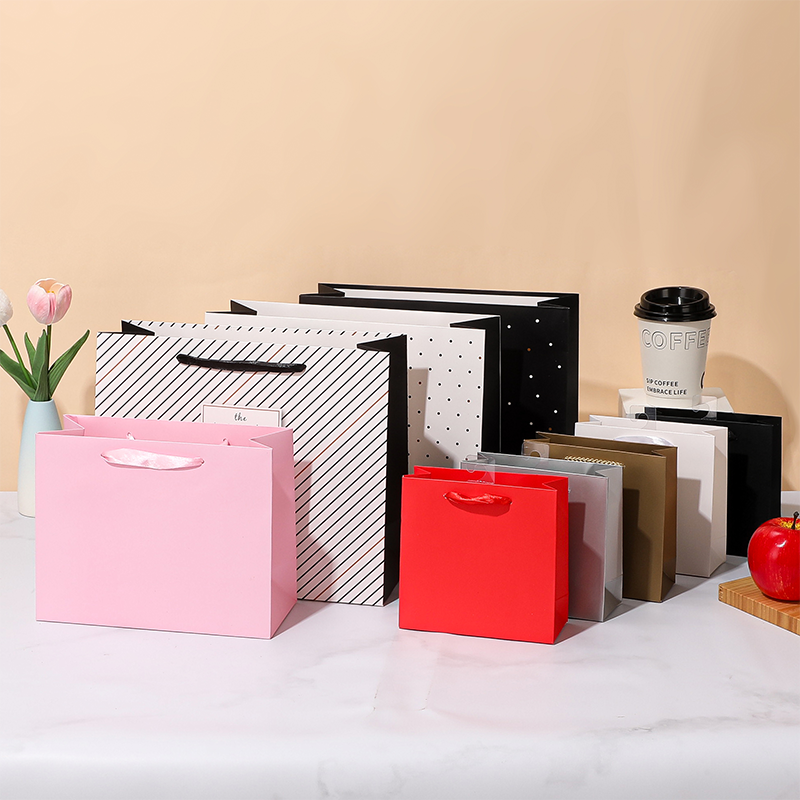
1. Understand What Print Coverage Means
Print coverage refers to the proportion of a bag's printable surface occupied by ink or other printed elements. A small logo on the front panel requires a different artwork layout from a design that extends across the front, back, and side gussets.
- Low coverage: A logo, short slogan, or small graphic on an otherwise unprinted bag.
- Moderate coverage: Larger graphics, multiple text elements, or printed patterns covering part of a panel.
- Full coverage: Artwork extending across all of the intended printing area, potentially including several panels.
Higher coverage can require additional ink and more careful control of color consistency. However, the cost difference depends on the printing method and production setup. Coverage alone does not determine the final unit price.
2. Compare Printing Methods Before Finalizing Artwork
The printing process affects how coverage influences the quotation. At Magic Tree, we recommend discussing the intended quantity, artwork complexity, and bag construction before confirming a suitable production method.
- Flexographic printing: Commonly used for larger production runs. Printing plates and setup requirements can affect the initial cost, particularly for designs with multiple colors.
- Offset printing: Suitable for many detailed, high-quality printed packaging applications. Paper characteristics and finishing requirements influence the overall production arrangement.
- Digital printing: Can suit certain shorter runs or variable designs because conventional printing plates may not be required. Equipment, substrate compatibility, and per-unit pricing still need evaluation.
Each process has different cost characteristics. A full-color design may be commercially reasonable under one production arrangement but less economical under another. We recommend comparing quotations based on the same artwork, bag dimensions, materials, and order quantity.
3. Check the Effect of Ink Coverage and Color Count
A design using a single brand color may have different setup requirements from artwork containing several spot colors or full-color images. The number of colors can affect printing plates, registration requirements, and setup work, depending on the chosen process.
Large areas of solid color may also require additional attention to ink distribution, drying, and surface consistency. On uncoated kraft paper, the natural paper color can influence the appearance of printed inks. Buyers should therefore review color samples on the intended stock before approving production.
Consider these practical options:
- Use a clearly positioned logo when brand identification is the primary purpose.
- Print additional information on selected panels rather than covering every surface automatically.
- Confirm whether side-gusset printing contributes meaningful value to the intended retail presentation.
- Request a sample for designs involving large solid-color backgrounds or detailed graphics.
4. Consider Paper Type and Bag Dimensions
Print coverage should not be evaluated separately from the paper specification. Natural kraft, white kraft, and coated paper provide different printing surfaces and visual effects. The same ink color may appear different depending on the paper background and surface properties.
Bag dimensions also affect material consumption and the total printable area. A larger bag with artwork across four panels generally requires a different specification from a compact bag printed on one side.
Before requesting a quotation, provide the following details:
- Finished bag width, gusset, and height.
- Paper type and grammage, expressed in GSM.
- Number of printed panels and approximate coverage percentage.
- Number of colors and required color references.
- Handle construction and any coating, lamination, or decorative finishing.
5. Compare Quotations Using the Same Specifications
Two suppliers may quote different prices because their proposals include different printing areas, setup charges, or finishing details. Comparing the unit price alone may hide these differences.
| Quotation item | What buyers should confirm |
| Artwork coverage | Front panel only, both sides, gussets, or full-surface printing |
| Printing setup | Plate charges, setup fees, and whether charges vary by color or size |
| Paper specification | Paper type, grammage, dimensions, and surface finish |
| Production quantity | Price tiers for the required quantity and each bag size |
| Additional finishing | Lamination, foil stamping, embossing, or other special treatments |
| Quality approval | Artwork proof, sample arrangements, and agreed color standards |
A detailed quotation allows buyers to identify which specifications account for price differences. It also helps prevent misunderstandings about whether the quoted amount includes all printed panels and requested finishing operations.
6. Approve a Sample Before Bulk Production
Before confirming a large order, review a sample or suitable production proof that reflects the intended artwork and materials. Check logo placement, color reproduction, ink coverage, folds, and the appearance of the assembled bag.
For repeat orders, retain the approved artwork and specification records. Any changes to paper, printing method, color references, or coverage should be reviewed before production proceeds.
Make Print Coverage a Defined Purchasing Decision
At Magic Tree, we recommend treating print coverage as one part of the complete packaging specification rather than an isolated design choice. A small logo may suit straightforward retail packaging, while multi-panel graphics can support a more extensive visual identity. The appropriate approach depends on your brand objectives, budget, materials, and order requirements.
Share your artwork, preferred bag dimensions, paper specifications, printing areas, and estimated order quantity with our team. We can review the requirements and discuss a suitable printing arrangement for your project. Clear specifications make it easier to compare quotations and approve packaging that meets both your visual expectations and purchasing needs.


